This page is for general informational purposes and does not replace an in-person medical consultation. Urticaria (hives) has many possible causes and triggers, and the right treatment approach depends on your specific pattern and history, confirmed through in-person evaluation with a qualified dermatologist.
Urticaria Treatment in Ahmedabad What We Offer
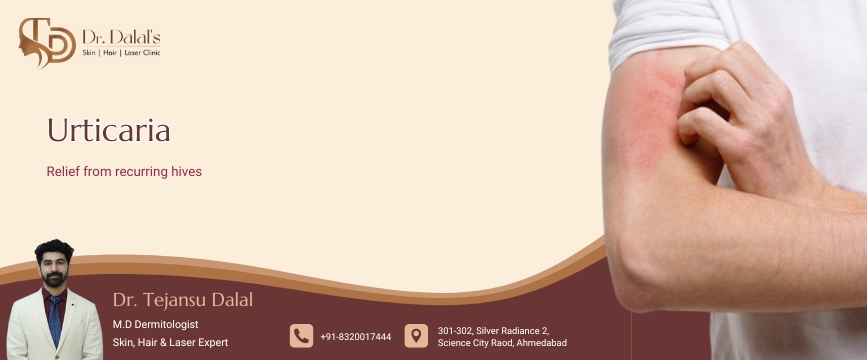
Urticaria (hives) are raised, itchy welts that can appear anywhere on the body. As a dedicated Chronic Urticaria Doctor in Ahmedabad, we diagnose and manage:
Our Skin Allergy Treatment in Ahmedabad services cover urticaria alongside other allergic skin conditions, with treatment tailored to whether your hives are acute or chronic.
Common Concerns Before Getting Treatment
These concerns are common with chronic urticaria specifically and a structured, specialist-led approach usually offers more relief than continuing to guess at triggers.
Our Approach to Chronic Urticaria Treatment
We start with a detailed history how often hives appear, how long they last, and any patterns with food, heat, stress, or specific activities. For most chronic urticaria cases, an obvious external trigger isn’t found, and treatment focuses on controlling the reaction itself rather than endless trigger-hunting.
Chronic urticaria treatment typically starts with regular (not just as-needed) antihistamine use at guideline-supported doses, and steps up to additional targeted therapy for cases that don’t respond adequately always tailored to how your specific case has responded so far.
Benefits of Specialist-Led Treatment
What to Expect - Step by Step
Before & After Real
Transformations, Real Stories
How Chronic Urticaria Treatment Pricing Works
Reviewed & Treated By
As your Urticaria Specialist in Ahmedabad: Dr. Tejansu Dalal (MBBS, MD Skin) Board Certified Consultant Dermatologist. Practices alongside his father, Dr. Samir Dalal (MBBS, MD Skin) together bringing 32+ years of combined clinical dermatology experience in diagnosing and managing chronic urticaria.
Specialist Treatment vs. Home Remedies
Pros of specialist treatment:
Cons of home remedies alone:
Acute vs. Chronic Urticaria Compared
Type | Duration | Common Approach |
Acute Urticaria | Under 6 weeks | Antihistamines, trigger avoidance if identified |
Chronic Urticaria | 6 weeks or more, most days | Regular antihistamine therapy, escalating to additional treatment if needed |
Physical/Inducible Urticaria | Triggered by heat, cold, pressure, or exercise | Trigger-specific management alongside antihistamine therapy |
The right approach depends on your specific pattern determined during consultation, not guessed from how long you’ve had symptoms.
When to Seek Immediate Medical Attention
Most urticaria is uncomfortable but not dangerous. However, some situations need urgent care:
Seek emergency care immediately if you experience, alongside hives:
These can be signs of a severe allergic reaction (anaphylaxis) or significant angioedema, and need emergency care call emergency services or go to the nearest emergency room immediately.
It can usually wait for a routine appointment if:
Frequently Asked Questions
Ready to Get Your Hives Under Control?
Whether you need Hives Treatment in Ahmedabad for a recent flare-up or ongoing Chronic Hives Treatment in Ahmedabad, book a consultation with our specialist for a structured plan not another round of guesswork.