
A device covered in tiny needles doesn’t sound like an anti-aging treatment – but the controlled micro-injury it creates is exactly what triggers skin to rebuild its own collagen from the inside out. Understanding how that process actually works explains why results take months, not days, to show.
Micro needling rejuvenates aging skin by creating thousands of tiny, controlled punctures that trigger the skin’s natural wound-healing process – without actually wounding it the way a cut or burn would. This process prompts the skin to produce fresh collagen and elastin over the following weeks and months, gradually improving thickness, firmness, and texture. Visible improvement typically begins within a few weeks, with the fullest results developing over three to six months as new collagen matures.
Key Takeaways
- Micro needling works by creating tiny punctures that trigger the skin’s own repair response, not by removing or burning the skin’s surface.
- The skin’s healing happens in stages – new collagen starts forming within days, but the strongest, most durable type of collagen takes months to fully develop.
- Results build gradually because fresh collagen gets progressively replaced by denser, stronger collagen over the following several months.
- Adding radiofrequency energy to micro needling creates a combined mechanical-and-heat effect, often used for more pronounced skin tightening.
- Applying specific topical ingredients right after a session can enhance results, because the tiny channels created temporarily allow deeper absorption into the skin.
Introduction
Micro needling has become one of the most widely used treatments for aging skin, but how it actually works often gets reduced to “it stimulates collagen” without explaining what that really means or why it takes time. This article walks through what happens inside the skin during and after a micro needling session, how the healing process actually rebuilds skin structure, and what realistically affects how well it works.
What Micro needling Actually Does to the Skin?
Micro needling uses very fine needles to create a grid of microscopic punctures through the skin’s outer layer and into the deeper layer beneath it, called the dermis – the layer that holds collagen and elastic fibers. These punctures are deliberately too small to cause a visible wound or scar, but they’re exactly the kind of signal the skin recognizes as an injury that needs repairing.
That recognition is the whole point. The skin’s repair response is what actually produces the anti-aging benefit – fresh collagen, new elastic fibers, and a thicker, more resilient skin structure – not the punctures themselves. In other words, micro needling doesn’t rejuvenate skin directly; it convinces the skin to rejuvenate itself.
Clinical Overview: The Skin’s Healing Response, Stage by Stage
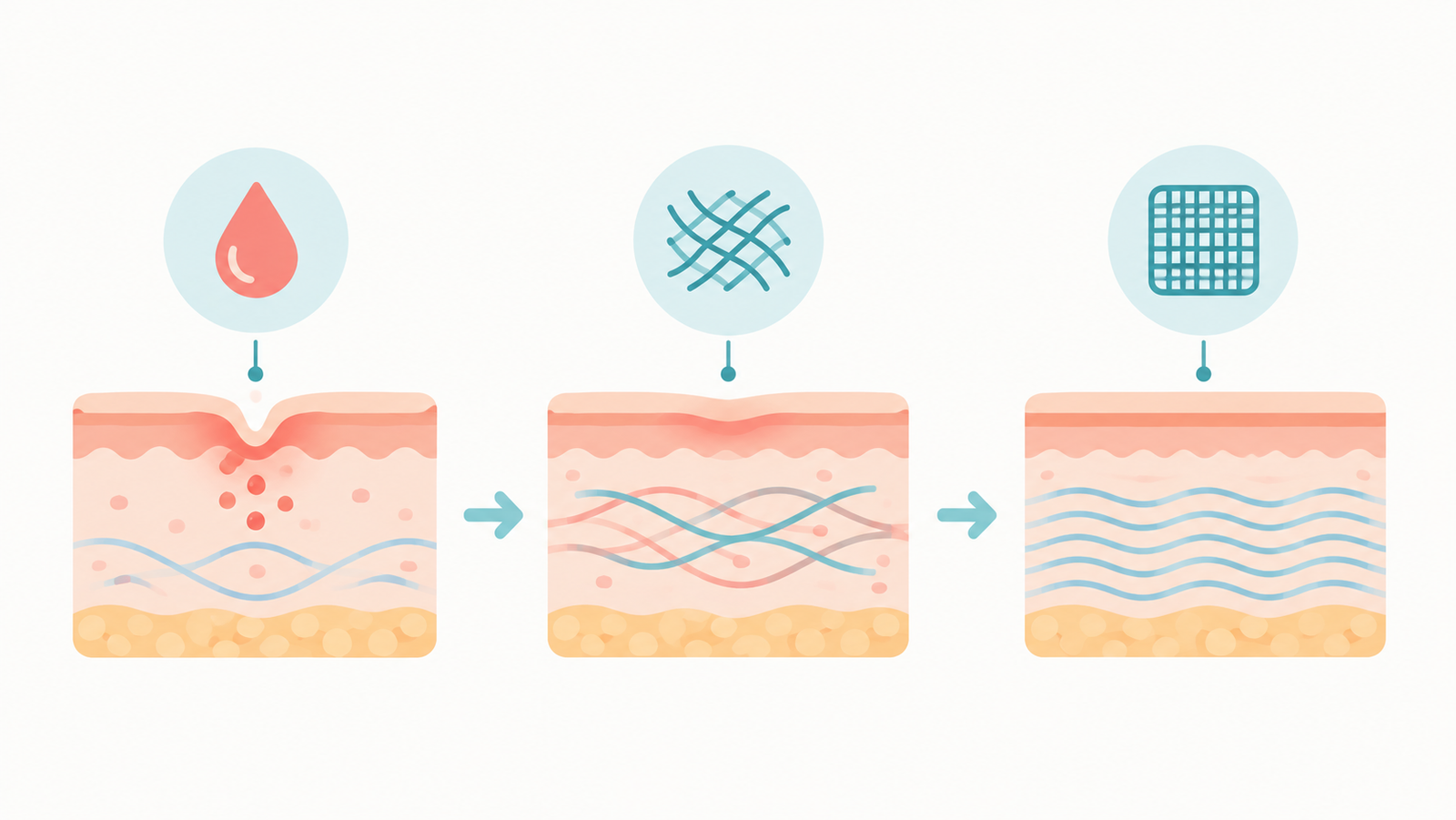
The skin’s response to micro needling unfolds in three overlapping stages, each doing a different job.
In the first couple of days, the tiny punctures cause minor bleeding beneath the surface, and the body’s clotting and repair signals flood the area. This early signaling is what calls in the cells responsible for cleaning up and rebuilding.
Over the next two weeks, those cells get to work laying down a temporary, flexible type of collagen as a first draft of new tissue, along with fresh elastic fibers and new tiny blood vessels to support the area. This is why early improvement in skin texture is often noticeable within a few weeks.
Over the following three to six months, the skin replaces that first-draft collagen with a stronger, denser, more organized type – the kind that actually gives skin its long-term firmness and thickness. This slow swap is exactly why micro needling results keep improving well after the visible redness has settled, and why realistic expectations should be set in months, not days.
Diagnosis: Who Tends to Benefit Most
A dermatologist typically considers a few factors before recommending micro needling:
- Primary concern: Fine lines, uneven texture, mild laxity, enlarged pores, and early photodamage tend to respond well; very deep structural laxity usually needs a different or combined approach.
- Skin tone: Because micro needling doesn’t rely on heat targeting pigment the way some lasers do, it generally carries a lower risk of pigment-related side effects across skin tones – though energy-based versions still need tailored settings.
- Realistic timeline expectations: Someone expecting dramatic overnight change needs a different conversation than someone comfortable with gradual improvement building over several months.
- Whether radiofrequency energy adds value: For more noticeable skin laxity, combining micro needling with radiofrequency heat is often considered, since it adds a tightening effect beyond what mechanical needling alone provides.
Treatment: What a Session and Recovery Actually Involve
A typical microneedling session starts with a numbing cream applied to keep the procedure comfortable, followed by the device being passed evenly across the treatment area. Most sessions take around 30 to 45 minutes depending on the area being treated.
Immediately afterward, skin looks and feels similar to a mild sunburn – pink, slightly warm, and a little tight. This typically settles within one to three days for standard micro needling, sometimes slightly longer when radiofrequency energy is added. During this window, gentle skincare and daily sunscreen matter more than usual, since the skin is in an active repair phase. Most people need a series of sessions spaced four to six weeks apart to get the full benefit, since each session adds to the collagen-building process already underway from the last one.

Getting More From Each Session: What Pairs Well With Micro needling
Because the tiny channels micro needling creates temporarily allow much deeper absorption into the skin, certain topical ingredients applied right after a session can meaningfully boost results. Vitamin C supports the collagen-building process directly at a cellular level, while gentle growth-factor serums can help speed healing and improve outcomes. These additions aren’t essential, but they’re commonly used to get more out of each session rather than relying on the needling alone.
Radiofrequency micro needling takes this a step further by adding controlled heat through the same needles, which creates an additional tightening effect alongside the collagen-rebuilding response – often chosen for skin with more noticeable looseness rather than fine lines alone.
What the Research Shows
Published dermatologic research supports several specific points about how micro needling works and what it achieves:
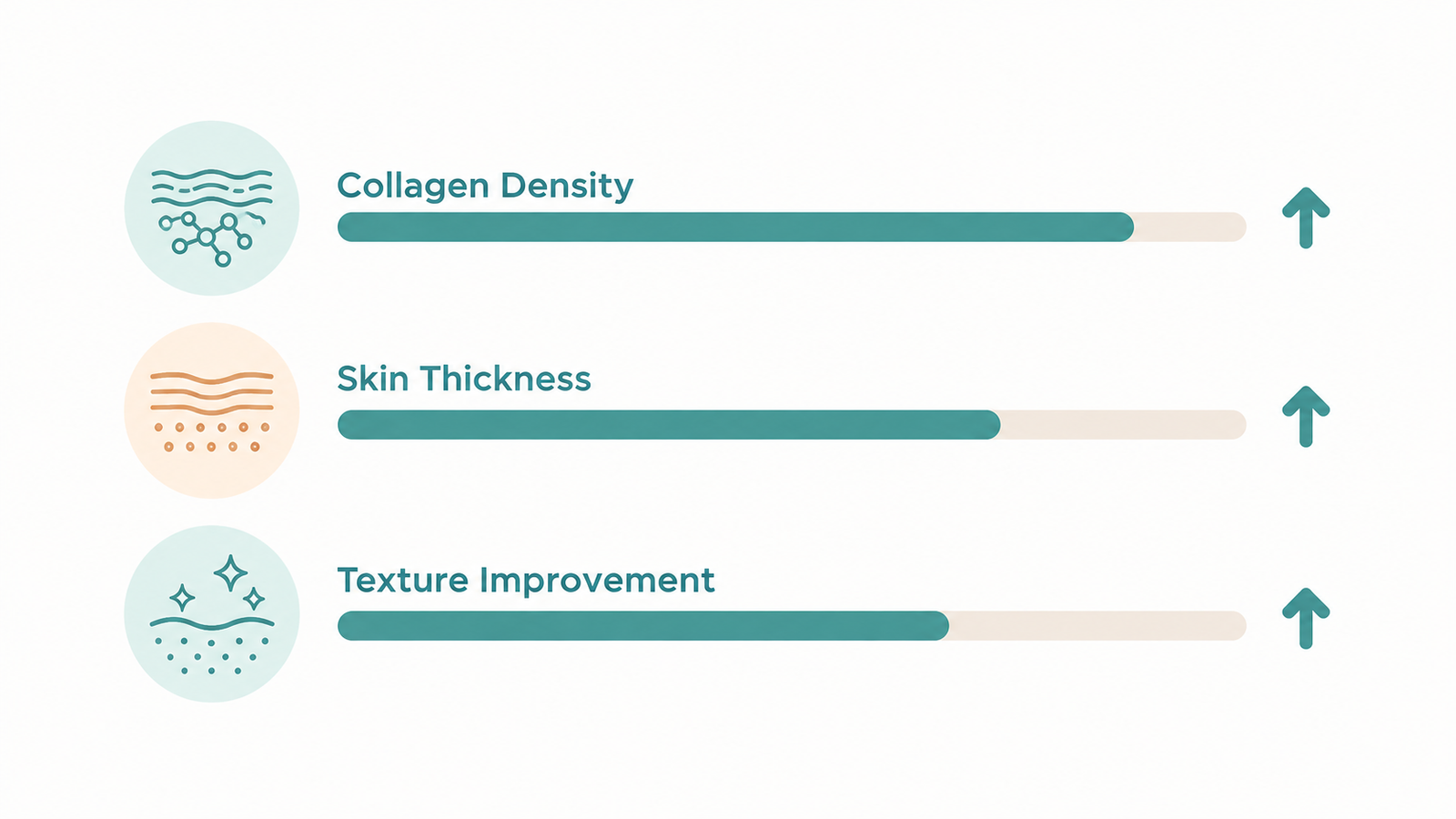
- New collagen is measurable, not just a marketing claim: Histological studies – biopsies examined under a microscope – consistently show significant increases in collagen density following a series of micro needling sessions, confirming real structural change rather than just surface-level improvement.
- Collagen remodeling takes months, not days: Research tracking tissue changes shows the skin’s first-response collagen gradually replaced by stronger, denser collagen over three to six months, explaining why results continue improving long after redness settles.
- The rebuilt structure lasts for years: Follow-up studies show the new collagen framework remains structurally stable for roughly five to seven years before naturally breaking down, supporting micro needling’s reputation for lasting improvement.
- It also thickens and strengthens the outer skin layer: Research shows meaningful increases in epidermal thickness after treatment, which helps explain improvements in overall skin resilience and texture, not just fine lines.
These findings reflect published dermatologic research; individual results vary by skin condition, number of sessions, and aftercare followed.
Doctor Review Block
This article has been medically reviewed by Dr. Tejansu Dalal, MD (Dermatology), for clinical accuracy. Micro needling’s results come from a genuine, well-documented biological repair process –
References & Citations
This article draws on dermatologic research on percutaneous collagen induction, including findings published by the National Center for Biotechnology Information on micro needling’s clinical applications and mechanisms, and reference material from the National Institutes of Health on micro needling procedures and safety. Clinical outcome figures reflect published dermatologic histological studies.