
Not every glowing-skin facial works for every skin type – and picking the wrong one can actually leave you with irritation or dark patches instead of a glow. This guide breaks down which facial treatment genuinely suits oily, dry, sensitive, and pigmentation-prone skin.
The right facial depends on your skin type and concern, not personal preference alone: oily or acne-prone skin generally responds best to deep-cleansing treatments paired with targeted light therapy, dry or photoaged skin benefits from hydrating exfoliation and collagen-stimulating light, sensitive or rosacea-prone skin needs gentler, low-pressure options, and pigmentation-prone or darker skin tones require carefully selected, slower-penetrating exfoliants to avoid worsening dark patches. Choosing based on skin biology rather than trend avoids the irritation and pigmentation problems that come from a mismatched treatment.
Key Takeaways
- Darker skin tones are more prone to dark-patch formation after aggressive exfoliation, so gentler, larger-molecule ingredients matter more than treatment intensity.
- Fair skin tolerates deeper exfoliation well but is more prone to sun-related damage and redness.
- Sensitive and rosacea-prone skin should avoid abrasive or high-strength treatments entirely, regardless of skin tone.
- Stopping retinoids and strong actives a few days before any facial treatment meaningfully reduces the risk of irritation or burns.
- A facial chosen to match your specific skin concern outperforms a generic, one-size-fits-all treatment.
Introduction
Walk into any salon or clinic and you’ll find a long menu of facials – HydraFacial, chemical peels, LED light therapy, carbon peels – each promising glowing skin. But the treatment that works beautifully for one skin type can genuinely backfire on another, particularly when skin tone and specific concerns like acne, dryness, sensitivity, or pigmentation aren’t factored in. This guide walks through how professional facials are actually matched to skin type and concern, so you can make a more informed choice than simply picking whatever’s trending.
Why Skin Type Matters for Facial Selection?
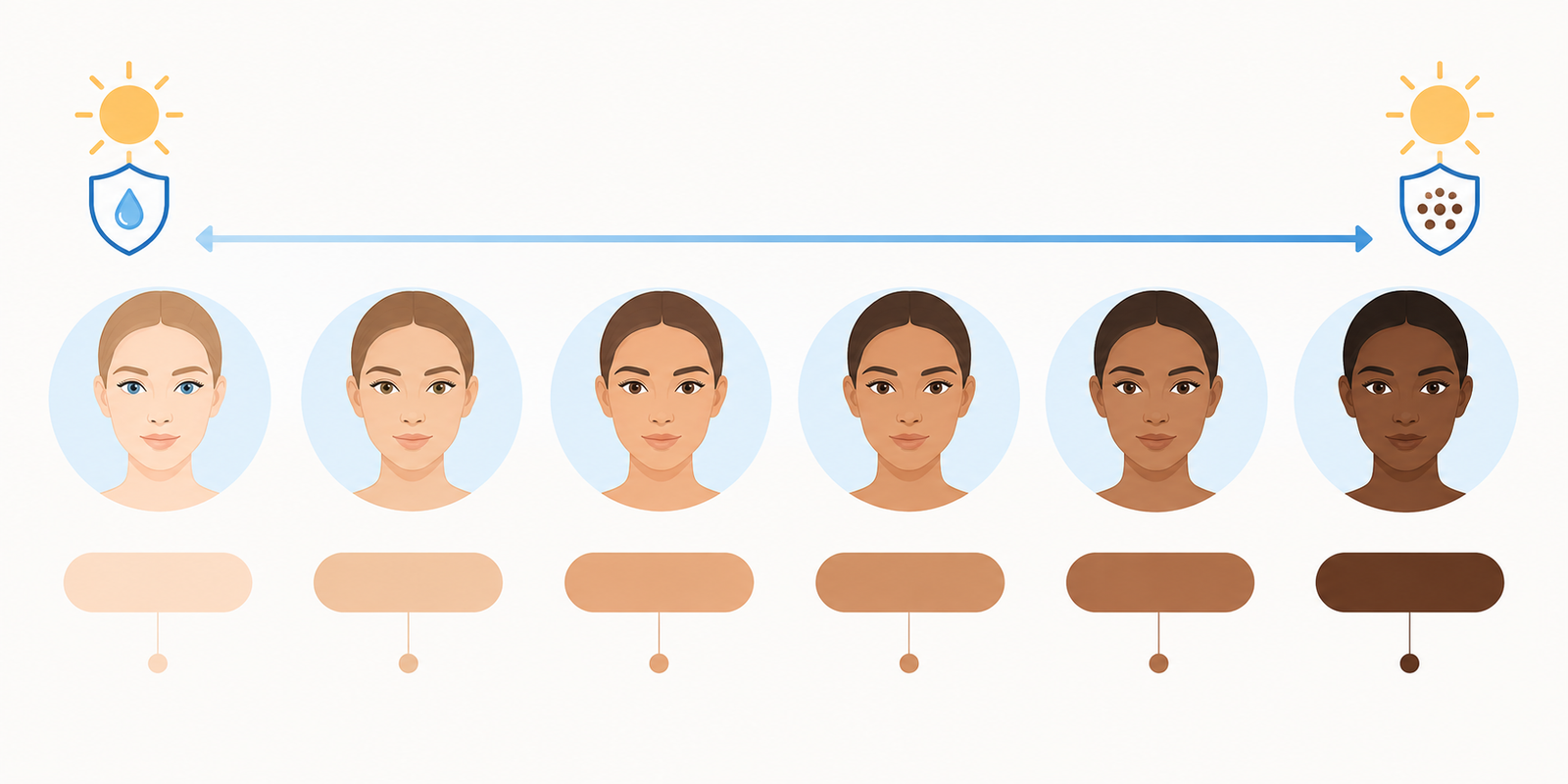
Professional facials work by intentionally creating controlled change in the skin – through exfoliation, light exposure, or infusion of active ingredients – and how your skin responds to that change depends heavily on its baseline biology. Skin is broadly classified using the Fitzpatrick Skin Type scale, which ranges from very fair skin that burns easily to deeply pigmented skin that rarely burns. This classification matters because different skin tones carry meaningfully different risks when exposed to the same treatment, particularly around pigmentation changes after the skin has been irritated or injured.
Clinical Overview
Fairer skin tones generally tolerate deeper exfoliating treatments well, since they carry a lower risk of post-treatment dark patches, but they are more vulnerable to sun-related damage, redness, and visible aging over time – making treatments that stimulate collagen and repair particularly beneficial. Deeper skin tones, on the other hand, have more reactive pigment-producing cells that respond to injury or irritation by producing excess pigment, which is why aggressive exfoliation or high-strength chemical treatments carry a real risk of leaving dark patches behind rather than the intended glow.
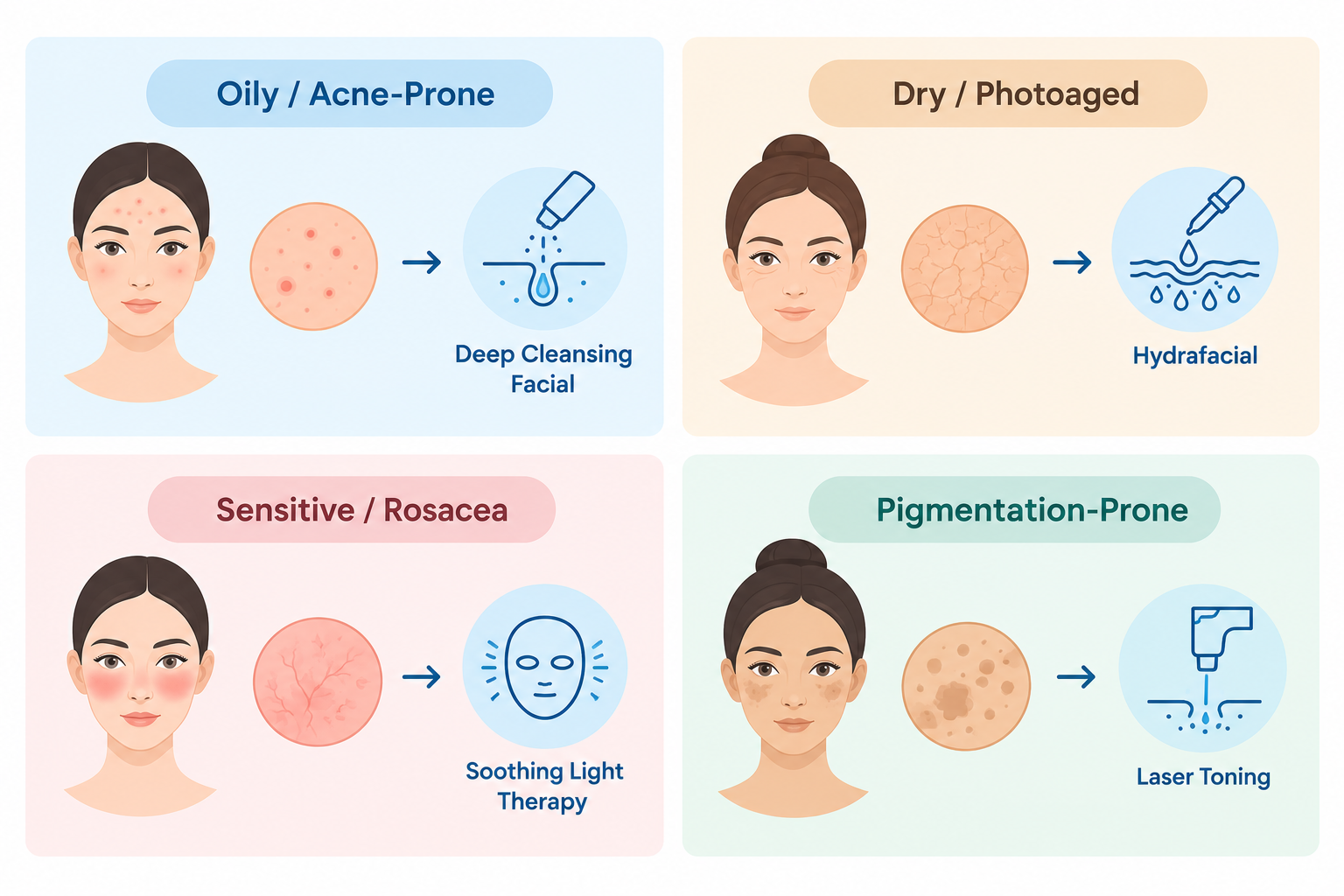
Skin concern matters just as much as tone. Oily, acne-prone skin needs treatments that clear clogged follicles and reduce bacterial activity. Dry, photoaged skin benefits most from hydration and collagen-stimulating approaches. Sensitive or rosacea-prone skin requires gentle handling that avoids triggering flushing or inflammation. And skin with existing pigmentation concerns needs a careful, slower approach that won’t provoke further discoloration.
Diagnosis
Before recommending a facial treatment, a proper skin assessment considers:
- Skin tone and sun-reactivity: How the skin has historically responded to sun exposure helps place it on the Fitzpatrick scale, which directly informs treatment intensity and ingredient selection.
- Barrier function: Assessing how well the skin retains moisture and resists irritation determines whether it can tolerate more active treatments or needs a gentler approach.
- Active concerns: Identifying whether the primary issue is oiliness and breakouts, dryness and fine lines, redness and sensitivity, or existing dark patches shapes which treatment modality is prioritized.
- Current skincare and medication use: Recent use of retinoids, strong exfoliating acids, or certain medications needs to be flagged, since these can significantly increase sensitivity to a professional treatment.
- Contraindication screening: Active breakouts of certain infections, open wounds, or a recent flare of a skin condition may mean postponing a treatment altogether until the skin has settled.
This assessment is what separates a facial genuinely suited to your skin from one that simply happens to be popular that season.
Treatment Options by Skin Type
Oily and Acne-Prone Skin
Deep-cleansing, pore-clearing treatments that use gentle acid-based exfoliation to dissolve clogged follicles work well here, often followed by targeted light therapy that specifically reduces acne-causing bacteria without heat or downtime.
Dry and Photoaged Skin
Hydrating exfoliation followed by infusion of moisture-binding ingredients addresses surface dryness, while light therapy in the red and near-infrared range supports collagen production for firmer, more resilient skin over time.
Sensitive and Rosacea-Prone Skin
Low-pressure, non-abrasive approaches paired with gentle, soothing ingredients are essential here – anything abrasive or high-strength risks triggering more redness and irritation rather than improvement. Calming light therapy can support barrier repair without added trauma to reactive skin.
Pigmentation-Prone Skin and Darker Skin Tones
A slower, more conservative approach using larger-molecule exfoliating ingredients reduces the risk of triggering further dark patches, and pre-treatment preparation with pigment-regulating ingredients for a few weeks beforehand can further reduce this risk.
Clinical Trial Data
Research on professional facial treatments shows some consistent, evidence-supported patterns:
- HydraFacial-style hydradermabrasion treatments have shown statistically significant reductions in acne lesion counts and comedones across a series of sessions, with high tolerability reported across a range of skin tones.
- Larger-molecule exfoliating acids are consistently associated with slower, more even penetration into the skin, which reduces the risk of localized irritation compared to smaller-molecule acids in the same treatment class.
- Medium-depth chemical peels show effective collagen-stimulating results for fine lines and photoaging in fairer skin tones, but carry a meaningfully elevated risk of pigmentation changes and scarring in darker skin tones unless carefully modified.
- Red and near-infrared light therapy has been shown to increase collagen synthesis and support tissue repair, making it a useful addition following resurfacing treatments across virtually all skin tones.
- Blue light therapy has demonstrated targeted antibacterial effects against acne-causing bacteria without the thermal damage associated with more aggressive acne treatments.
These findings reflect published dermatology and cosmetic research; individual results depend on skin type, treatment history, and how consistently any recommended aftercare is followed.
Facial Treatments Explained
| Treatment Type | Best Suited For | Typical Downtime |
|---|---|---|
| HydraFacial-style hydradermabrasion | Nearly all skin types, especially oily/congested skin | None |
| Superficial chemical peel | Active acne, mild pigmentation, most skin tones | 1–3 days mild peeling |
| Medium-depth chemical peel | Fine lines, photoaging (fairer skin tones) | 7–14 days |
| LED light therapy | Acne, redness, post-procedure recovery, all skin tones | None |
| Carbon peel facials | Oily skin, dullness, pore refinement | Minimal |
Always disclose your current skincare routine – including any retinoids or strong exfoliating acids – before a professional facial, since these need to be paused beforehand to avoid irritation or chemical burns.

Doctor Review Block
This article has been medically reviewed by Dr. Tejansu Dalal, MD (Dermatology), for clinical accuracy. Facial treatment recommendations should always be personalised through an in-person skin assessment, since skin type, tone, and concern all meaningfully affect which treatment is appropriate and safe.
References & Citations
This article draws on dermatology and cosmetic dermatology clinical literature, including research published by the National Institutes of Health on treatment approaches for darker skin tones, and clinical reference material from the National Center for Biotechnology Information on chemical peel classification and safety. Treatment outcome figures reflect published dermatology and cosmetic research.