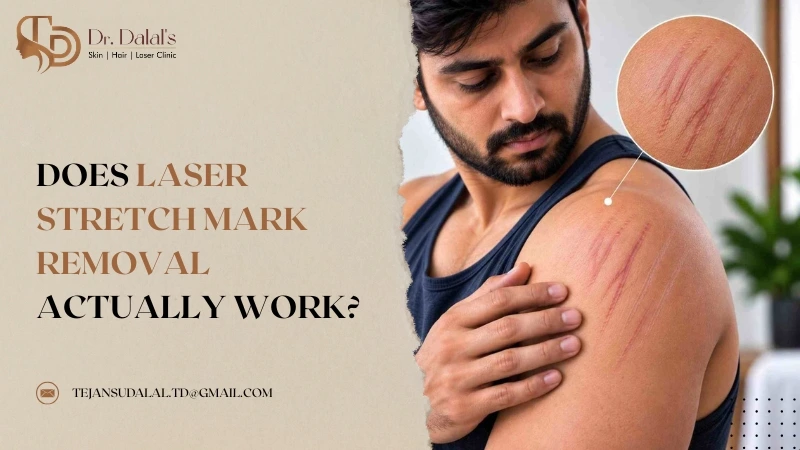
Stretch marks affect most people at some point – through growth spurts, pregnancy, or weight change – and laser treatment is one of the most researched options for reducing how they look. But “does it work” has a more specific, honest answer than most marketing suggests.
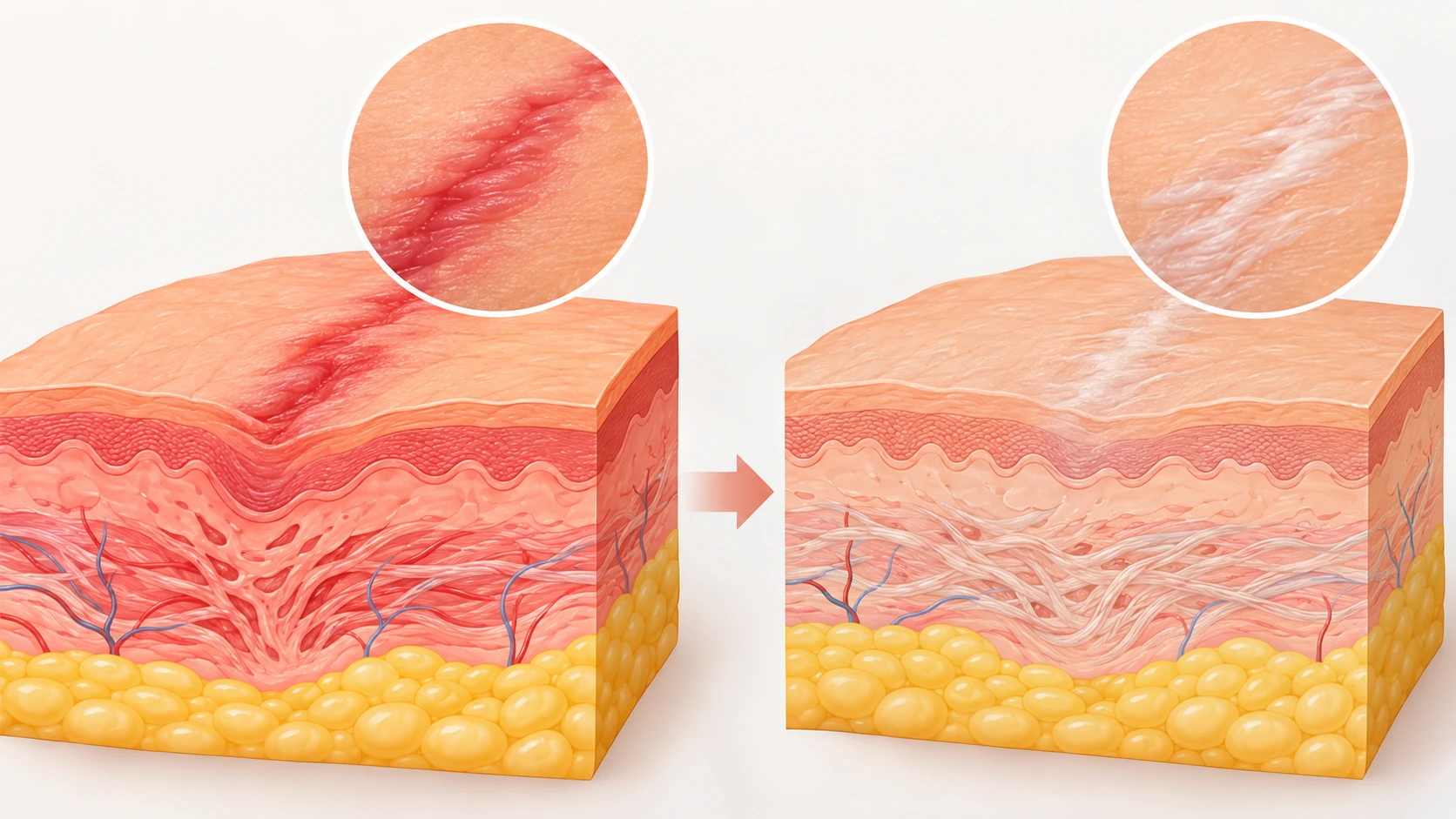
Laser treatment does not completely erase stretch marks, but well-matched laser technology produces real, measurable reductions in their width, depth, and color. The honest clinical answer is that laser stretch mark removal works as a significant improvement tool, not a complete erasure tool – and which laser works best depends heavily on whether the stretch marks are newer (reddish) or older (pale and flattened).
Key Takeaways
- No current laser technology fully erases stretch marks – but several types produce genuine, measurable improvement in width, depth, and color.
- Newer, reddish stretch marks respond well to vascular-targeted lasers, while older, pale stretch marks need lasers that rebuild deeper tissue structure instead.
- The age of a stretch mark isn’t actually what decides treatment success – its width and depth matter more, even for marks that are decades old.
- Combining treatments, such as a gentler laser pass before a stronger one, often produces better results than relying on a single laser type alone.
- Skin tone affects which laser is safest – some laser types carry a higher risk of dark or light patches in deeper skin tones, so the right choice isn’t one-size-fits-all.
Introduction
Search “laser stretch mark removal” and you’ll find plenty of confident claims about erasing stretch marks completely. The real clinical picture is more nuanced – and more useful to actually understand before booking a treatment. This article walks through what laser treatment genuinely does to stretch marks, why the type of laser matters more than most people realize, and what a realistic, evidence-based outcome actually looks like.
What Stretch Marks Actually Are Beneath the Surface
Stretch marks form when skin stretches faster than its deeper structural fibers can keep up, causing tears in the dermis – the layer beneath the surface that holds collagen and elastic fibers. In their early stage, this shows up as reddish or purplish raised lines, since the area is still inflamed and full of small dilated blood vessels. Over time, as the inflammation settles, the area flattens and fades to a pale, slightly indented line as the torn fibers are replaced with denser, less elastic scar-like tissue.
This progression matters directly for treatment, because a laser that works well on the early, blood-vessel-rich stage often does almost nothing for the older, pale stage – and vice versa.
Clinical Overview: Why One Laser Doesn’t Fit All Stretch Marks
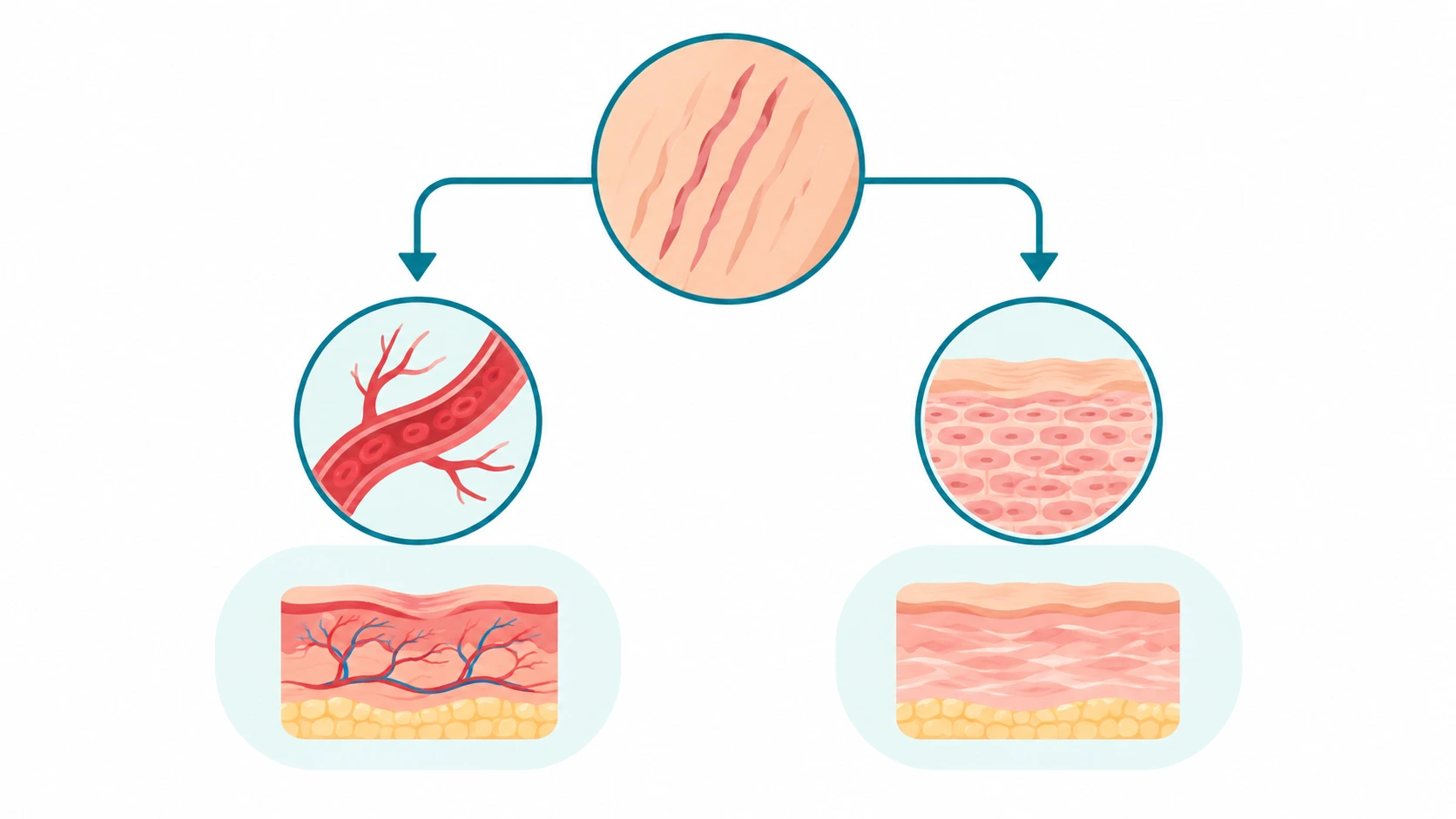
Lasers work by targeting a specific structure in the skin – commonly blood vessels, water, or pigment – with light tuned to that structure’s absorption. Early, reddish stretch marks are rich in small blood vessels, so vascular-targeted lasers can address the redness effectively and even slow down the mark’s progression toward its paler, more permanent stage.
Older, pale stretch marks no longer have that blood-vessel target. Instead, treatment has to focus on triggering new collagen growth and rebuilding the damaged dermal structure – which calls for lasers that create controlled, microscopic injury zones that stimulate the skin’s own repair process. This fundamental difference is exactly why the “right” laser genuinely depends on what stage a stretch mark is currently in, not on marketing claims about any single device being universally best.
Diagnosis: Matching the Right Laser to the Right Stage
A dermatologist typically evaluates a few specific things before recommending a laser approach:
- Color and age of the stretch mark: Reddish or purplish marks point toward vascular-targeted treatment, while pale, flattened marks point toward resurfacing-style lasers.
- Width and depth, not just how old it looks: Research shows that a stretch mark’s width and depth predict treatment response far better than how many years old it is – a decades-old mark can still respond well if it’s shallow, while a wide, deep one takes more sessions regardless of age.
- Skin tone: Deeper skin tones carry a higher risk of pigment changes from certain laser types, which shifts the recommendation toward gentler, non-ablative, or non-laser options like radiofrequency microneedling.
- Realistic goals: Someone expecting complete erasure needs a different conversation than someone looking for meaningful fading and texture improvement – the treatment plan should match the actual expectation.
Treatment: What the Laser Session Actually Involves
Treatment for stretch marks is typically delivered over a series of sessions spaced several weeks apart, rather than as a single procedure. Early, reddish stretch marks generally respond faster, often needing fewer sessions to see meaningful fading. Older, pale stretch marks require a longer course, since the goal is gradually rebuilding dermal structure rather than simply calming existing inflammation.
Many dermatologists now combine approaches for better results – for example, using a gentler laser pass first to prime the tissue before a stronger resurfacing laser, or combining laser treatment with platelet-rich plasma to speed healing and improve outcomes. Non-laser alternatives, such as radiofrequency microneedling, are also increasingly used, particularly for people with deeper skin tones who face a higher risk of pigment changes from certain laser types.
Across all approaches, downtime and side effects like temporary redness or swelling are expected, and the degree varies by which specific technology is used.
What the Research Shows
Clinical research on laser treatment for stretch marks consistently supports a few key points:
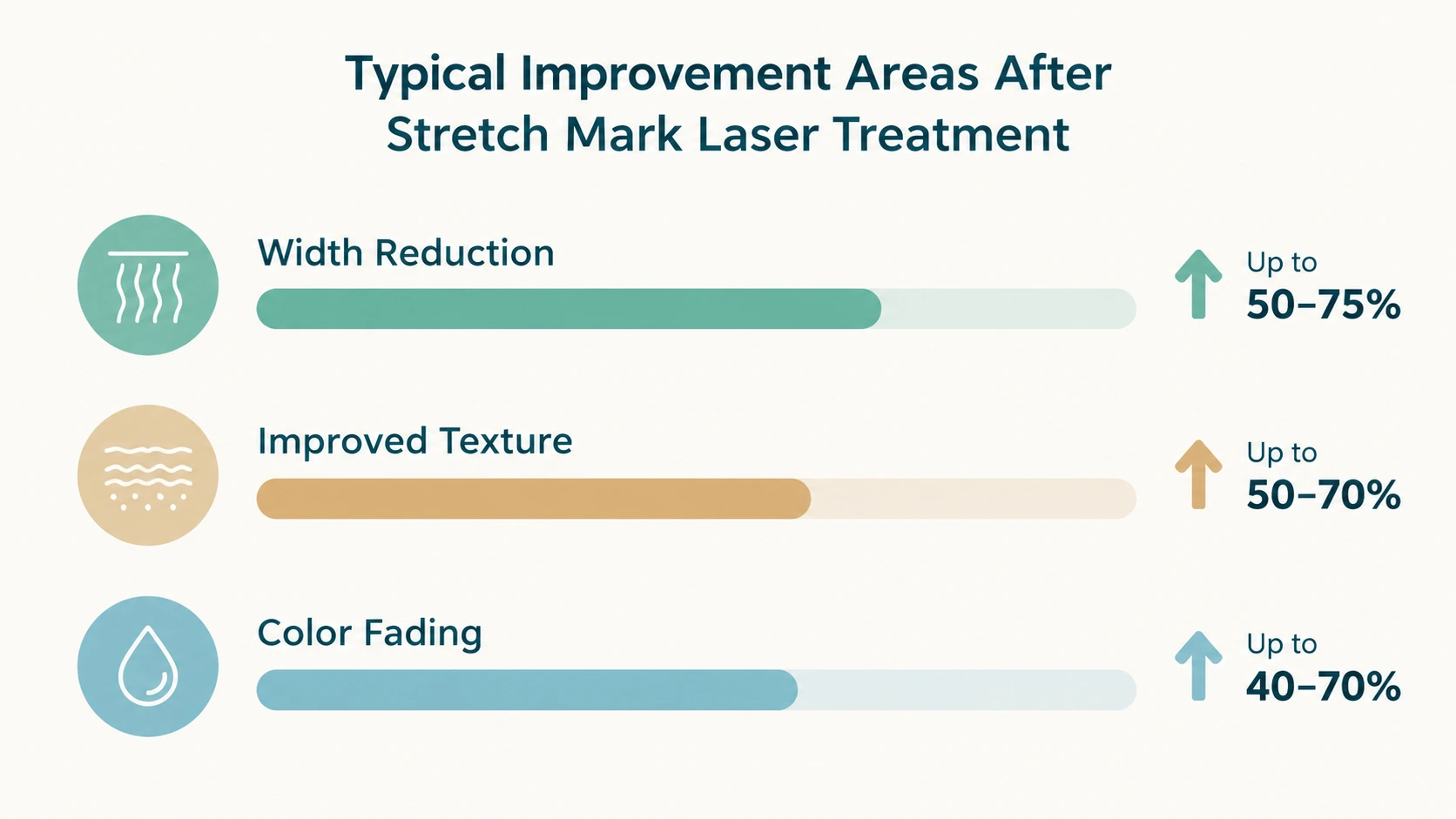
- Real, measurable improvement: Multiple published studies report significant reductions in stretch mark width and length following a series of laser sessions, with consistent patient satisfaction, though complete disappearance is not reported as an achievable outcome.
- Stage-specific response: Vascular lasers show strong results specifically for early, reddish stretch marks, while that same technology shows little to no benefit once marks have matured and paled.
- Width and depth over age: Research following stretch marks ranging from very recent to several decades old found that physical width and depth – not chronological age – predicted how well a mark responded to treatment.
- Combination approaches outperform single treatments: Studies comparing combined treatment protocols against single-laser approaches report measurably better improvement scores with the combined approach.
- Skin tone matters for safety: Research specifically flags a higher risk of pigment-related side effects with certain laser wavelengths in darker skin phototypes, supporting the use of gentler laser types or radiofrequency-based alternatives for these patients.
These findings reflect published dermatologic research; individual results vary based on the specific stretch marks, skin type, and treatment protocol used.
Doctor Review Block
This article has been medically reviewed by Dr. Tejansu Dalal, MD (Dermatology), for clinical accuracy. Laser treatment for stretch marks produces genuine, well-documented improvement – but setting realistic expectations from the start, based on the specific stage and type of stretch marks present, is what leads to the most satisfying outcome.
References & Citations
This article draws on dermatologic laser research, including findings published by the National Center for Biotechnology Information on current treatments for striae distensae, and reference material from the National Institutes of Health on advances in stretch mark treatment technology. Clinical outcome figures reflect published comparative laser studies.