
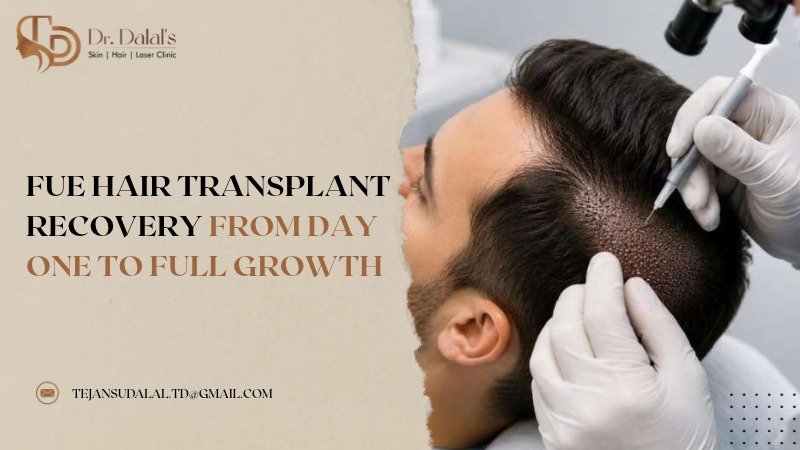
The surgery takes a day, but the result takes more than a year. Between those two points, transplanted hair falls out, the scalp looks bare for weeks, and then new hair slowly grows in. Knowing what each stage looks like is what keeps a normal part of healing from turning into unnecessary worry.
FUE hair transplant recovery happens in two stages: about two weeks of physical healing, followed by many months of hair growth. In the first two weeks, the new grafts settle into the scalp and become fully secure, usually by around day 9, and scabs fall away. Between weeks 2 and 6, most transplanted hairs shed, which is expected. New growth then begins around months 3 to 4, density builds noticeably between months 6 and 9, and final results are generally reached by 12 months, or up to 18 months at the crown.
Key Takeaways
- The first two weeks are about protecting the grafts. They are fragile for the first few days and become fully secure by roughly day 9.
- Shedding of the transplanted hair between weeks 2 and 6 is a normal part of recovery. The roots stay alive beneath the skin and grow new hair later.
- The scalp can look close to its pre-surgery state for a few months, which is the most worrying stage for many patients but is also normal.
- Visible results build slowly: early fine hair around months 3 to 5, a clear gain in density around months 6 to 9, and the final result at about 12 months.
- Following the care instructions on washing, sleeping position, exercise, and sun protection directly affects how many grafts survive and grow.
Introduction
Most people spend a lot of time researching the surgery itself and very little time understanding what recovery actually looks like. That gap causes real anxiety. Hair that falls out after a transplant, a bare scalp at month two, and uneven early growth can all look like failure when they are actually normal stages of healing. This article walks through the recovery in order, from the first day to full growth, so each stage is easier to recognise and understand.
What FUE Hair Transplant Recovery Actually Involves?
In an FUE hair transplant, individual hair follicles are taken from the back or sides of the scalp and placed into tiny channels in thinning areas. Once placed, each graft has been cut off from its blood supply, so recovery is really about the grafts re-connecting to the scalp and then restarting their normal growth cycle.
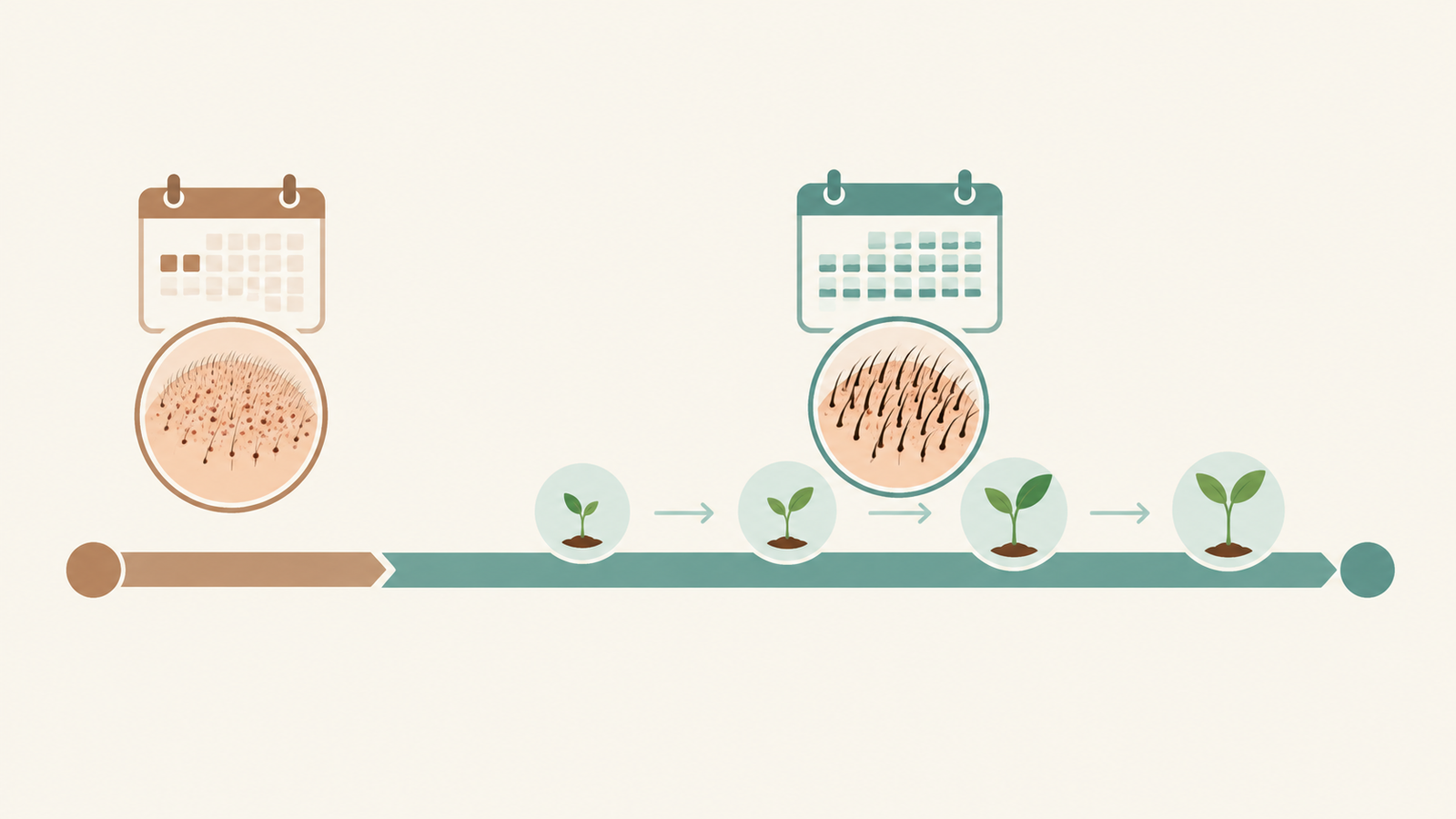
That means recovery has two separate calendars. The first is the physical healing phase of about 14 days, when the grafts anchor in and the scalp settles. The second is the growth phase, which runs from about month 3 to month 12 and sometimes up to month 18. Mixing the two up is why many patients expect visible hair far too early.
Clinical Overview: The First 14 Days of Healing
Right after the procedure, each graft is held in place only by a tiny clot. For the first two days this hold is weak, so touching or pulling the area can remove grafts permanently. By days 3 to 5, new tissue begins forming around each graft and small blood vessels start growing in. By days 6 to 8, blood flow is established and the grafts are much more secure. By around day 9, they are fully anchored and no longer at risk from normal washing or light friction. Complete tissue integration is generally finished by day 14.
Tiny scabs form around each graft within one to two days. They protect the area early on, but they should clear on their own between days 10 and 14. Swelling is also common. The fluid used to numb the scalp can settle down toward the forehead and eyelids around days 2 to 4, and it usually resolves by day 6 or 7. Sleeping with the head raised and using cold compresses on the forehead, never directly on the transplanted area, helps keep this under control.
Diagnosis: What Is Normal and What Needs a Call
Many of the things that worry patients are normal. A few are worth reporting. Your surgeon is the best person to judge, but these are the usual differences:
- Hair shedding vs. a lost graft: Shedding means only the hair shaft falls out, with no tissue attached and no bleeding. A truly dislodged graft comes out with a small pale piece of tissue and a pinpoint of bleeding, leaving a visible empty pore.
- Itching and scabbing: Itching and darkening scabs around days 4 to 5 are common and settle as healing continues.
- Numbness or tingling: Numbness in the donor area is common and usually fades over 2 to 8 weeks as nerves recover.
- Small red bumps at months 2 to 3: These can appear as new hairs push toward the surface. They are usually mild and clear on their own.
- Texture problems: A bumpy surface from grafts placed too shallowly, or small dimples from grafts placed too deeply, are placement issues, not normal healing, and need a surgeon’s review.
Treatment: Aftercare That Protects the Result
Aftercare after an FUE hair transplant is simple but strict, and following it closely is one of the few things patients can control. For the first two days, the transplanted area should not be touched or washed. Gentle washing with a mild shampoo usually starts around day 2 or 3, using poured water and no pressure. From about day 7 or 8, light fingertip massage while washing helps soften the scabs so they come off safely between days 10 and 14.
Other restrictions matter just as much. Heavy exercise and weightlifting are generally avoided for 10 to 14 days, and contact sports for about four weeks. Direct sun on the scalp should be avoided for two to three months, using loose headwear, because the healing skin is easily darkened by sunlight. Swimming pools, sea water, saunas, and steam rooms are avoided for at least four weeks. Medication to slow further hair loss is often continued or restarted within a few weeks of surgery, and minoxidil is usually restarted only after the skin has fully healed, so these should always follow the surgeon’s instructions.

Growth Timeline Guide: Month by Month
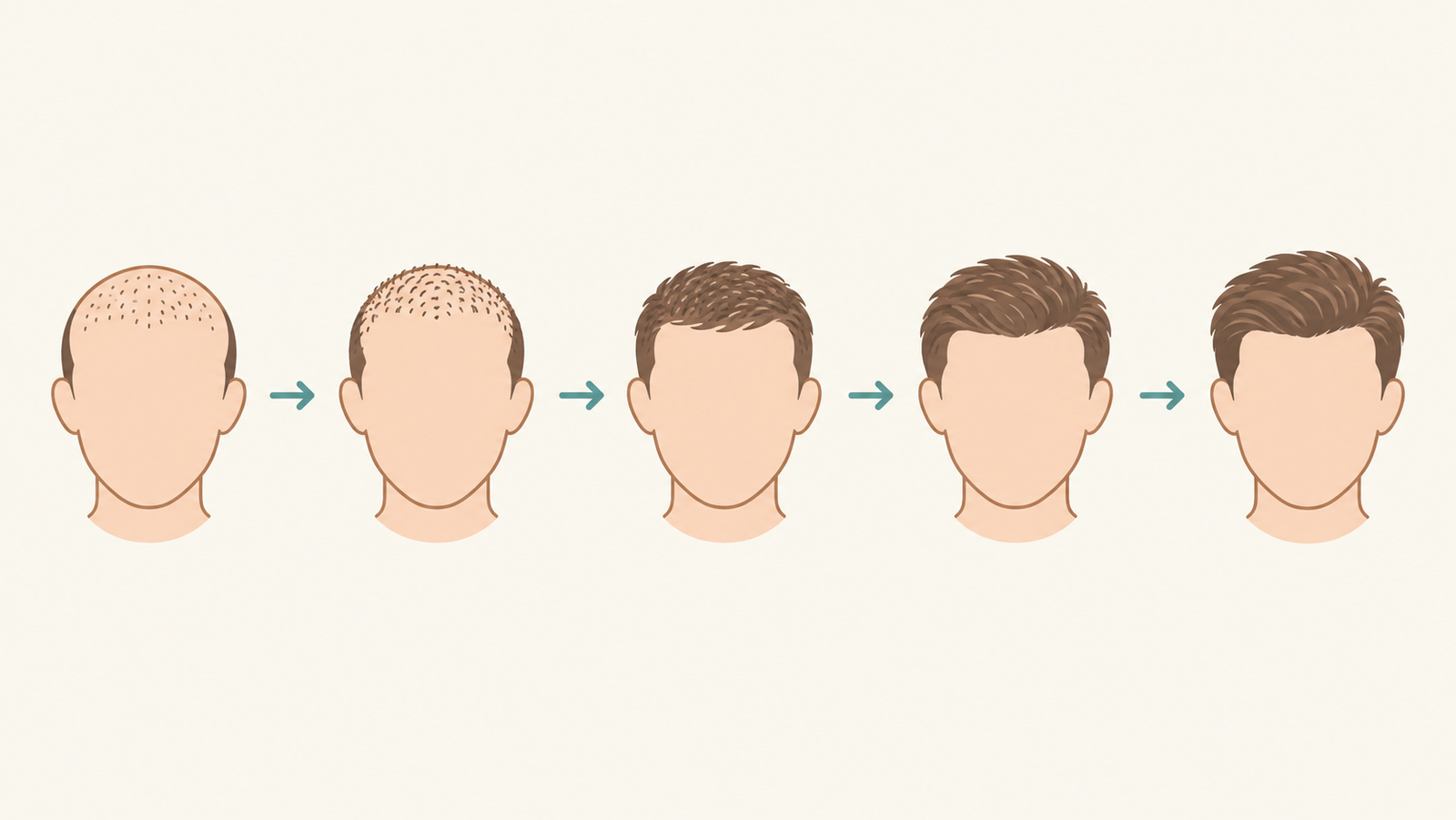
| Time After Surgery | What Is Happening | What You See |
|---|---|---|
| Days 0 to 14 | Grafts anchor in, scabs form and clear | Pinpoint marks, scabs, mild swelling, then a clean scalp |
| Weeks 2 to 6 | Hairs shed as follicles enter a resting phase | Transplanted hair falls out, scalp looks close to pre-surgery |
| Months 2 to 3 | Roots rest and reconnect with blood supply | Surface looks bare, occasional small bumps |
| Months 3 to 5 | New growth cycle begins | Fine, thin, wispy hairs appear, often patchy |
| Months 6 to 9 | Most grafts are growing, hair thickens | Clear gain in density, hair becomes stylable |
| Months 10 to 12 | Hair continues to thicken and darken | Strong density, most of the final result visible |
| Months 12 to 18 | Texture and direction settle | Final result, with the crown often maturing last |
These timelines are typical ranges. Individual growth varies with hair type, scalp health, and how closely aftercare was followed.
What the Research Shows?
Published research on hair transplantation supports several specific points about recovery:
- Graft security follows a predictable timeline: Studies on how grafts anchor show they are weakly held for the first two days, progressively more secure through the first week, and fully secure against normal handling by about day 9.
- Shedding is expected, not a sign of failure: Published reviews describe a temporary resting phase after surgery in which most transplanted hair shafts shed while the roots remain alive and later restart growth.
- Graft handling affects survival: Research on factors affecting follicular graft growth and survival shows that how long and how carefully grafts are stored outside the body influences how well they survive and grow.
- Results build gradually and vary by area: Clinical timelines report that most visible density arrives between months 6 and 12, with the crown often taking longer than the front of the scalp.
These findings reflect published research; individual recovery and results depend on the person and the surgeon’s assessment.
Doctor Review Block
This article has been medically reviewed by Dr. Tejansu Dalal, MD (Dermatology), for clinical accuracy. Most worry after a hair transplant comes from not knowing what normal looks like. Understanding that shedding and a bare-looking phase are expected, and that results take a year or more, helps patients follow aftercare calmly and judge their result at the right time.
References & Citations
This article draws on hair restoration research, including findings published by the National Center for Biotechnology Information on FUE technique and recovery, and reference material from the National Institutes of Health on how grafts anchor after hair transplantation. Recovery timelines reflect published clinical and surgical research.