
When a raised, thick scar keeps growing, the first thought is often simple: “Just cut it off.” It makes sense, but it is also the approach most likely to fail. Surgery alone brings a keloid back in many people, and sometimes it returns bigger than before. Good keloid treatment is less about removing the scar and more about controlling the healing process that created it.
The best keloid treatment is usually a combination, not a single procedure. Removing a keloid with surgery alone brings it back in a large share of people, with reports ranging from about 45% up to nearly all cases. Recurrence falls sharply when surgery is modified or combined with other treatments, such as steroid-based injections, a short course of low-dose radiation, pressure and silicone, or careful freezing from inside the scar. A good plan also includes follow-up, because keloids need monitoring for months after treatment. No treatment can promise a keloid will never return, but the right combination can lower the chance a great deal.
Introduction
A keloid is not an ordinary scar. It keeps growing beyond the original wound, can itch or hurt, and often appears after something as small as an ear piercing, an acne spot or a minor cut. Because it is so visible, many people have tried creams, home remedies or even a quick surgical removal, only to see the keloid return.
This article explains why cutting alone usually disappoints, which treatments lower the chance of regrowth and how treatment is planned for different body areas and skin types. It will help you ask better questions at a consultation.
What a Keloid Is and Why It Forms?
When skin is injured, the body builds scar tissue to close the wound and normally switches the process off once the wound is healed. In a keloid, the switch does not turn off. The scar-making cells keep producing tough collagen, and the scar grows beyond the edges of the original injury, becoming raised, firm and sometimes shiny, red or dark.
Keloids are more common in people with darker skin and in people with a family history of them. They often appear on the earlobes after piercing, and on the chest, shoulders and upper back, where the skin is under constant tension. They can follow even small injuries, such as acne, insect bites or minor surgery.
Diagnosis: Keloid or Another Scar
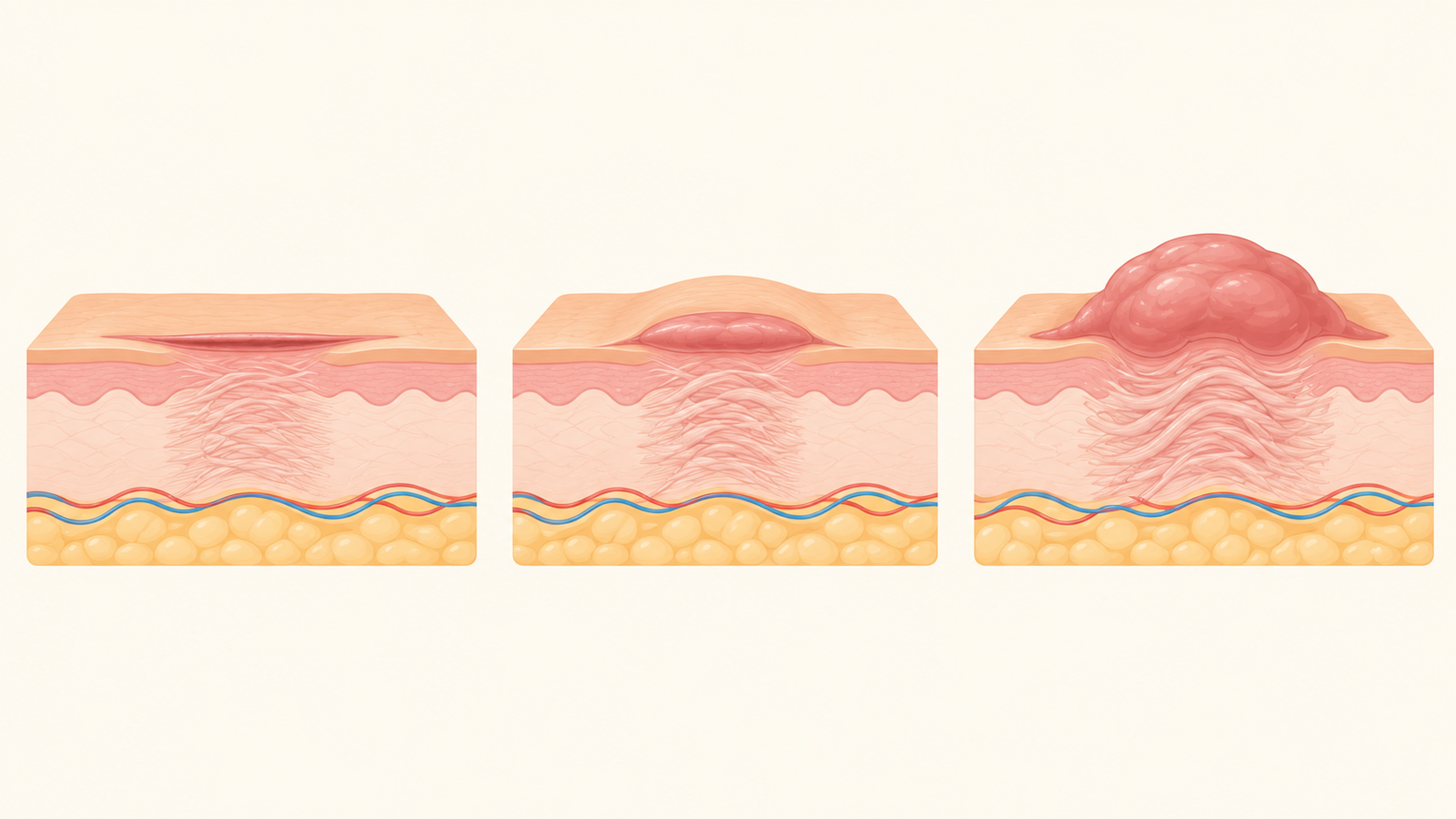
A keloid is told apart from other scars by how it behaves. A hypertrophic scar is also raised but stays inside the original wound and often flattens by itself over time. A keloid spreads beyond the wound, rarely settles on its own and can keep growing for months or years. Acne scars, in contrast, are usually pitted or uneven rather than raised.
A specialist will examine the scar, ask what caused it and how long it has been growing, and check for any history of keloids in your family. Choosing the best dermatologist in Ahmedabad for scar care matters because the same-looking lump can need very different treatment depending on its type, size and site. Rarely, a different skin growth can look like a keloid, so a doctor may advise further testing if the lump looks unusual.
Clinical Overview: Why Cutting Alone Fails
Surgery to remove a keloid is itself a new injury. The wound edges are cut, stitched under tension and begin to heal in the same skin that is already prone to overgrowth. This re-triggers the same abnormal healing, and the scar often returns, sometimes larger than before. Reported recurrence after simple excision ranges from about 45% to almost 100%.
That is why modern care has moved away from cutting out the whole keloid as the only step. Instead, doctors reduce the injury to the surrounding skin and add treatments that calm the scar-making cells:
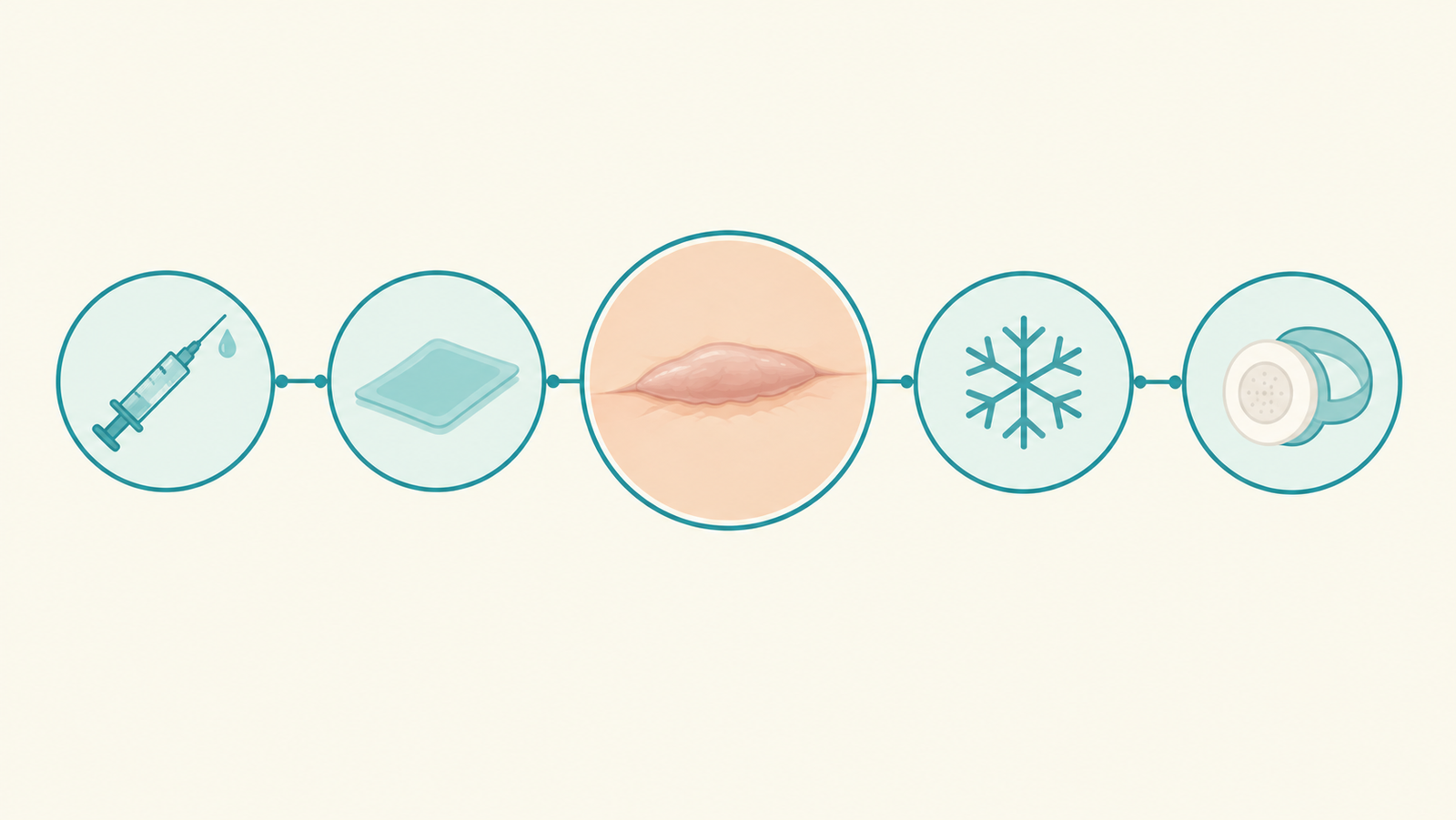
- Steroid and scar-calming injections reduce inflammation and slow collagen production.
- Pressure and silicone make the scar flatter by limiting blood supply and keeping the skin hydrated.
- Short courses of radiation after surgery stop scar cells from multiplying early in healing.
- Freezing from the inside destroys the core of the keloid while protecting the top skin layer.
Using more than one of these together reaches different parts of the problem at the same time.
Treatment: Options That Lower Regrowth
A well-planned keloid treatment starts by matching the approach to the scar. Small, flat or spread-out keloids are often treated without surgery, using regular injections into the scar at intervals, with pressure or silicone to support healing. Thick keloids that stick out, such as those on the earlobe, may need a modified surgery that removes the bulk of the scar but leaves a thin rim of keloid behind, which avoids injuring the surrounding skin and has been shown to lower recurrence.
After surgery, a second step is usually added. This may be a short course of radiation, a combination of injections or, for earlobes, a pressure earring worn for months together with silicone sheeting. Freezing from inside the scar is another option for suitable keloids, and it is gentler on skin colour than freezing the surface, which can leave pale patches in darker skin.
Treatment takes months, not days. Injections are repeated at planned intervals, and follow-up visits catch early signs of regrowth when they are easiest to treat. At a dermato surgery specialist in ahmedabad clinic, keloid care is planned as a series of steps with monitoring, instead of a one-time removal. Common side effects of treatment include pain at the injection site, skin thinning, small visible blood vessels, temporary skin lightening or darkening and slow wound healing, which your doctor will explain and monitor.
What the Research Shows?
Published studies give a clear picture of how much each approach lowers the chance of a keloid returning:
- Cutting alone: Recurrence is reported in about 45% to 100% of cases.
- Modified surgery: Removing the bulk of the keloid but leaving a thin rim reduced recurrence to about 13% in a large combined analysis of over 600 keloids.
- Surgery plus radiation: Recurrence was about 14% to 18% across different ways of giving radiation, with small risks such as redness, skin darkening and slower healing in roughly 9% to 18% of cases.
- Surgery, radiation and an injection combined: Recurrence fell further, to about 8%.
- Steroid injections alone: Up to about a third of keloids returned within a year, and long-term steroid use can thin the skin.
- Earlobe keloids: A pressure earring combined with silicone sheeting after surgery gave recurrence of about 11% to 14%.
- Freezing from the inside: Recurrence of 0% to about 24% was reported, with a keloid volume reduction of roughly half or more, and a lower risk of pale patches than surface freezing.
- Dark skin: In a structured, step by step non-surgical programme, recurrence was very low in darker skin types, though the programme took a long time and needs strict follow-up.
These findings come from published reviews and studies. Your own result depends on the keloid’s site and size, your skin type and how closely the plan is followed.
Treatment Guide by Scar Type
| Keloid Type | Usual First Approach | Added Step to Prevent Regrowth | Common Cautions |
|---|---|---|---|
| Large, raised or hanging keloid, such as on the earlobe | Modified surgery that leaves a thin rim | Short radiation course, injections or a pressure earring with silicone | Needs close monitoring for months |
| Small to medium keloid, or a patient who cannot have surgery | Regular injections into the scar, or freezing from the inside | Injection after freezing, plus pressure or silicone | Pain, skin thinning and colour change are possible |
| Flat, spread-out keloid on chest, shoulder or back | A combination of injections | Light-based treatment, pressure or silicone in suitable cases | Tension-prone sites are more likely to relapse |
| Stubborn keloid in darker skin | A planned step by step non-surgical programme | Gentle pigment care after flattening | Longer treatment time, sun protection needed |
This table shows general patterns. Your doctor decides the exact plan after examining you.
Key Takeaways
- A keloid is a scar that keeps growing beyond the original wound. It is not an ordinary scar and not an infection.
- Surgery alone often fails, with regrowth reported in about 45% to nearly 100% of cases.
- Combining treatments, such as modified surgery, injections, pressure, silicone, radiation or freezing, lowers the chance of regrowth a great deal.
- Darker skin, a family history and tension-prone sites raise the risk, so planning must be individual.
- Treatment takes months and needs follow-up. No one can promise a keloid will never return.
- Do not cut, burn or squeeze a keloid at home, as this can make it larger.
Doctor Review Block
This article has been medically reviewed by Dr. Tejansu Dalal, MD (Dermatology), for clinical accuracy. In my experience, the biggest difference in keloid outcomes comes from avoiding a quick surgical removal on its own. A planned combination with close follow-up gives far better results than any single treatment.
References & Citations
This article draws on published research on keloid recurrence and treatment, including a meta-analysis of keloid excision techniques published by the National Center for Biotechnology Information and a study of surgery combined with additional treatments from the National Institutes of Health. Recurrence figures reflect published clinical studies.