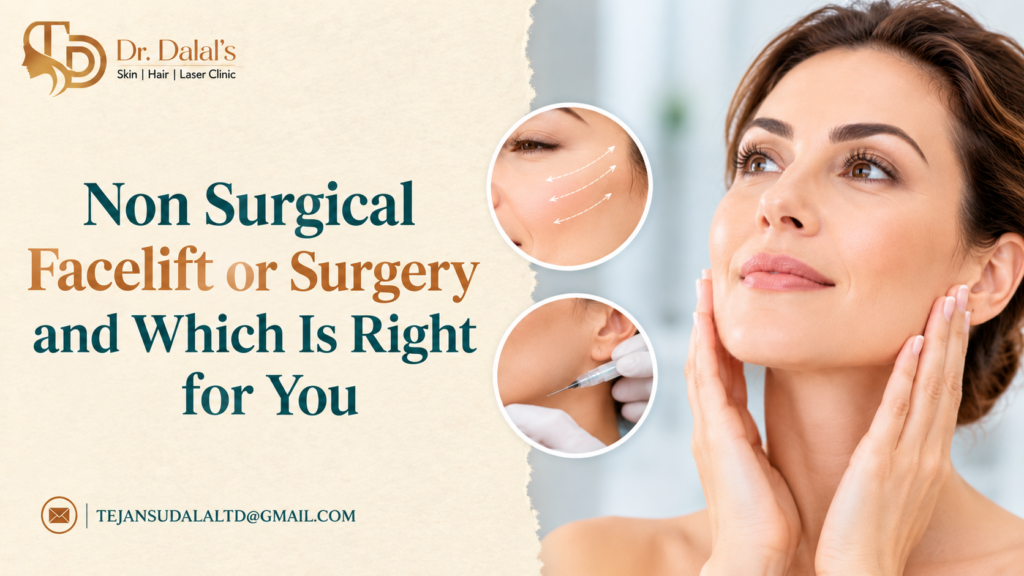
Sagging cheeks, early jowls and lines around the mouth lead many people to ask the same question: should I try a non surgical facelift, or do I need surgery? Both can make the face look fresher, but they work in very different ways. One refines the skin and restores some volume. The other physically repositions tissue that has dropped. This guide explains what each can and cannot do, how long results last and how to decide which one fits your face.
A non surgical facelift suits mild to moderate sagging with fairly firm skin, while surgery is better for significant sagging, heavy jowls and loose neck skin. Non surgical options such as focused ultrasound, threads, radiofrequency and fillers can firm, lift slightly and restore lost volume, with little downtime, but results are temporary and need maintenance. Surgery repositions fallen tissue and removes extra skin, and results last many years, but it needs anaesthesia and a longer recovery. Age alone does not decide it. Your skin quality and how far the tissue has dropped matter more.
Introduction
A face changes with age in two ways. The skin gets thinner and loses firmness, and the deeper layers lose fat and slide downward. Fine lines, a soft jawline and hollow cheeks are the visible result.
Most non surgical treatments work well on the first problem, the skin, and partly on the second. Surgery works directly on the second. Problems arise when treatments are chosen without knowing which problem is the main one. A face with heavy sagging treated only with fillers can end up looking puffy, not lifted. A face with mild changes treated with surgery may be more than needed.
Understanding the difference helps you choose with confidence and avoid wasted effort.
What a Non Surgical Facelift Means
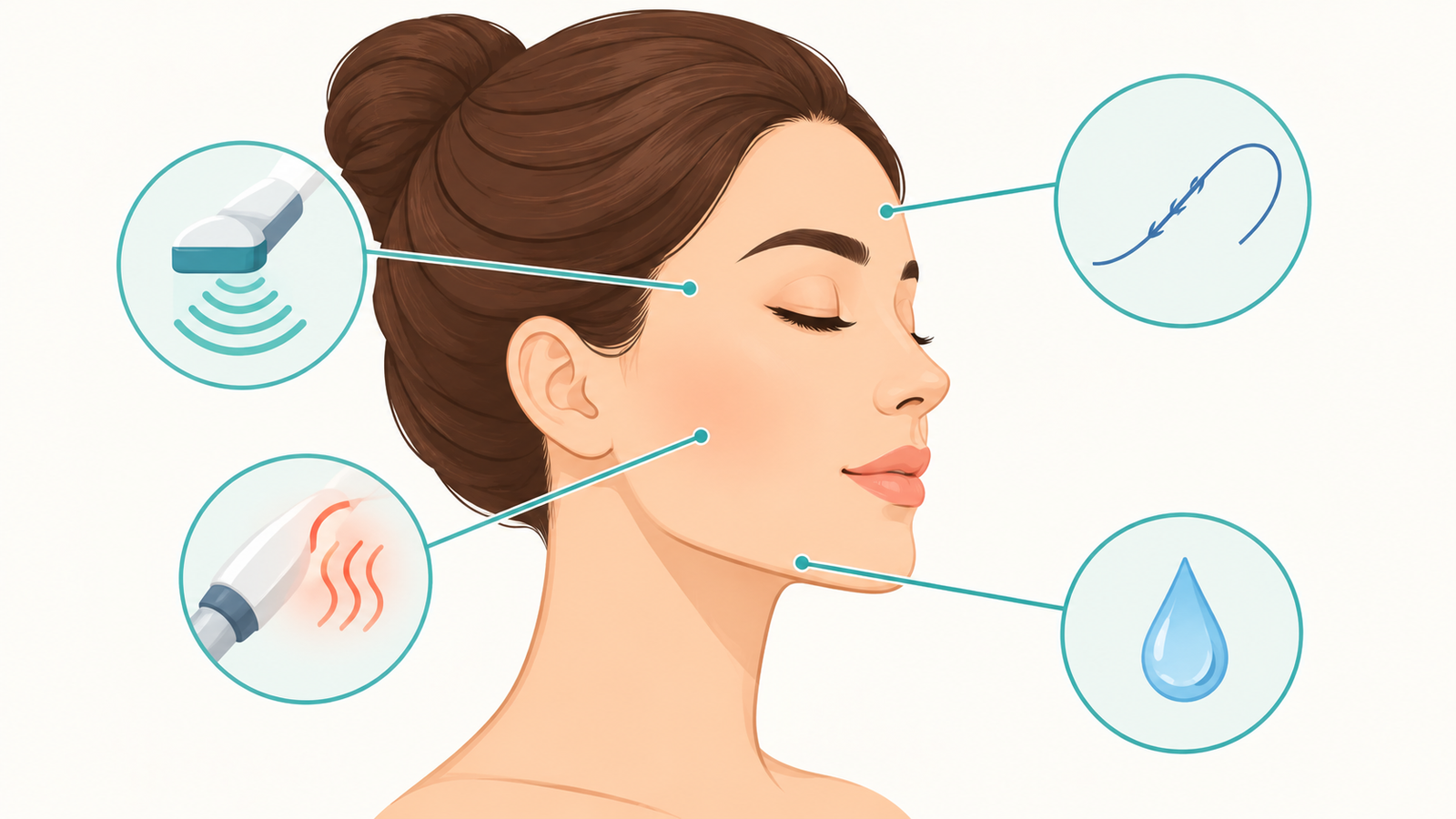
A non surgical facelift is not one single treatment. It is a plan that combines treatments that do not need cuts or general anaesthesia to give a firmer, fresher look. Depending on your face, it may use:
- Focused ultrasound to warm deeper layers and encourage firming over the following months
- Threads that are placed under the skin to give an immediate light lift
- Radiofrequency to tighten the skin gradually
- Fillers to restore volume lost from the cheeks and other areas
- Muscle-relaxing injections to soften lines caused by movement
Most people need only one or two of these, not all of them. A doctor chooses the combination after looking at your skin and your face shape. Be careful with any promise of a “20 minute facelift”. The treatments can take that long, but the results build over weeks to months and do not match surgery.
How Faces Age and Why It Matters
Two things happen together:
- Surface changes: The skin gets thinner and loses firmness. Fine lines, dull texture and mild looseness appear.
- Deep changes: Fat pads shrink and move down, ligaments loosen and bone slowly shrinks. The cheeks flatten, jowls form and lines deepen around the nose and mouth.
Surface changes respond well to non surgical treatments. Deep changes respond only partly, because non surgical treatments can add support and firmness but cannot remove loose skin or fully move fallen tissue back up. This difference is why two people of the same age can need very different plans.
Non Surgical Options Compared
| Option | What It Does | When Results Appear | Usual Length of Results | Downtime |
|---|---|---|---|---|
| Focused ultrasound | Firms deeper layers | Gradually, over a few months | About a year or more | Little or none |
| Threads | Gives a light mechanical lift | Soon after treatment | About a year to two years | A few days |
| Radiofrequency | Tightens skin gently | Gradually | Several months to a year or more | Little or none |
| Fillers | Restores lost volume | Soon after treatment | Many months to about a year and a half | Minimal |
| Muscle-relaxing injections | Softens movement lines | Within two weeks | A few months | Minimal |
These ranges are general patterns from published reports. Your own results depend on your skin, your age and how the treatment is planned.
Where Surgery Does Better
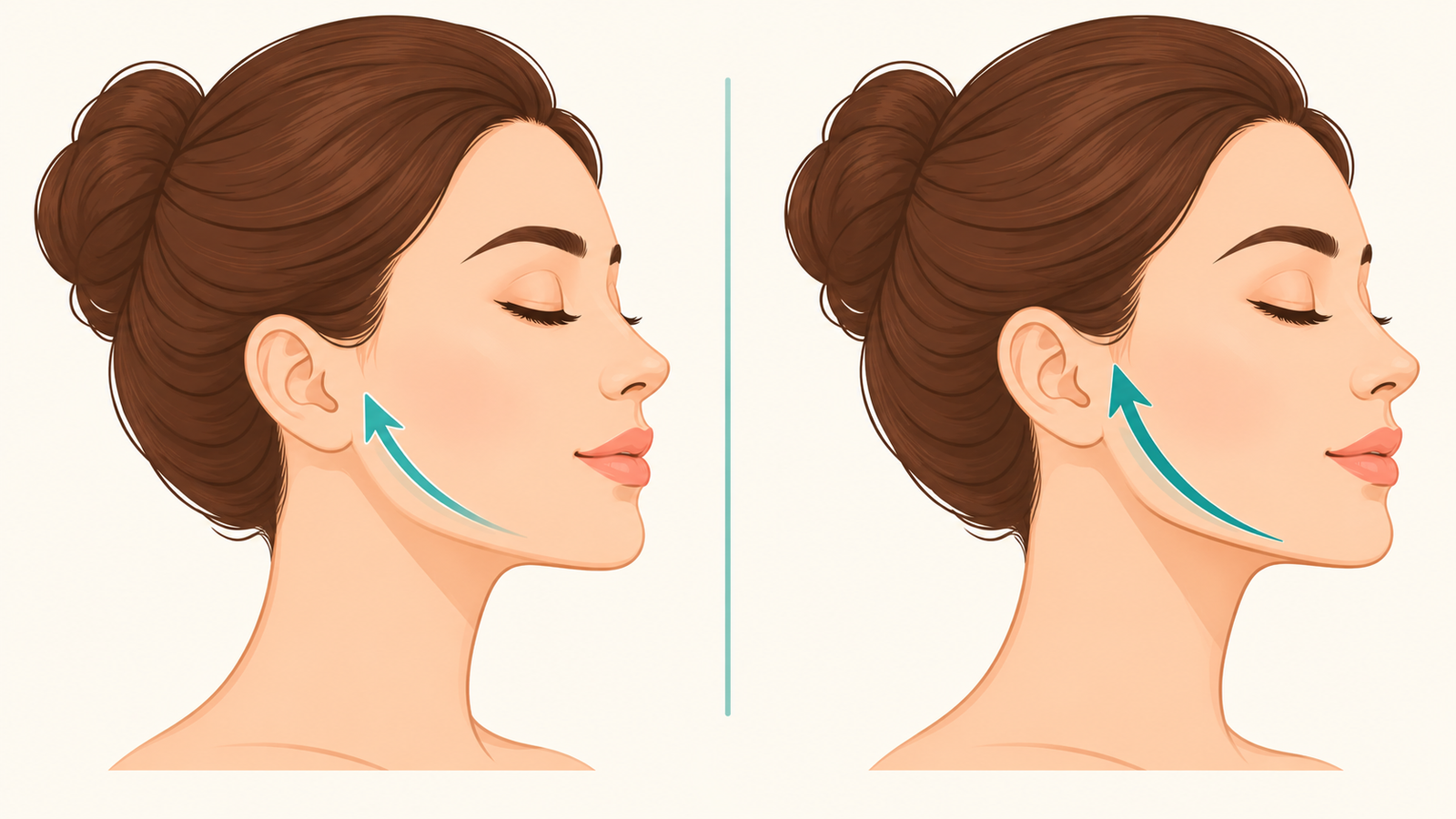
Surgery moves fallen tissue back to a higher position and removes extra skin. This is something non surgical treatments cannot do. It is usually considered when there is:
- Significant skin looseness
- Heavy jowls along the jawline
- Deep folds from the nose to the mouth
- Bands or looseness in the neck
- A face that has already had several rounds of treatment with only brief improvement
Studies of surgical facelifts report high satisfaction, around 9 in 10 people, and results that last many years, often a decade or more. The trade-offs are anaesthesia, a longer recovery of a few weeks, scars hidden near the ears and a small chance of serious problems, which is why the choice needs an experienced surgeon and a careful talk about risks.
What the Research Shows
- Non surgical treatments are good for early changes: Reviews describe injectables, energy devices and threads as effective for surface texture, early volume loss and mild laxity, and for delaying the need for surgery.
- They have limits: They cannot lift fallen deep tissue or remove extra skin. Trying to correct advanced sagging with large amounts of filler or repeated treatments can give poor results.
- Overdoing treatments can distort the face: A review of facial overfilled syndrome describes how repeated or excessive filler can make the face look swollen and unnatural. Careful, measured treatment avoids this.
- Repeated treatments can affect later surgery: Reports suggest that many repeated energy treatments and thread insertions can cause scar-like changes under the skin, which may make a later surgical facelift harder. This does not mean non surgical treatments are unsafe, but it is a reason to avoid endless repeat treatments when a surgical option is likely to suit you better.
- Patients value both options: A study of surgical or nonsurgical facial rejuvenation looked at how people choose between them. Many people begin with non surgical treatments, and a large share later consider surgery.
- Results are temporary and need upkeep: Muscle-relaxing injections last a few months, fillers many months to about a year or more, and energy treatments around a year or longer. Over many years, upkeep can add up in time and effort.
How to Decide Between the Two
A non surgical facelift usually suits you if:
- You see mild to moderate sagging or early jowls
- Your skin is still fairly firm
- You notice fine lines, dull skin or early volume loss
- You want little downtime and a gradual change
- You are happy with maintenance sessions
Surgery may suit you better if:
- You have heavy jowls, deep folds or noticeable looseness in the neck
- Your skin is loose and has little spring
- You want a stronger, longer lasting result
- Non surgical treatments no longer give the change you want
Questions to ask your doctor:
- Is my main problem skin quality, volume loss or dropped tissue?
- What can a non surgical facelift realistically change for my face?
- How long will it last, and what upkeep will I need?
- At what point would surgery make more sense?
A consultation with the best dermatologist in ahmedabad includes a look at your skin, your facial structure and your goals, and an honest recommendation, including when a surgical opinion would be better for you. A planned non surgical facelift usually starts with an assessment, a combination chosen for your face and follow-up to check how the results build. An anti aging treatment doctor in ahmedabad can also plan how to space treatments so that you do not overdo them.
Doctor Review Block
This article has been medically reviewed by Dr. Tejansu Dalal, MD (Dermatology), for clinical accuracy. In my experience, the happiest patients are those who were told clearly at the first visit what a non surgical plan can and cannot do. When someone needs surgery for the result they want, saying so early is better for them than months of treatments that cannot deliver it.
Key Takeaways
- A non surgical facelift is a plan that combines treatments, not one single procedure.
- It suits mild to moderate sagging with fairly firm skin, and gives gradual, natural changes.
- It cannot remove extra skin or fully reposition dropped tissue.
- Surgery suits significant sagging and gives longer lasting results, with more downtime and risk.
- Too many fillers or repeat treatments can distort the face or complicate later surgery.
- Results from non surgical treatment are temporary and need maintenance.
- An honest assessment of your skin and face shape matters more than your age.
References & Citations
This article draws on published research on facial rejuvenation, including a narrative review of facial overfilled syndrome available through the National Institutes of Health, and a study of surgical or nonsurgical facial rejuvenation and the patients’ choice, published through the National Library of Medicine. Durations and satisfaction figures reflect published reviews and general clinical practice.