
Not every scar needs the same fix, and treating a simple, narrow scar the same way as a thick, tight, or deeply indented one rarely gives a good result. Scar revision surgery isn’t a single technique – it’s a set of different approaches, each matched to exactly what kind of scar is actually present.
Scar revision surgery works by surgically re-forming the scar – removing it, redirecting it along the skin’s natural lines, or restoring lost volume beneath it – depending on exactly what kind of problem the scar presents. A simple, narrow scar may need nothing more than careful re-excision and closure. A scar that crosses the skin’s natural movement lines may need to be broken up and redirected. A scar that’s tight enough to restrict movement needs its tension released. And a scar that’s deeply indented from underlying tissue loss may need volume restored beneath it. Matching the technique to the actual scar type is what determines the outcome.
Key Takeaways
- Scar tissue is biologically different from normal skin – it never regains hair follicles or sweat glands, and even once fully healed, it only reaches about 80% of the strength of uninjured skin.
- Timing matters: most scars need 6 to 12 months to fully mature before elective revision, since operating too early can actually make a scar worse.
- Different scar problems need genuinely different surgical solutions – a scar that’s simply wide or noticeable is treated very differently from one that’s tight and restricting movement, or one that’s thick, raised, and prone to returning.
- Scars that are thick, raised, and keep coming back often need more than surgery alone – combining surgery with targeted injections meaningfully lowers the chance of recurrence.
- Aftercare, including silicone sheeting and tension-reducing tape, genuinely affects how well a revised scar heals and whether it stays flat and soft.
Introduction
Scar revision surgery gets talked about as a single, general procedure, but the reality is far more specific. A scar that’s simply a bit wide and noticeable needs a completely different surgical approach than a scar that’s tight and restricting movement, or one that keeps growing back thick and raised no matter what’s tried. This article walks through why scars form the way they do, what separates one problem scar from another, and how surgeons actually choose between a simple excision and a more complex reconstructive approach.
What Makes Scar Tissue Different From Normal Skin?
When skin heals after an injury or surgery, it doesn’t rebuild itself exactly as it was. Instead of the organized, flexible structure of normal skin, scar tissue forms as a denser, less organized collection of fibers that permanently lacks hair follicles and sweat glands. This is exactly why a scar can feel stiffer than the skin around it, and why it never fully blends back into looking or behaving like untouched skin.
Scar tissue also never fully regains the strength of the skin it replaced. In the weeks after an injury, the healing tissue is still quite weak, and even once fully matured months later, it typically reaches only around 80 percent of original skin strength. This is one of the key reasons timing matters so much in scar revision – operating on a scar before it’s finished maturing can actually trigger it to thicken or return worse than before.
Clinical Overview: Why Timing and Scar Type Both Matter
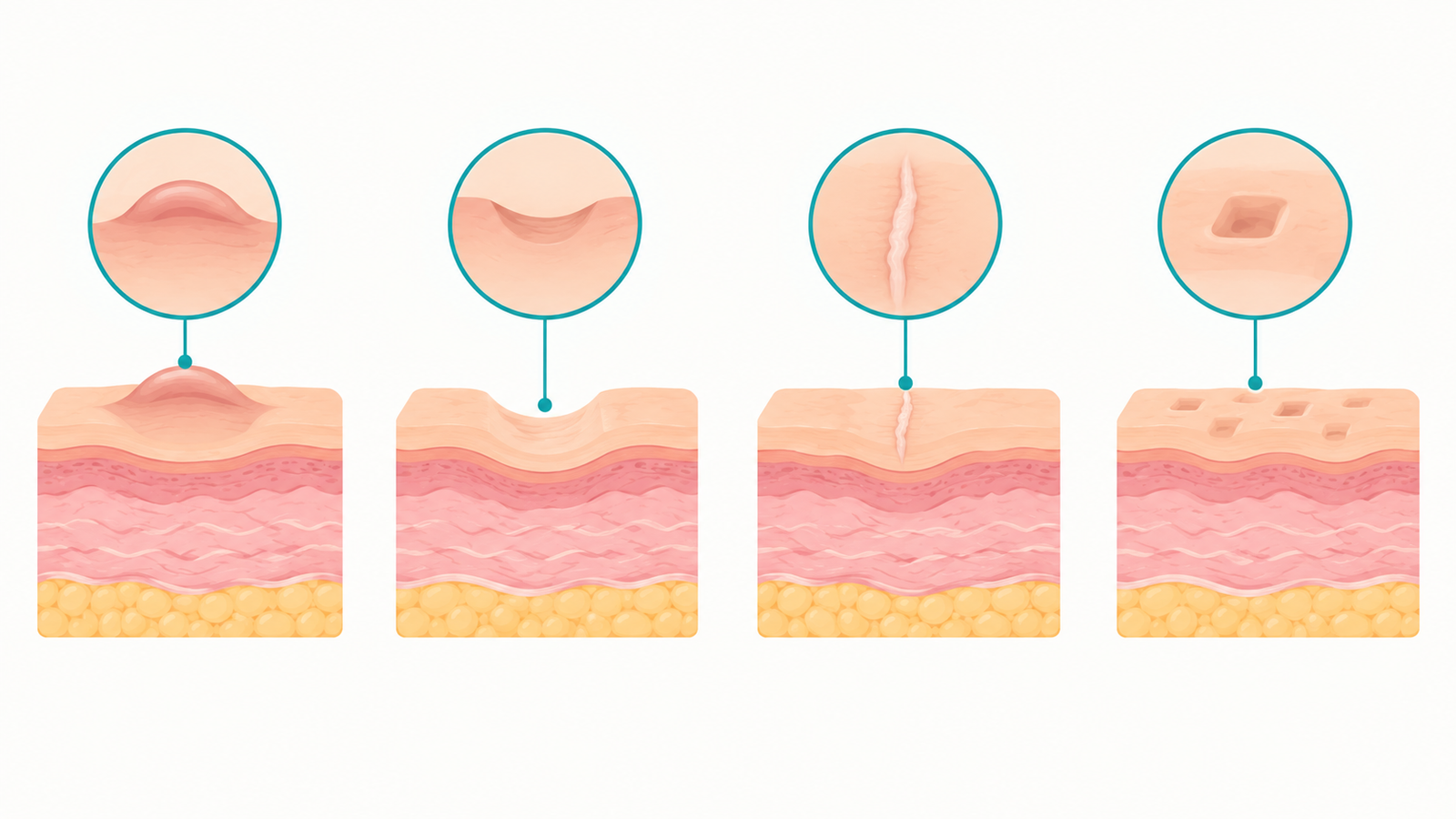
Not all problem scars are the same, and identifying exactly which type is present is the single most important step before any surgical planning begins. A raised scar that stays neatly within the boundaries of the original wound is generally more straightforward to treat than one that spreads outward into surrounding healthy skin and tends to return even after removal – this second type is also typically itchier, more tender, and more prone to recurrence. A separate category involves scars that physically tighten across a joint or fold, restricting normal movement, while another involves scars that sit sunken below the surrounding skin due to tissue loss underneath.
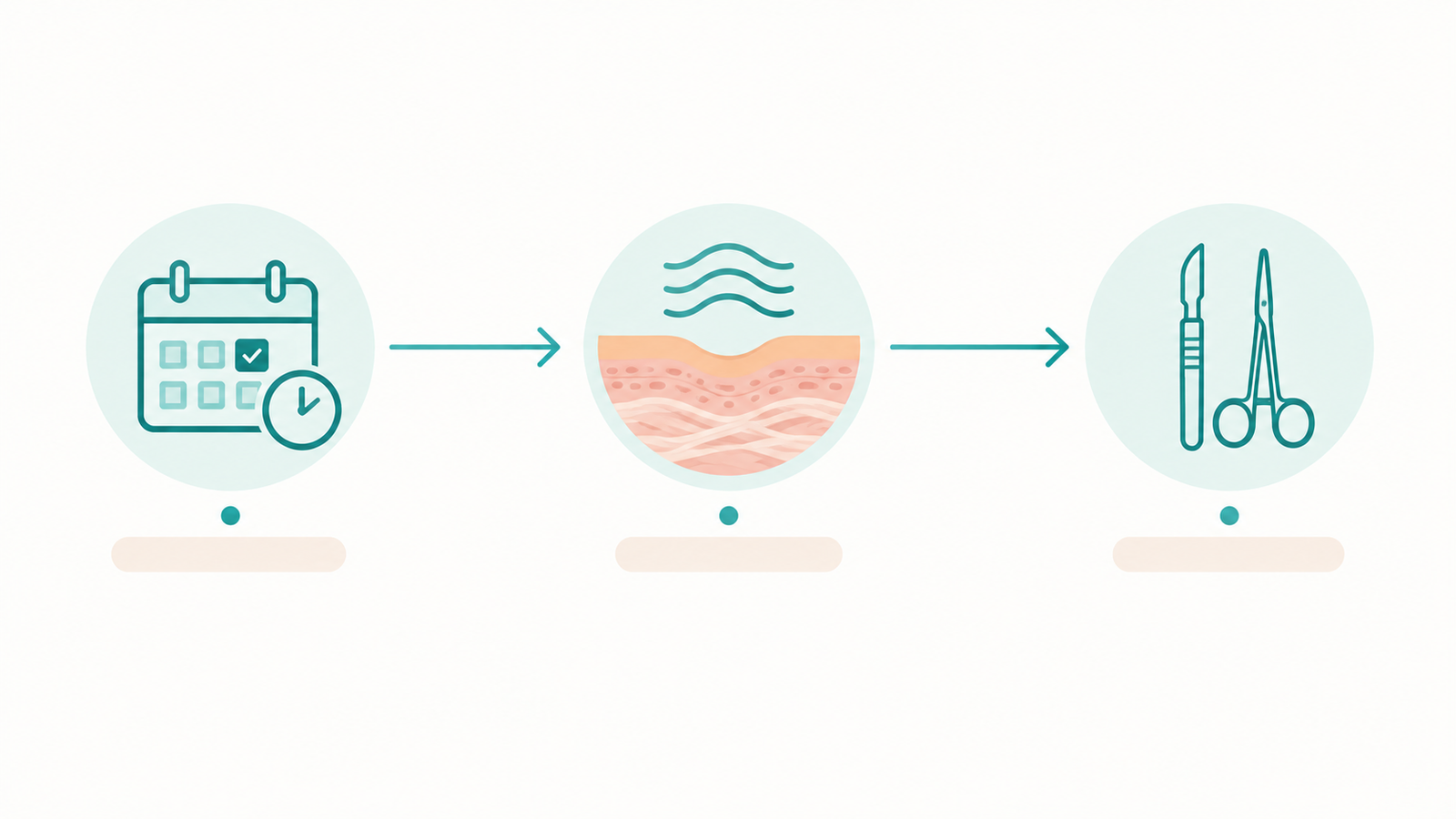
Timing is just as important as identifying the type. Most scars continue remodeling internally for up to a year after the original injury, and elective revision surgery is generally deferred until the scar has had six to twelve months to fully mature – operating too early risks working on tissue that’s still actively inflamed, which can worsen the outcome. The clear exception is when a tightening scar is already causing a real functional problem, such as restricting neck movement, pulling on an eyelid, or limiting motion around a joint – in these cases, earlier surgical intervention is justified to prevent lasting damage.
Diagnosis: Identifying What Kind of Scar Problem Is Present
Before recommending a specific surgical approach, a surgeon typically evaluates several factors together:
- Scar boundaries: Whether the scar stays within the original wound area or has spread into surrounding healthy skin changes both the treatment approach and the expected recurrence risk.
- Orientation relative to natural skin lines: Scars that run against the skin’s natural tension lines are more visually noticeable and often need a redirecting technique rather than simple re-excision.
- Functional impact: Any tightening that restricts movement around a joint, the neck, or the eyelid is treated as a priority, independent of how the scar looks cosmetically.
- Depth and underlying tissue loss: Scars that are visibly sunken or tethered to deeper structures may need volume restoration, not just surface-level revision.
- Scar maturity: How long ago the original injury occurred determines whether the scar is ready for elective surgical revision or should be managed conservatively a while longer.
Treatment: What Scar Revision Surgery Actually Involves
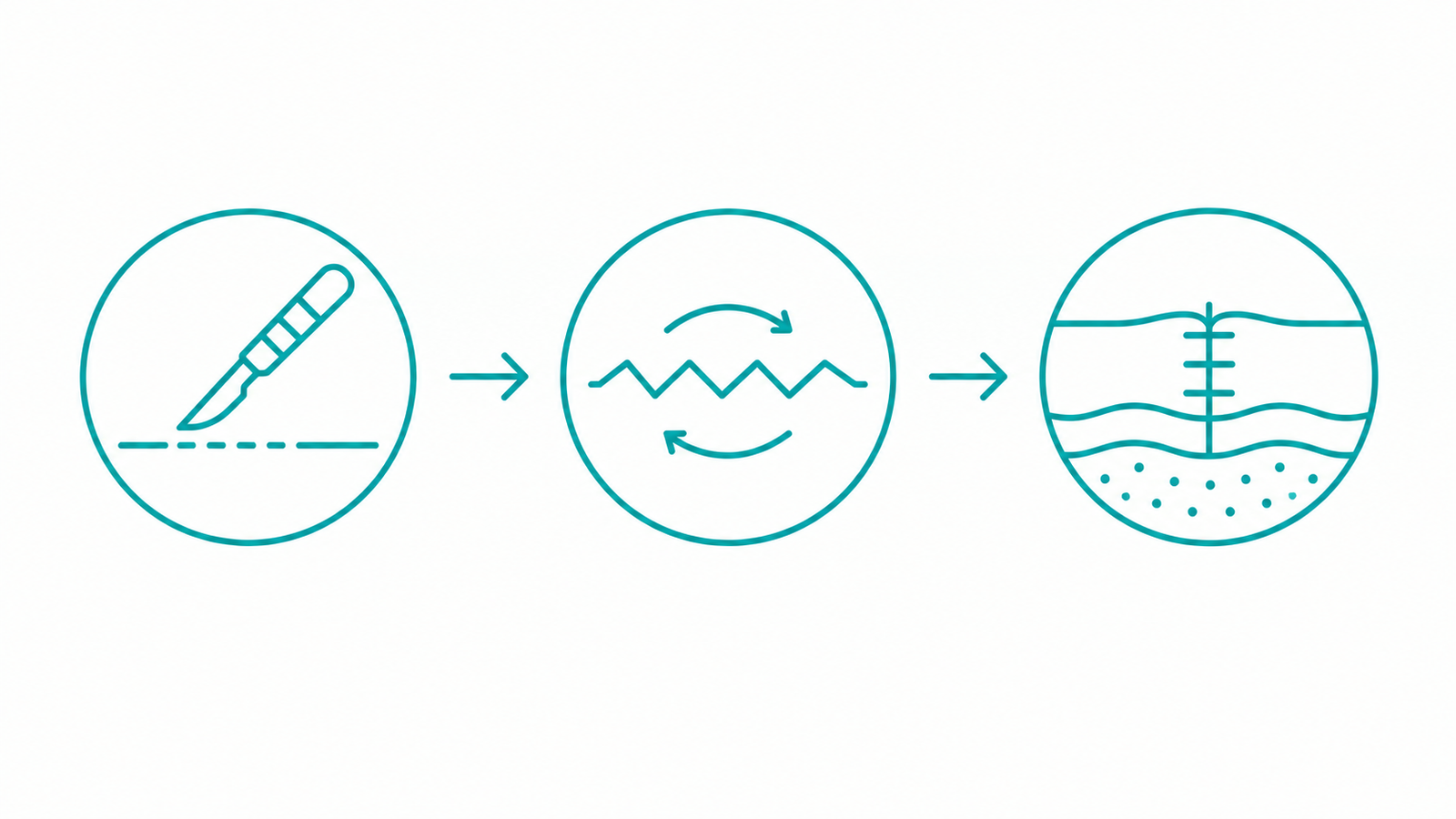
Scar revision surgery begins with careful surgical planning around the skin’s natural tension lines, since placing or redirecting an incision along these lines significantly reduces tension on the healing wound and improves the final appearance. For a simple, narrow scar, this typically means excising it along with a very small margin, carefully separating the skin from deeper tissue to reduce tension, and closing it in layers – first beneath the surface to handle tension, then at the skin’s surface for a fine, precise result.
More complex scars need a different strategy entirely. A scar that runs against the skin’s natural lines may be surgically redirected into a zig-zag or irregular pattern, which breaks up the straight line that makes a scar visually obvious and can also help release tightness. Very large scars that can’t be removed in one stage are sometimes treated through a staged approach, removing a portion at a time over several weeks as the surrounding skin gradually stretches to accommodate the rest. Deeply indented scars with underlying tissue loss may require restoring volume beneath the skin using the patient’s own nearby tissue, giving the surface a smooth, even plane to heal against. For scars prone to returning thick and raised, surgery is often paired with targeted injections placed directly into the treatment area to reduce the chance of regrowth.
Technique Guide: Matching the Surgery to the Scar
| Scar Problem | Surgical Approach | Best Suited For |
|---|---|---|
| Narrow, well-aligned scar | Simple excision and layered closure | Scars running along the skin’s natural tension lines |
| Scar crossing natural skin lines | Redirecting technique using angled incisions | Visible linear scars on flat areas like the cheek or forehead |
| Very large scar | Staged, multi-session removal | Scars too large to remove in a single procedure |
| Tightening, movement-restricting scar | Tension-releasing redirection technique | Scars crossing joints, the neck, or the eyelid area |
| Deeply indented scar | Volume restoration using nearby tissue | Scars with visible tissue loss or tethering beneath the surface |
| Thick, raised, recurring scar | Surgery combined with targeted injections | Scars that have returned after previous treatment |
The right technique depends on the scar’s type, location, and maturity – this is a decision made with a surgeon, not a one-size-fits-all approach.
What the Research Shows?
Published surgical and dermatologic research supports several specific points about scar revision surgery:
- Timing genuinely affects outcome: Research confirms that scar tissue continues remodeling for up to 12 months after injury, and that premature surgical revision on an immature scar increases the risk of a worse recurrence.
- Combining surgery with targeted injections reduces recurrence: Studies on thick, recurrence-prone scars show that pairing surgical removal with targeted post-operative injections meaningfully lowers the chance of the scar returning, compared to surgery alone.
- Redirection techniques effectively disguise visible scars: Research on scars crossing the skin’s natural tension lines shows that breaking a straight scar into an irregular or angled pattern measurably reduces its visual prominence by disrupting how light reflects off the surface.
- Function matters as much as appearance to patients: Patient outcome studies consistently show that restoring normal movement and reducing restriction ranks as a higher priority for patients than the scar’s cosmetic appearance alone.
These findings reflect published surgical and dermatologic research; the right technique and timing for an individual still depends on an in-person evaluation.
Doctor Review Block
This article has been medically reviewed by Dr. Tejansu Dalal, MD (Dermatology), for clinical accuracy. Scar revision surgery works best when the technique is chosen specifically for the type of scar present – matching a redirection technique to a tight, movement-restricting scar, or pairing injections with surgery for a recurrence-prone scar, is exactly what separates a lasting result from one that disappoints.
References & Citations
This article draws on surgical and dermatologic scar research, including findings published by the National Center for Biotechnology Information on scar revision techniques and outcomes, and reference material from the National Institutes of Health on surgical approaches to scar management. Clinical timing and technique details reflect published surgical research.