
Exosome therapy is one of the newest names in hair treatment, and it is often described as the next step beyond PRP. The promise is simple: tiny messenger particles from stem cells wake up tired hair follicles. The science behind that idea is genuinely interesting, and early results are encouraging. But the research is still young, the products are not standardised and regulators in some countries have not approved them for hair loss. This guide explains what is known, what is not and how to decide.
Stem cell exosome therapy may help some people with early to moderate hair thinning, but the evidence is still early. Small studies report better hair density and thicker hair strands after scalp treatment, with mostly mild, short-lived side effects. However, most studies are small, are short and lack proper placebo controls, and products vary widely in quality. In the United States, no exosome product is currently approved for hair loss. Typical plans use 3 to 6 sessions a month or so apart, with occasional maintenance. Results usually build over 3 to 6 months. It is best seen as an experimental add-on, not a proven replacement for established treatments.
Key Takeaways
- Exosomes are tiny messenger particles released by stem cells. They carry signals that can encourage hair follicles to grow.
- Small studies show improved hair density and shaft thickness, but the research is early, with short follow-up and few placebo-controlled trials.
- Side effects in controlled studies are usually mild, such as redness, swelling and tenderness lasting a day or two.
- Serious problems have been reported with unvetted products, such as abscesses, allergic reactions and skin damage, so the source and quality of the product matter greatly.
- Regulators in the United States have not approved any exosome product for hair loss, and rules differ by country.
- It is best used as an add-on to proven treatments, with honest expectations and clear information about the product.
Introduction
Hair loss is common and often stubborn. Many people try creams, tablets and PRP, and some do not get the response they hoped for. Exosome therapy is attractive because it works in a different way, by sending signals to the follicles, without the hormonal effects of some tablets.
The difficulty is that exosome therapy is a fast-moving field with strong marketing and limited proof. Understanding what the studies have really shown, and what questions to ask a clinic, will help you make a safe and realistic decision.
What Stem Cell Exosome Therapy Is?
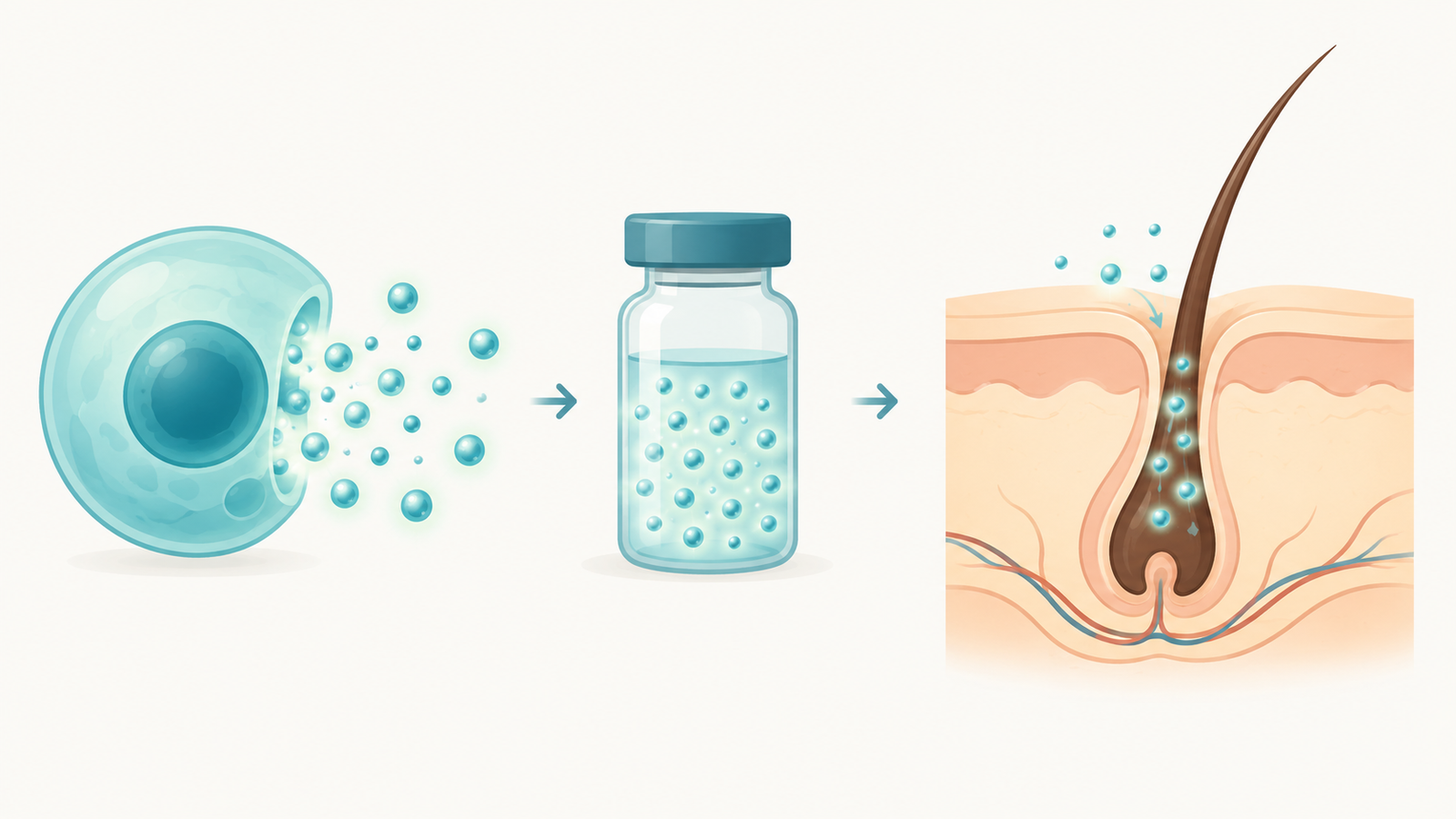
Stem cells release very small bubble-like particles called exosomes. These particles carry proteins, growth signals and tiny genetic messages that tell nearby cells how to behave. In exosome therapy, these particles are collected from cultured stem cells, such as those taken from umbilical cord tissue or fat, purified and delivered to the scalp.
The treatment does not place stem cells in the scalp. It uses only the particles they release, which is why it is called a cell-free therapy. For hair, the aim is to encourage follicles to enter and stay in their growth phase.
Clinical Overview: How Exosomes Act on Hair
In pattern hair loss, hormones gradually shrink the follicle and shorten its growth phase, so hairs become thinner and shorter. Exosome signals seem to act on the follicle and the cells at its base in several ways:
- Waking up growth: Signals help move follicles from resting into the active growth phase and keep them there longer.
- Protecting follicle stem cells: Some signals slow the ageing of the cells that renew the follicle.
- Improving blood supply: Growth signals encourage tiny blood vessels to form around the follicle.
- Calming inflammation: Anti-inflammatory signals may help in inflammatory types of hair loss.
- Protecting against damage: Antioxidants in the particles help limit stress damage to follicle cells.
Because this works locally in the scalp, it does not change hormone levels in the body. This is one reason it appeals to people who want to avoid hormone-blocking tablets. Most of these mechanisms are shown in laboratory and early studies, and human proof is still being built.
Diagnosis: Who May Consider It
A proper diagnosis comes first. A best dermatologist doctor in ahmedabad will examine your scalp, identify the type of hair loss and rule out treatable causes such as low iron, thyroid problems or stress-related shedding before suggesting any advanced treatment.
Often considered for:
- Early to moderate pattern hair loss in men and women
- Thinning that has not responded well to standard options
- Some people who want to support results after other hair treatments
- Selected cases of patchy or diffuse hair loss, under specialist advice
Usually not suitable, or needs caution:
- Hair loss where the scalp is smooth and shiny, as scarred follicles cannot regrow
- Active scalp infection or open wounds
- Pregnancy and breastfeeding
- Anyone who has had a serious reaction to a similar product
- People who are unwilling to accept that the treatment is still experimental
What the Research Shows?
A growing number of small studies and reviews have looked at exosome therapy for hair. The main points are:
- Early positive signs: Several small studies report increased hair density and thicker hair strands, and less daily shedding, after exosome treatment of the scalp.
- Different sources: Exosomes from umbilical cord, fat, placenta and other tissues have all been tested, and results are not directly comparable.
- Evidence quality is limited: Many studies are small, short (often under a year), lack double-blind placebo controls and are rated as low-level evidence.
- Methods vary: Labs prepare, purify and dose exosomes differently, so a product used in one study may not match what a clinic uses.
- Some early publications have been questioned: Quality problems in early literature, including at least one retraction, are a reason to rely on carefully reviewed research.
- Safety in controlled studies is reassuring: Reported effects were mostly mild redness, swelling, tenderness or itching, lasting one to two days, with no major systemic problems.
- Real-world reports are more worrying: At least 10 serious problems have been documented with unvetted products, including abscesses, severe allergic reactions and skin damage, linked to poor manufacturing or contamination.
- Regulation: In the United States, no exosome product is approved for hair loss or any other medical use, and regulators have warned against unapproved products. Rules differ across countries.
These findings come from published reviews and studies. They support cautious optimism, not a guarantee.
Delivery Methods Guide
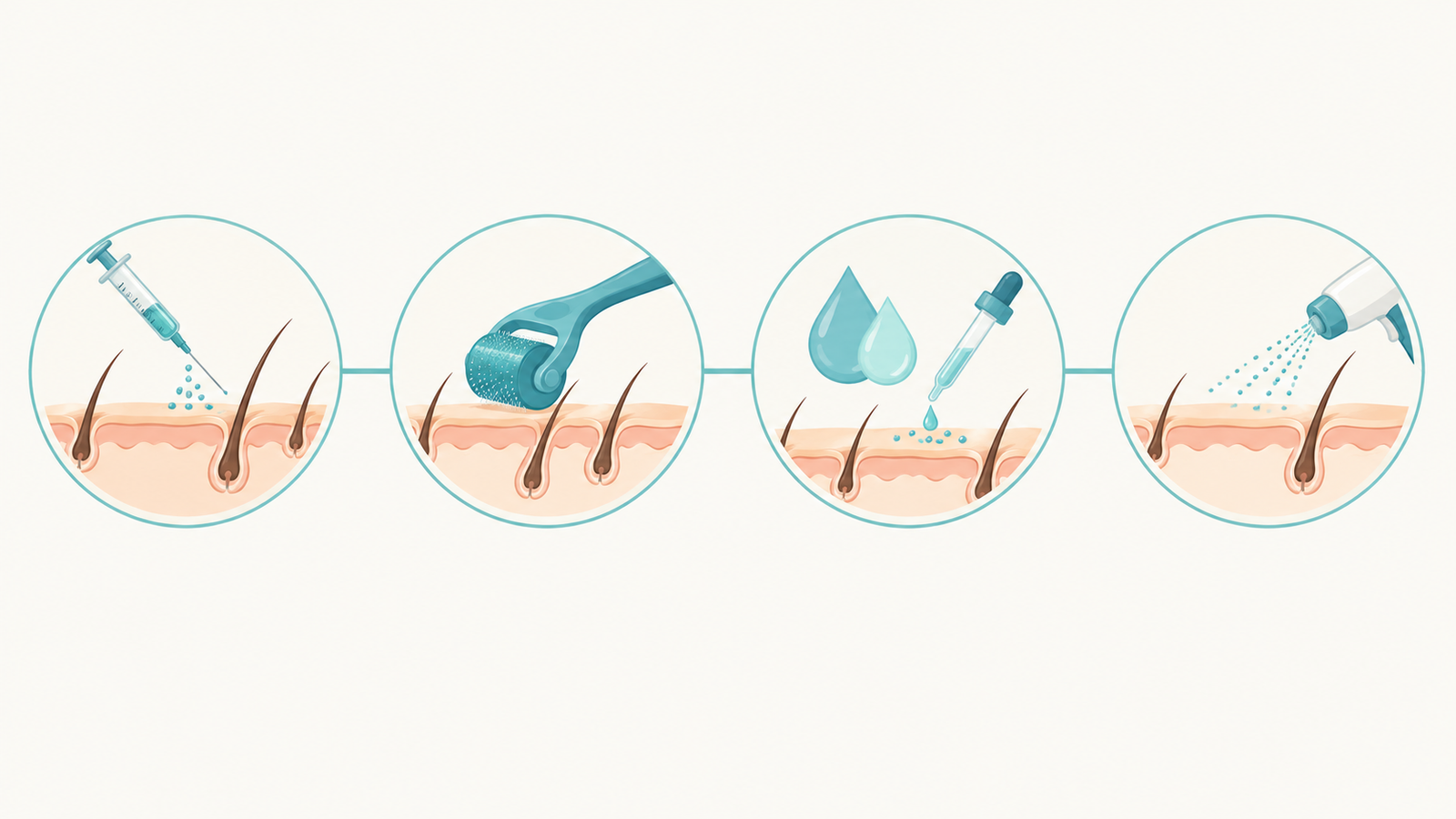
| Method | How It Is Delivered | Main Advantage | Main Limitation |
|---|---|---|---|
| Scalp micro-injections | Many tiny injections into the thinning area | Most direct delivery to the follicles | Needle discomfort; needs sterile technique |
| Microneedling with topical application | Tiny channels are made and the product is applied on top | Less invasive | Less of the product enters the skin, so effect may be weaker |
| Combination with PRP | PRP and exosomes used together | Quick growth signals from PRP, plus longer-acting signals from exosomes | Results of the combination need more research |
| Topical or plant-derived products | Applied to the scalp surface | Gentle, with little discomfort | Small, non-significant effects in studies |
These are general patterns from published studies. Your doctor will choose what fits your scalp.
Treatment: What to Expect and What to Ask
A careful stem cell exosome therapy plan starts with the scalp assessment, followed by a decision on the delivery method. Most published protocols use about 3 to 6 sessions spaced around 4 to 6 weeks apart, followed by maintenance every 6 to 12 months. Visible changes in density and thickness are usually judged after about 3 to 6 months, because hair grows slowly. Side effects are usually mild redness, swelling or tenderness for a day or two, though you should not assume there is no risk.
Exosome therapy is generally best used as part of a broader plan, together with proven options. At the best hair doctor in ahmedabad level, this means treating the cause of the hair loss first and using newer treatments such as exosomes as add-ons, not replacements.
Questions worth asking any clinic before treatment:
- What is the source of the exosomes, and how are they made and tested?
- What is the regulatory status of the product in this country?
- Is the product single-use, sealed and labelled, and can I see the packaging?
- What do your own results and published studies show, and what are the risks?
- What happens if I do not see improvement?
A clear, honest answer to these questions is a good sign. Vague answers or promises of guaranteed results are a reason to wait.
Doctor Review Block
This article has been medically reviewed by Dr. Tejansu Dalal, MD (Dermatology), for clinical accuracy. In my experience, patients are best served when new treatments such as exosomes are explained as promising but not proven, and used alongside established care. Honest expectations and clear information about the product matter more than the name of the treatment.
References & Citations
This article draws on published research on exosomes and hair, including a systematic review of clinical evidence on exosomes and hair regeneration published by the National Center for Biotechnology Information and a review of exosomes for hair growth and regeneration available through the National Institutes of Health. Findings reflect published research, which is still developing.