

Finding the right vitiligo specialist in Ahmedabad can be the difference between months of frustration and a treatment plan that actually works. This guide breaks down exactly what to check credentials, technology, and treatment options – before you book a consultation for vitiligo in Ahmedabad.
Medical Disclaimer: This article is for general educational purposes only and does not replace professional medical advice, diagnosis, or treatment. Vitiligo presentations vary widely between patients – always consult a qualified dermatologist for an evaluation specific to your skin.
The right vitiligo specialist is a board-certified dermatologist with dedicated experience in pigmentary disorders, access to phototherapy (NB-UVB, excimer laser) and surgical grafting on-site, and a track record of setting realistic expectations rather than promising a “cure.” Look beyond a general skin clinic – ask specifically about their vitiligo case volume and outcome tracking.
Key Takeaways
- Vitiligo has no permanent cure, but 50–70% of patients see meaningful repigmentation with the right combination therapy.
- A genuine vitiligo specialist offers the full spectrum: topicals, phototherapy, excimer laser, and surgical options – not just one modality.
- Disease stability (no new patches for 12+ months) determines whether surgery is even an option.
- Face and neck areas respond best to treatment; hands and feet respond least.
- Realistic-outcome counselling and psychological support are as important as the prescription itself.
Introduction
If you’re searching for a vitiligo specialist in Ahmedabad, you’re likely dealing with new white patches on your skin and a flood of conflicting information – some clinics promising a “permanent cure,” others offering only a single treatment option. Vitiligo is a chronic autoimmune condition, and how well it responds to treatment depends heavily on who is treating it. This guide walks Ahmedabad patients through exactly what separates an experienced vitiligo specialist from a general skin clinic, what treatments genuinely work, and what questions to ask before you commit to a treatment plan.
What Is Vitiligo?
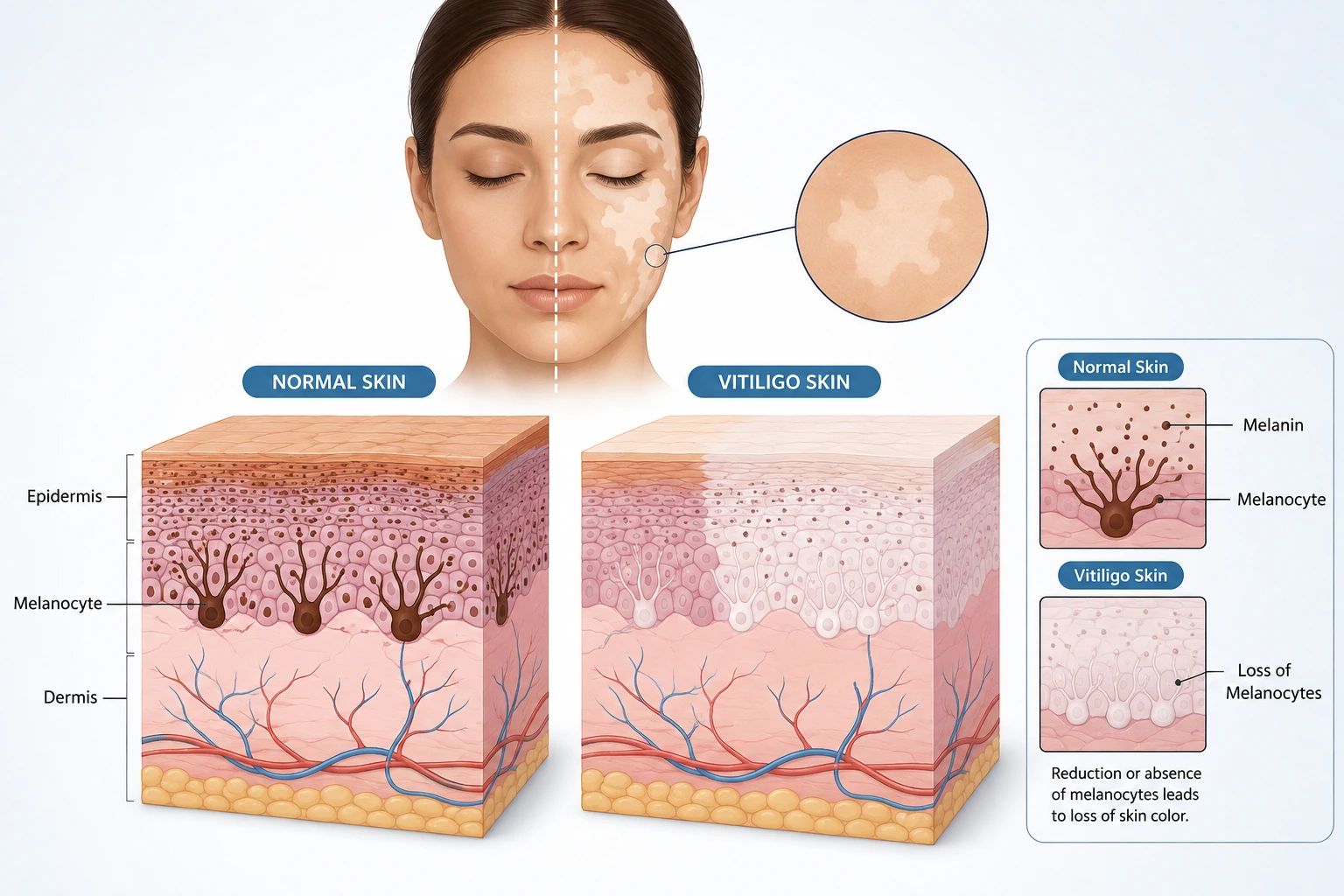
Vitiligo is a chronic autoimmune skin condition in which the immune system mistakenly attacks melanocytes – the cells responsible for skin pigment – resulting in smooth, white patches on the skin. It is classified broadly as non-segmental (generalized, symmetric, the most common form) or segmental (localized to one area or side of the body, often more stable). Vitiligo is not contagious and is not caused by poor hygiene, diet, or “bad blood,” despite common myths in India. It can appear at any age but most often begins before age 30.
Clinical Overview
Vitiligo affects roughly 1% of the population worldwide, and India carries one of the highest reported burdens globally, with clinic-based studies from Gujarat and other regions showing it as a common reason for dermatology visits. The condition is strongly associated with other autoimmune disorders – particularly thyroid disease, and less commonly diabetes and atopic dermatitis – which is why a thorough specialist workup often includes screening beyond the skin itself.
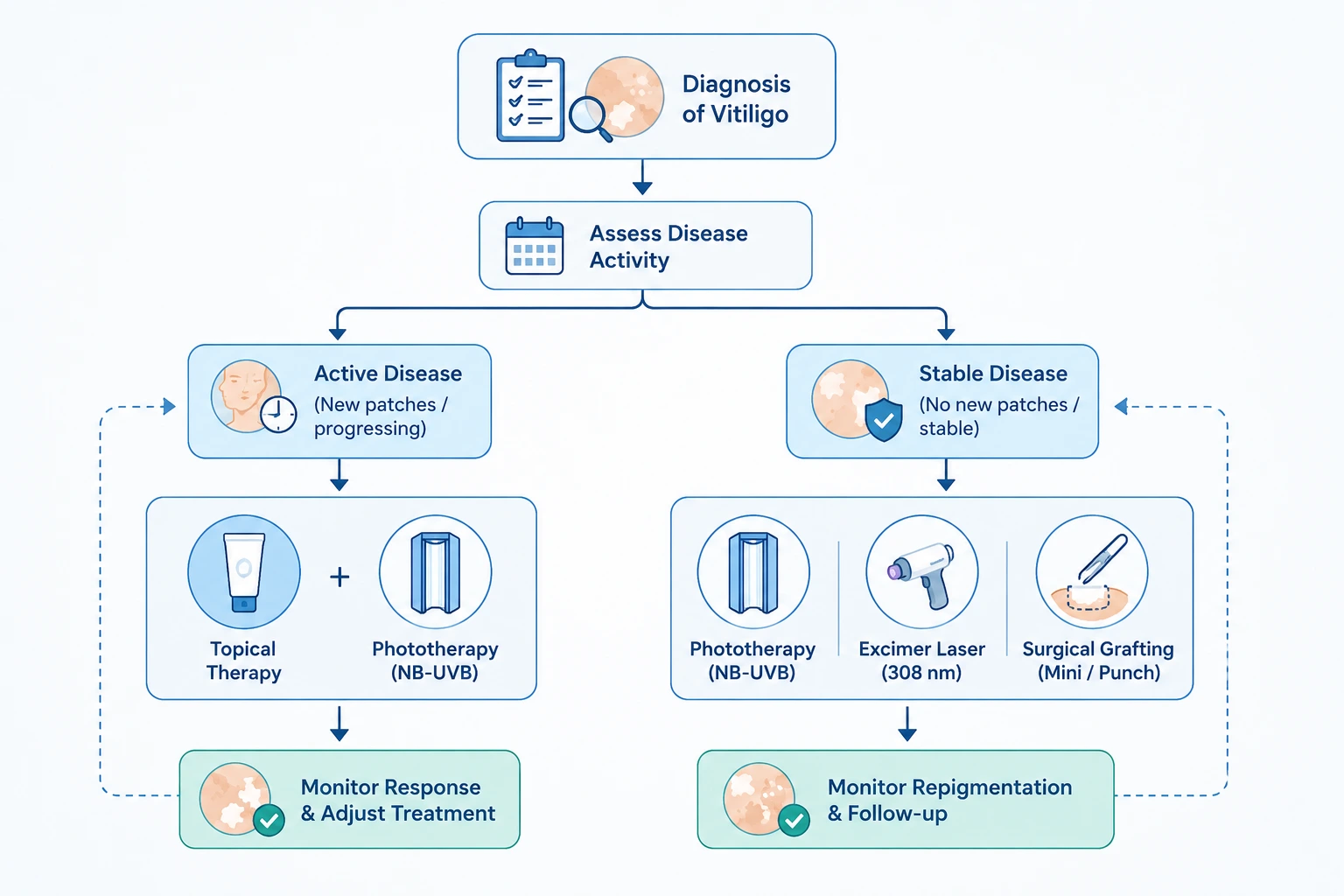
Disease course varies: some patients have a few stable patches for years, while others experience active, spreading disease that requires more urgent intervention. Dermatologists classify a case as active (new patches or expanding borders in recent months) or stable (no change for 12 months or more), and this single distinction drives almost every treatment decision that follows – from whether phototherapy alone is appropriate to whether the patient is even a candidate for grafting.
The psychological impact of vitiligo, especially on visible areas like the face, hands, and neck, is well documented and often underestimated in routine care. Patients frequently report anxiety, low self-esteem, and social stigma, which is why comprehensive vitiligo care extends beyond prescriptions to counselling and camouflage guidance.
Diagnosis
A proper vitiligo diagnosis involves more than a visual glance. An experienced specialist typically follows this process:
- Clinical examination: Assessing the pattern (segmental vs. non-segmental), body surface area involved, and any recent spread.
- Wood’s lamp examination: A UV light exam that reveals depigmented patches more clearly and helps distinguish vitiligo from other pigment conditions.
- Dermoscopy: Used in some cases to check for early inflammatory signs that indicate active disease.
- Blood tests: Screening for thyroid antibodies and other autoimmune markers, since vitiligo frequently coexists with thyroid disorders.
- Photographic documentation: Baseline photos to objectively track repigmentation over months of treatment.
Patients should expect their dermatologist to clearly explain whether their vitiligo is active or stable, and how that classification shapes the treatment plan – this single conversation is often the clearest sign of a specialist versus a general clinic.
Treatment
There is no single “best” treatment for vitiligo – the right approach depends on disease activity, extent, and location on the body. A specialist typically works through the following options:
Topical Therapy
High-potency corticosteroids and calcineurin inhibitors (like tacrolimus) are first-line for limited patches, especially on the face and neck, which tend to respond best.
Phototherapy (NB-UVB)
Narrowband UVB is considered first-line for widespread vitiligo. It requires 2–3 sessions weekly for 6–12 months, and works best when combined with topical therapy rather than used alone.
Excimer Laser
A targeted, higher-intensity form of UVB light for localized patches. It requires fewer overall sessions than whole-body phototherapy since treatment is concentrated on affected areas only. Ahmedabad patients can explore this option through the clinic’s excimer phototherapy
Surgical Grafting
Reserved strictly for stable disease (no new patches for 12+ months). Techniques such as punch grafting or blister grafting transplant pigmented skin into depigmented areas and can achieve high repigmentation rates when disease activity has genuinely stopped. This is covered in more detail on the clinic’s vitiligo surgery page.
Combination Therapy
Many specialists combine phototherapy with topical agents, since studies consistently show better outcomes with combination approaches than with either treatment alone.
Depigmentation
For patients with extensive (over 50%) stable vitiligo who prefer a uniform skin tone, depigmenting the remaining pigmented skin is an option – though this is permanent and typically considered a last resort.
Treatment Comparison
| Treatment | Best For | Typical Timeline |
|---|---|---|
| Topical steroids/tacrolimus | Limited patches, face/neck | 2–3 months for initial change |
| NB-UVB phototherapy | Widespread, active disease | 6–12 months |
| Excimer laser | Localized, stable patches | Weekly to biweekly, 3–6 months |
| Surgical grafting | Stable, segmental disease | Immediate visible pigment, blends over 1–2 months |
| Depigmentation | Extensive stable disease | Up to 12 months |
Clinical Trial Data
Published dermatology research gives a realistic picture of what patients can expect from evidence-based treatment:
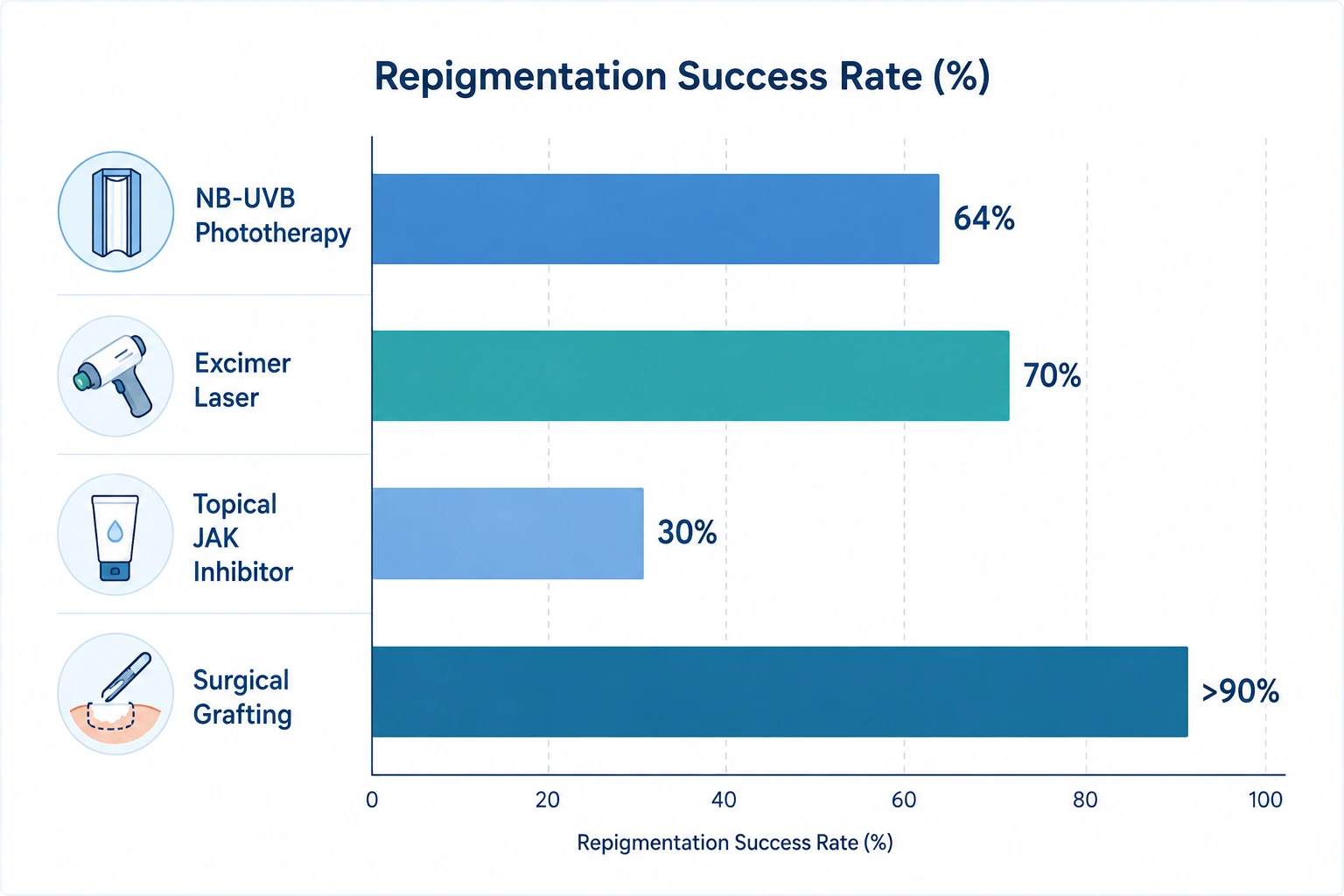
- NB-UVB phototherapy: Roughly 64% of patients achieve at least 50% repigmentation by 6 months of consistent treatment, with facial and neck areas responding considerably better than hands and feet.
- Excimer laser: Clinical reports show up to 70% of patients demonstrate visible improvement in skin colour after roughly 6 months of twice-weekly sessions.
- Topical JAK inhibitor therapy: In controlled trials, around 30% of patients achieved 75% or greater facial repigmentation by 24 weeks, compared to roughly 10% on placebo – making it one of the newer options for facial vitiligo specifically.
- Surgical grafting: In carefully selected stable cases, repigmentation of the grafted area can exceed 90%, though outcomes depend heavily on disease stability at the time of surgery.
- Relapse: Vitiligo can wax and wane even after successful treatment, which is why most specialists recommend a maintenance plan rather than treating it as a one-time fix.
These figures come from published dermatology literature and clinical reporting; individual outcomes vary based on skin type, disease duration, and treatment adherence.
Medication Guide
| Medication/Therapy | Type | Typical Use |
|---|---|---|
| Clobetasol (or similar high-potency steroid) | Topical corticosteroid | Limited patches, short courses to avoid skin thinning |
| Tacrolimus / Pimecrolimus | Topical calcineurin inhibitor | Face and neck, longer-term use with lower side-effect risk than steroids |
| Ruxolitinib cream | Topical JAK inhibitor | Facial vitiligo, applied twice daily over 24+ weeks |
| NB-UVB | Phototherapy | Widespread or active disease, in-clinic sessions |
| Oral mini-pulse steroids | Systemic | Short courses to halt rapidly spreading (active) disease |
Always use prescription-strength topical or systemic medication only under a dermatologist’s supervision — self-medicating with steroid creams is a common cause of skin thinning and rebound flare-ups.
Doctor Review Block
This article has been medically reviewed by Dr. Tejansu Dalal, MD (Dermatology), for clinical accuracy. Treatment recommendations should always be personalised through an in-person consultation, as vitiligo presentation and response vary significantly between patients.