
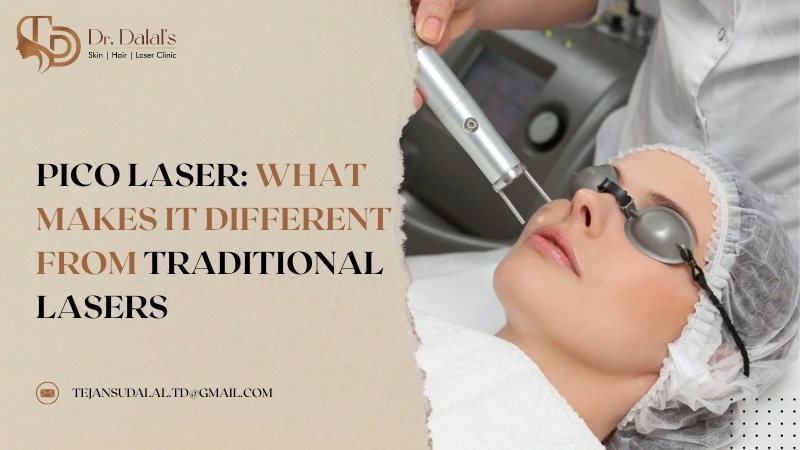
Two lasers can target the exact same pigment and still behave completely differently inside the skin – one working mainly through heat, the other through a split-second mechanical shockwave. That difference is what separates pico laser treatment from the traditional lasers dermatology has used for decades.
Pico laser treatment uses pulses measured in picoseconds – roughly a thousand times shorter than the nanosecond pulses used by traditional Q-switched lasers which shifts the way -energy interacts with skin from a heating effect to a rapid mechanical shockwave. This single difference in pulse duration is why pico lasers tend to clear pigment and tattoo ink in fewer sessions, with less heat-related side effects, than older nanosecond laser technology.
Key Takeaways
- Pico lasers deliver energy in picoseconds, while traditional Q-switched lasers use nanosecond pulses – about a thousand times longer.
- This shorter pulse shifts the main mechanism from photothermal (heat-based) damage to photoacoustic (mechanical shockwave) fragmentation.
- Pico laser treatment generally shatters pigment and tattoo ink into smaller particles than nanosecond lasers, which the body’s own immune cells clear more efficiently.
- Darker skin tones generally tolerate pico laser treatment with a lower risk of post-inflammatory hyperpigmentation compared to traditional nanosecond lasers.
- Despite the differences, both laser types still have overlapping use cases – the right choice depends on the specific concern, skin tone, and treatment goal.
Introduction
Walk into any conversation about laser treatments for pigmentation, tattoo removal, or skin rejuvenation today, and “pico laser” comes up almost immediately – often positioned as the newer, better option compared to traditional lasers. But what’s actually different about it isn’t the color of light or the treatment area; it’s how fast the energy is delivered, and what that speed does once it reaches the skin. This article breaks down the real physical difference between pico laser treatment and traditional nanosecond lasers, what that means clinically, and where each technology still fits.
What Actually Makes a Laser “Pico”?
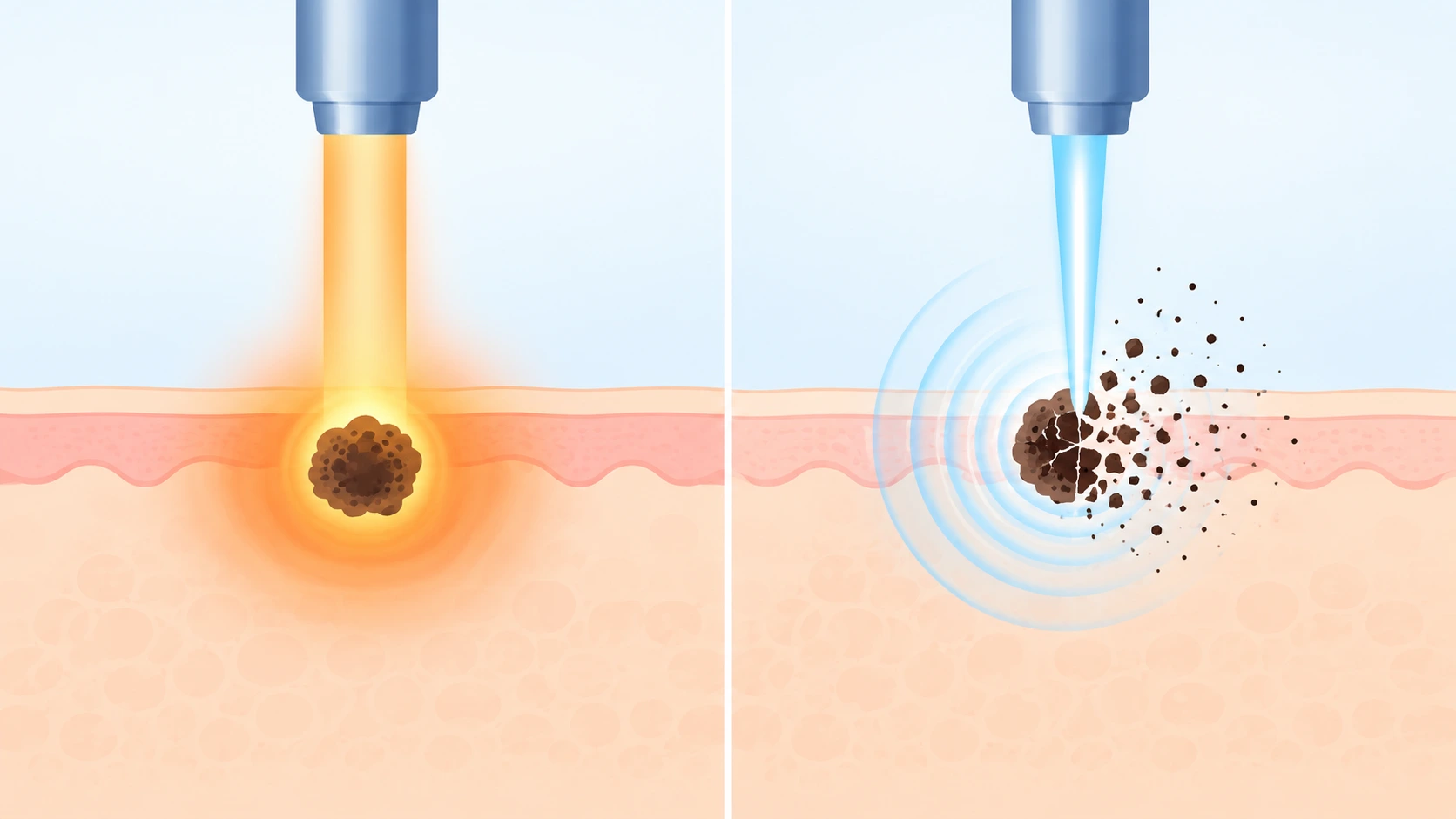
The term “pico” refers to pulse duration – a picosecond is one-trillionth of a second, and pico lasers deliver their energy in pulses roughly a thousand times shorter than the nanosecond pulses used by traditional Q-switched lasers. That might sound like a technical footnote, but it fundamentally changes how the laser interacts with skin. A longer nanosecond pulse gives heat time to build up and spread from the target into surrounding tissue. A picosecond pulse is so brief that it doesn’t allow that same heat buildup – instead, the energy is released almost instantly as a rapid mechanical shockwave that physically shatters the target structure.
Clinical Overview: Photothermal vs Photoacoustic Action
Traditional nanosecond lasers work mainly through a process called photothermal action – the target structure, such as a melanin particle or tattoo ink granule, absorbs light energy and converts it into heat, and that heat is what breaks the target down. The challenge is that this heat doesn’t stay perfectly confined; some of it diffuses into the surrounding healthy tissue, which is part of why traditional lasers carry a higher chance of heat-related side effects like redness, blistering, or pigment changes, particularly in darker skin tones.
Pico laser treatment relies predominantly on a different mechanism known as photoacoustic action. Because the pulse is delivered so quickly, the target structure doesn’t have time to release its energy as heat – instead, the sudden energy delivery creates a rapid pressure wave that mechanically shatters the target into much smaller particles, without raising the surrounding tissue temperature nearly as much. This is also the mechanism behind a related effect called laser-induced optical breakdown, where pico lasers create microscopic zones of controlled mechanical injury in the skin that stimulate the body’s own collagen-producing response – a key reason pico laser technology is also used for skin texture and scar concerns, not just pigment removal.
Diagnosis: Which Skin Concerns Respond Differently
Not every skin concern responds the same way to the switch from a heat-based to a shockwave-based laser:
- Pigmented lesions and melasma: Pico laser treatment tends to fragment pigment more finely with less heat delivered to surrounding melanocytes, which is particularly relevant for melasma, a condition that can worsen with excess heat exposure.
- Multicolor tattoos: Colors like green and teal, which traditional nanosecond lasers struggle to clear effectively, respond considerably better to the broader acoustic energy picosecond lasers generate.
- Acne scars and enlarged pores: Because picosecond pulses can create controlled mechanical micro-injury without full thermal coagulation, some patients see measurable texture improvement with less visible downtime than fully ablative resurfacing.
- Darker skin phototypes: Patients with more background skin pigment generally tolerate pico laser treatment with a comparatively lower rate of post-inflammatory hyperpigmentation than traditional nanosecond lasers, though risk is never eliminated entirely.
A proper evaluation still matters here – which laser and which settings make sense depends on the specific pigment, scar type, and skin tone being treated, not just which technology sounds newer.
Treatment: Where Pico Laser Technology Is Used
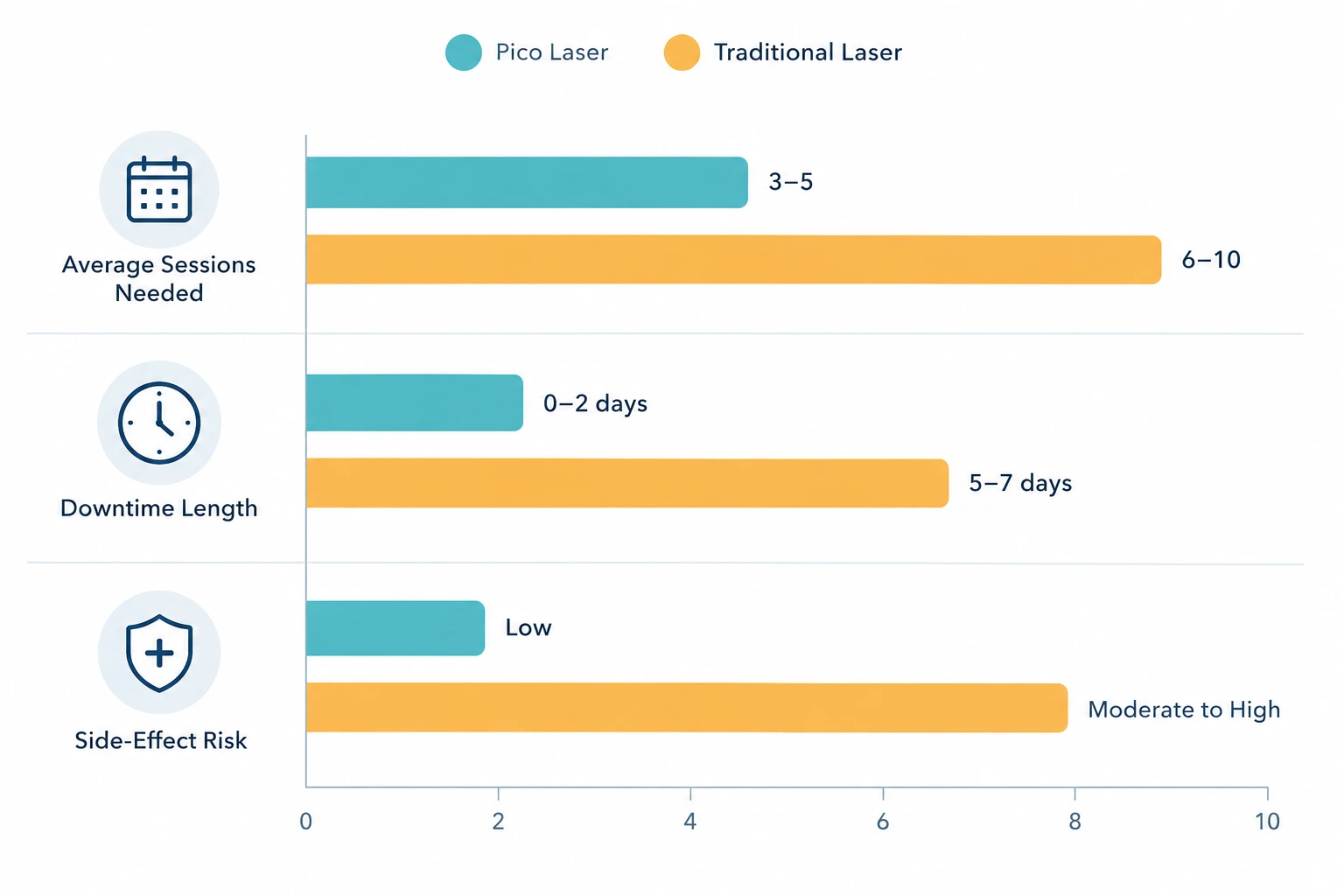
Pico laser platforms are now applied across a range of indications that were previously dominated by traditional Q-switched systems, including stubborn pigmentation, refractory melasma, multicolor tattoo removal, acne scarring, enlarged pores, and early signs of skin aging. In each case, the underlying goal is the same – break down or stimulate a target structure in the skin – but the pico laser approach generally asks for fewer total treatment sessions and a shorter recovery window between them, since less cumulative thermal injury needs to heal between visits.
That said, traditional lasers haven’t become obsolete. For certain target sizes and specific wavelength requirements, a nanosecond laser can still be the more appropriate or cost-effective choice, which is exactly why this decision is best made during a dermatology consultation rather than assumed from the technology name alone. Patients interested in exploring which laser-based option fits their concern can discuss options through a broader cosmetic dermatology evaluation, where pigment, scarring, and skin-tightening goals are assessed together.

What the Research Shows
Comparative clinical research between picosecond and traditional nanosecond lasers has found consistent patterns:
- Tattoo clearance: Studies comparing picosecond and nanosecond lasers on dark and multicolor tattoos report higher complete-removal rates and fewer required sessions with picosecond treatment, along with reduced pain and scab formation during healing.
- Pigment-related side effects: In prospective studies on professional tattoo removal, post-inflammatory hyperpigmentation occurred meaningfully less often with picosecond lasers compared to nanosecond lasers in the same patient population.
- Melasma outcomes: Split-face trials comparing picosecond and nanosecond Nd:YAG lasers for melasma found comparable improvement in pigment severity scores, but significantly lower pain scores and less post-treatment redness with the picosecond laser.
- Skin texture and scarring: Clinical evaluations of fractional picosecond treatment for acne scars and fine wrinkles report measurable increases in dermal collagen density alongside shortened downtime compared to fully ablative resurfacing methods.
These findings reflect published dermatologic laser research; individual results and the right technology choice still depend on an in-person evaluation of your specific skin and concern.
Pico vs Traditional Laser at a Glance
| Factor | Traditional (Nanosecond) Laser | Pico Laser |
|---|---|---|
| Pulse duration | Nanoseconds | Picoseconds (about 1,000x shorter) |
| Primary mechanism | Photothermal (heat-based) | Photoacoustic (mechanical shockwave) |
| Typical sessions for tattoo removal | Often 8-15+ sessions | Often 4-8 sessions |
| Heat-related side effect risk | Comparatively higher | Comparatively lower |
| Common additional use | Pigment, hair, vascular lesions | Pigment, tattoos, scars, early texture concerns |
Session counts and outcomes vary by individual skin type, pigment depth, and the specific concern being treated.
Doctor Review Block
This article has been medically reviewed by Dr. Tejansu Dalal, MD (Dermatology), for clinical accuracy. While pico laser treatment offers clear advantages for several pigment and texture concerns, the right laser technology still depends on an individualized assessment of your skin type, the specific concern, and treatment goals.
References & Citations
This article draws on comparative dermatologic laser research, including findings published by the National Institutes of Health on newer trends in laser tattoo removal and reference material from the National Center for Biotechnology Information on fractional picosecond laser treatment. Clinical outcome figures reflect published comparative laser studies.