Not every skin concern – and not every skin type – responds the same way to laser energy. Before any laser is switched on, a dermatologist is really answering one question: is this specific patient, with this specific skin and this specific history, a safe fit for this specific device? Here’s what actually goes into that decision.
Candidacy for skin laser treatment depends on four factors working together: the specific skin concern being targeted, your Fitzpatrick skin phototype, your medication and medical history, and your ability to follow pre- and post-procedure care. There is no single laser suitable for everyone — the right device is chosen by matching its wavelength to your skin’s pigment level and the target being treated, which is exactly why a proper consultation, not a generic treatment menu, determines whether you’re a candidate at all.
Key Takeaways
- Fitzpatrick skin phototype – not just the concern being treated – is one of the most important factors in laser candidacy and safety.
- Darker skin phototypes (IV–VI) aren’t excluded from laser treatment, but they require different wavelengths, lower energy settings, and more conservative devices than lighter skin.
- Active infections, a history of keloid scarring, and suspicious or undiagnosed skin lesions are absolute reasons a laser should not be used until addressed.
- Recent sun exposure or active tanning temporarily raises your skin’s risk of pigment-related side effects from laser treatment.
- Current guidance no longer treats recent oral isotretinoin use as an automatic disqualifier for most laser procedures – though full-depth ablative resurfacing still calls for extra caution.
Introduction
Laser treatment has become one of the most common tools in modern dermatology, used for everything from stubborn pigmentation to acne scarring to unwanted hair. But “a laser” is not one thing – it’s a category of devices, each built around a different wavelength, targeting a different structure in the skin. That means the question “am I a good candidate for laser treatment?” doesn’t have one universal answer. It depends on what’s being treated, how your skin responds to heat and light, what medications you’re on, and whether your skin has any history that changes the risk profile. This article walks through exactly how dermatologists evaluate candidacy – and what tends to rule someone in, or out, of a specific laser procedure.
What Actually Determines Laser Candidacy?
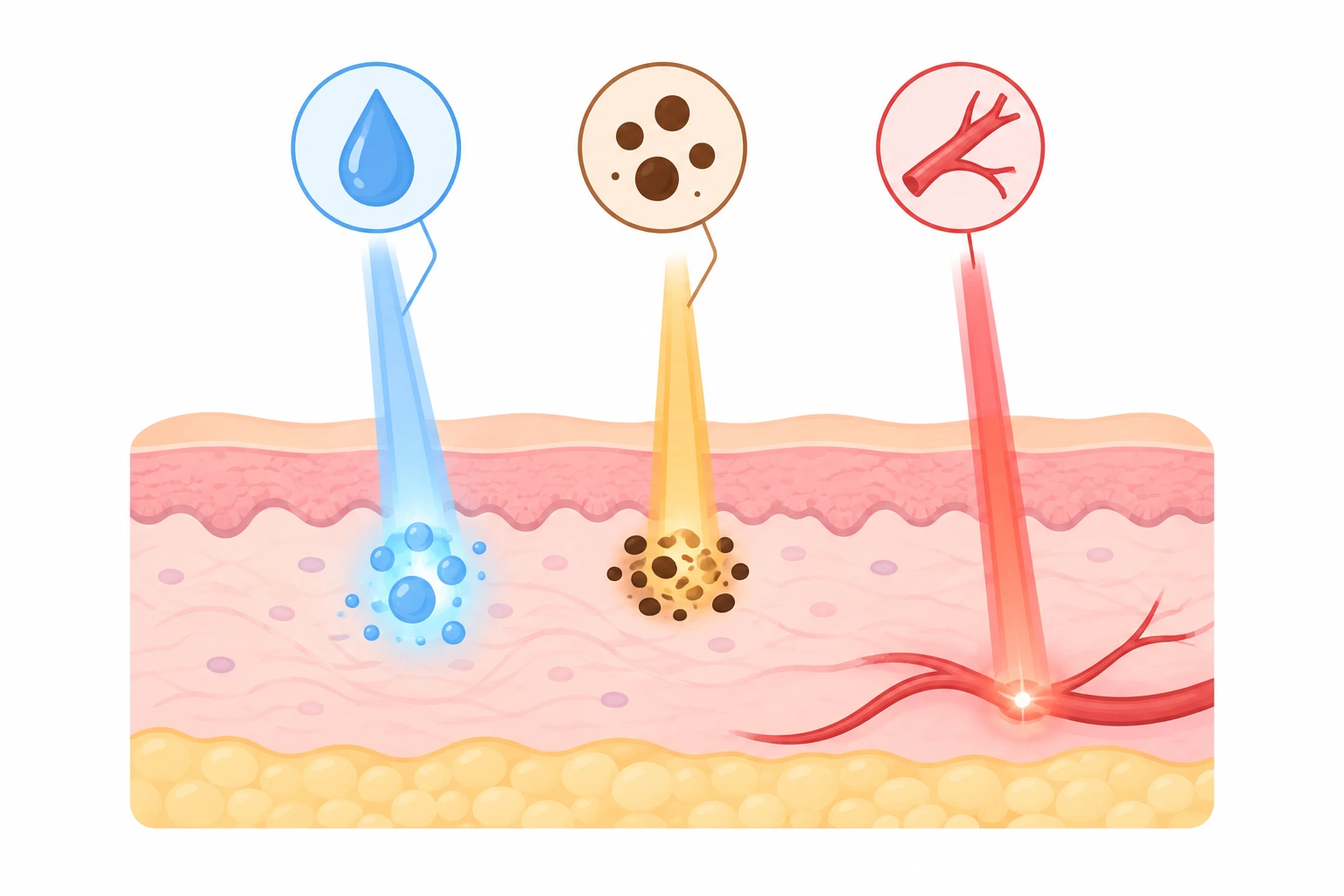
Candidacy for a laser procedure comes down to matching three things correctly: the target structure in your skin (called a chromophore), the laser wavelength best absorbed by that structure, and your individual skin biology. Lasers work by delivering light energy that is absorbed by a specific target – water, melanin, or oxygen-carrying blood vessels – and converted into heat that treats that target while, ideally, leaving the surrounding tissue undisturbed. Because every person’s skin carries a different amount of background melanin, the “right” laser for treating pigmentation in very fair skin can be the wrong, higher-risk choice in deeper skin tones. This is why a consultation looks less like picking a treatment off a menu and more like a structured risk assessment.
Clinical Overview: How Lasers Interact With Skin
The foundational principle behind every laser procedure is called selective photothermolysis – the idea that a laser can be tuned to a wavelength preferentially absorbed by one target structure, heating and affecting that structure while sparing the tissue around it. Melanin absorbs light across a broad range of wavelengths, which is why it’s the primary target for hair reduction and pigmented lesions, while oxygen-carrying blood vessels absorb light most strongly in narrower bands, making them the target for vascular concerns like visible capillaries or redness. Water, meanwhile, is the target for resurfacing lasers that address texture, fine lines, and scarring.
This matters directly for candidacy because melanin is present in everyone’s skin, not just the lesion being treated. In patients with more background skin pigment, a laser aimed at a pigmented spot or a hair follicle also partially heats the surrounding, healthy epidermis – which is the central reason Fitzpatrick skin phototype becomes such a decisive factor in which laser, and which settings, are actually safe to use.
Diagnosis: Screening for Contraindications
Before any laser touches the skin, a dermatologist screens for a specific set of factors that can rule a procedure in or out entirely:
- Suspicious or undiagnosed lesions: Any mole or growth with features suggestive of skin cancer must be properly evaluated – and biopsied if needed – before any laser is used near it, since laser treatment can mask or delay an accurate diagnosis.
- Active infection in the area: Laser treatment is deferred over active bacterial, fungal, or viral infections, including an active cold sore, since the controlled thermal injury from a laser can allow a local infection to spread.
- History of keloid or significant scarring: Patients with a personal history of keloid formation after minor skin injuries are evaluated far more cautiously for ablative procedures, since the same healing response that causes keloids can be triggered by laser-induced injury – this is one of the reasons keloid history is reviewed carefully alongside options like dedicated keloid treatment before any laser plan is finalized.
- Recent sun exposure or active tanning: Freshly tanned skin has temporarily elevated melanin activity, which raises the risk of pigment-related side effects if a laser is used too soon afterward.
- Certain autoimmune or skin conditions: Active vitiligo, psoriasis, or connective tissue disorders affecting the skin are reviewed individually, since laser-induced injury can occasionally trigger new patches of disease in some of these conditions.
Each of these is assessed individually rather than used as a blanket rule – which is exactly why the same concern can be treatable in one patient and deferred in another.
Treatment: Matching the Laser to Your Skin Type
Once absolute contraindications are ruled out, candidacy becomes a question of matching the right device and settings to your skin phototype and treatment goal.
| Fitzpatrick Phototype | General Description | Laser Candidacy Profile |
|---|---|---|
| Type I–II | Fair skin, burns easily | Broadest range of laser options; lower pigment-related risk |
| Type III | Light brown/olive skin | Good candidate profile with conservative energy settings |
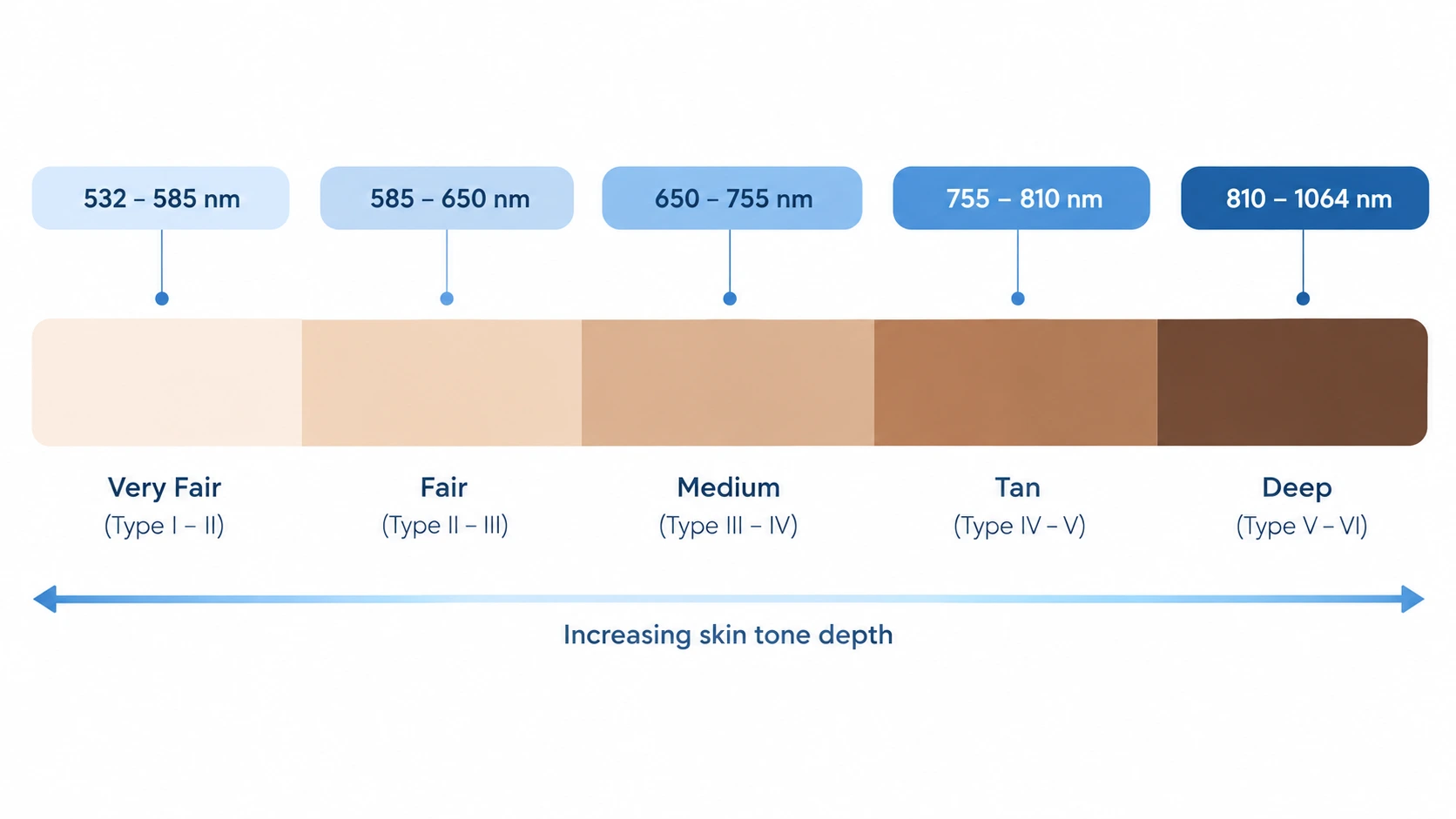
| Type IV | Moderate brown skin | Requires longer-wavelength or fractionated devices to limit pigment risk |
| Type V–VI | Deep brown to black skin | Strongest candidates for longer-wavelength, non-ablative, or fractional options; full-field ablative treatment approached with extreme caution |
For patients with deeper skin tones, longer-wavelength devices are generally preferred because they pass through surface melanin more safely and reach their target deeper in the skin without overheating the epidermis. This is also why laser hair reduction candidacy is assessed differently by skin tone – the same laser hair reduction goal is approached with a different wavelength and setting depending entirely on how much background melanin is present in the surrounding skin.
A separate, frequently asked candidacy question involves isotretinoin. For years, any recent or current use of oral isotretinoin was treated as a reason to delay nearly all energy-based procedures for 6 to 12 months. That blanket rule has since been revised – current consensus is covered in the research section below.
What the Research Shows
Several specific candidacy questions have shifted in recent years as more clinical evidence has become available:
- Isotretinoin and laser procedures: Task force guidelines from dermatologic surgery associations have found that the historical 6-to-12-month delay after oral isotretinoin is not supported by prospective clinical data for most procedures. Laser hair reduction, Q-switched pigment lasers, and non-ablative fractional resurfacing have all been shown to be performed safely during active or recent isotretinoin therapy. Full-face deep ablative resurfacing remains the one category where a more cautious approach is still reasonable.
- Darker skin phototypes and non-invasive options: Research on non-invasive cosmetic treatments for Fitzpatrick IV–VI skin tones consistently supports longer-wavelength and fractionated devices over full-field ablative treatment to reduce pigment-related complications.
- Post-inflammatory hyperpigmentation risk: Clinical literature on laser complications shows that pigment-related side effects are both the most common complication in deeper skin tones and largely preventable through correct device selection and preoperative skin preparation.
These findings reflect published dermatologic surgery literature; individual candidacy still depends on an in-person clinical evaluation.
Pre- and Post-Procedure Care
| Step | Purpose | Typical Timing |
|---|---|---|
| Topical skin priming (as advised) | Reduces pigment-related risk before treatment | 4-6 weeks pre-procedure, in appropriate candidates |
| Strict sun avoidance | Lowers baseline melanin activity and treatment risk | Before and after treatment |
| Antiviral precaution (if advised) | Prevents viral reactivation after resurfacing procedures | Around the procedure date, if applicable |
| Broad-spectrum sunscreen | Protects healing skin and prevents discoloration | Ongoing, for several months after |
Skipping preparation steps is one of the most common, and most avoidable, reasons a laser candidate experiences a side effect that proper preparation would have prevented.

Doctor Review Block
This article has been medically reviewed by Dr. Tejansu Dalal, MD (Dermatology), for clinical accuracy. Laser candidacy is never assumed from a single factor alone – skin concern, phototype, medical history, and healing capacity are all weighed together, which is why an in-person consultation remains the only reliable way to confirm whether a specific laser procedure is right for you.
References & Citations
This article draws on dermatologic laser literature, including information published by the National Center for Biotechnology Information on ablative laser resurfacing and reference material from the National Institutes of Health on laser-related complications and risk factors. Candidacy guidance reflects published dermatologic surgery consensus recommendations.