
A good moisturizer and skin boosters both aim to make skin look plumper and more hydrated – but one works entirely on the surface, while the other reaches cells that a cream can never touch. Understanding that difference is the real reason skin boosters deliver a kind of change moisturizer simply isn’t built to produce.
Skin boosters work differently than moisturizer because they are injected directly into the dermis, bypassing the skin’s outer barrier entirely, while moisturizer can only act on the surface layer it’s applied to. This lets skin boosters trigger an active biological response from skin cells – stimulating new collagen and elastin – rather than simply slowing moisture loss from the surface, which is the most moisturizer can ever do.
Key Takeaways
- Moisturizer works only on the stratum corneum, the skin’s outermost layer, because larger hydrating molecules physically cannot pass through intact skin.
- Skin boosters are injected directly into the dermis, placing hydrating and biostimulating ingredients exactly where skin cells that produce collagen actually live.
- This direct placement lets skin boosters mechanically stimulate fibroblasts – the cells responsible for producing collagen and elastin – something topical moisturizer cannot do.
- Moisturizer’s hydrating effect lasts hours and needs reapplication; skin boosters’ structural effect on skin can last months to over a year.
- The two aren’t competitors – moisturizer protects the skin’s surface, while skin boosters rebuild the deeper structure feeding that surface from below.
Introduction
Skincare routines are full of products promising to “hydrate” and “plump” skin, and skin boosters are often marketed alongside moisturizer as if they’re simply a stronger version of the same thing. They’re not. The two work in completely different layers of the skin, through completely different mechanisms, with completely different results. This article breaks down exactly why skin boosters produce a kind of change that even the best moisturizer physically cannot achieve – and where each one still has a role to play.
Why Moisturizer Can Only Work on the Surface?
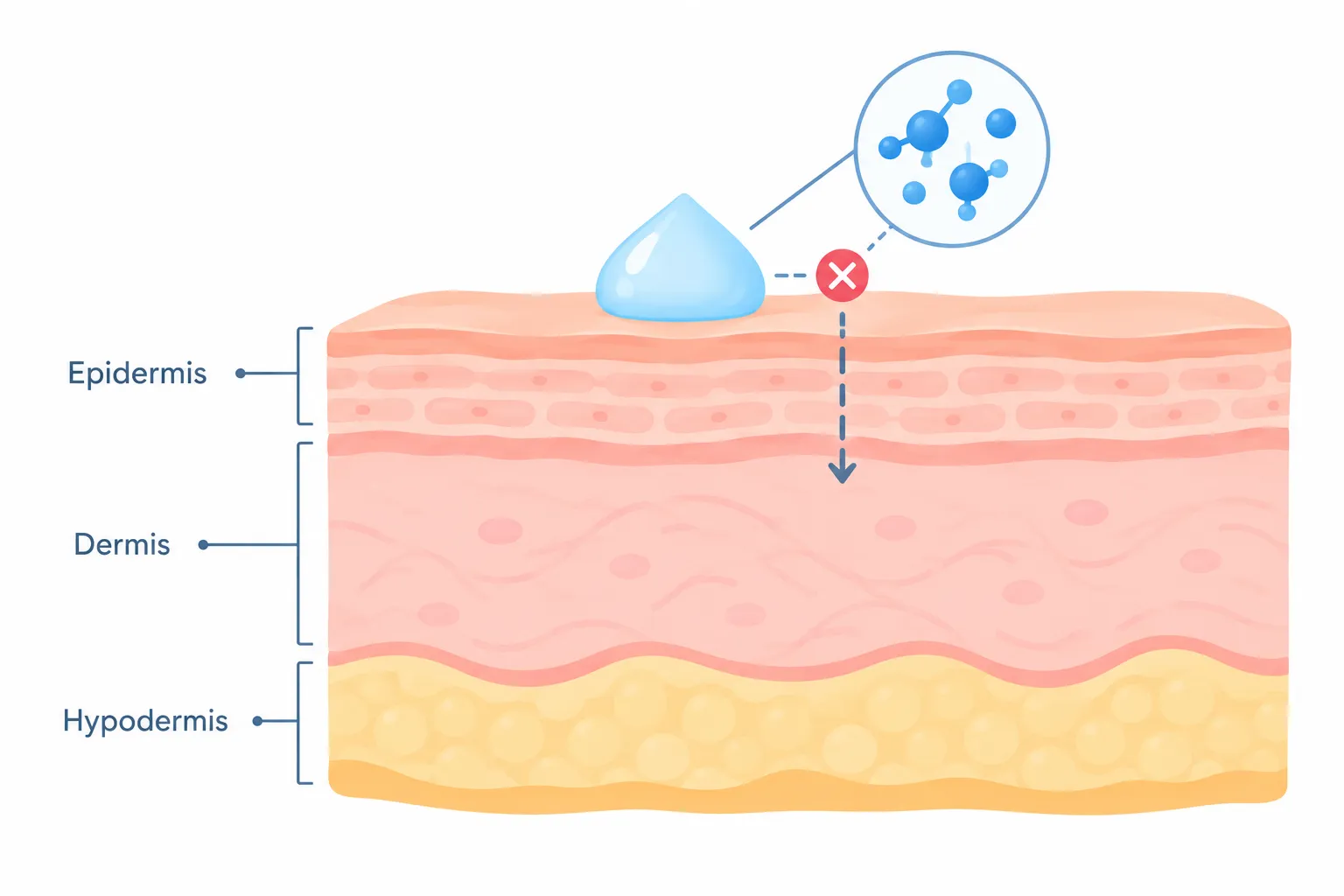
The skin’s outermost layer, the stratum corneum, is built like a wall specifically to keep things out – a dense structure of skin cells held together by a fatty, water-resistant layer. This barrier follows a well-established rule in skin science: molecules above a certain size simply cannot pass through intact skin, no matter how long a moisturizer sits on it. Most of the hydrating ingredients used in high-performance moisturizers, including hyaluronic acid, are far larger than that threshold, which is exactly why topically applied hyaluronic acid stays sitting on the surface rather than reaching the deeper, living layers of skin.
That doesn’t make moisturizer useless – it does real, measurable work holding water at the surface and reducing water loss from the skin. But by design, it cannot go any deeper than that outer wall allows.
Clinical Overview: How Skin boosters Reach the Dermis
Skin boosters take a completely different route: instead of being applied on top of the skin, they are injected directly beneath that outer barrier, into the dermis – the deeper layer where collagen, elastin, and the cells that produce them actually live. Because this delivery bypasses the surface barrier entirely, the size limitation that restricts moisturizer simply doesn’t apply. Skin boosters can deliver full-size hyaluronic acid and other biologically active ingredients directly where they’re needed, without being broken down or diluted to force them through skin that was never designed to let them pass.
Once in place, the hyaluronic acid in a skin booster absorbs the water already present in the surrounding tissue, expanding and physically creating more space and volume within the dermis – a very different process than moisturizer simply slowing evaporation at the surface.
Diagnosis: Which Skin Concerns Respond to Each Approach
Not every skin concern calls for the same solution, and recognizing which is which helps set realistic expectations:
- Surface dryness and flaking: Typically responds well to a good moisturizer, since the concern is isolated to the outer barrier layer that moisturizer is built to treat.
- Overall dullness and loss of skin “bounce”: Often reflects a deeper issue in dermal structure that moisturizer cannot meaningfully change, making it a more appropriate candidate for skin boosters.
- Fine surface lines from dehydration: Can improve somewhat with consistent moisturizer use, though lines caused by deeper structural changes typically need a dermal approach instead.
- Overall skin thickness and firmness loss: This is specifically where skin boosters have an advantage, since the mechanism that improves firmness happens in the dermis, a layer moisturizer cannot reach.
A dermatologist can help determine which category a specific concern actually falls into, since dryness and structural dullness can look similar on the surface but call for very different solutions.
Treatment: What Happens Inside the Skin After a Skin booster Session
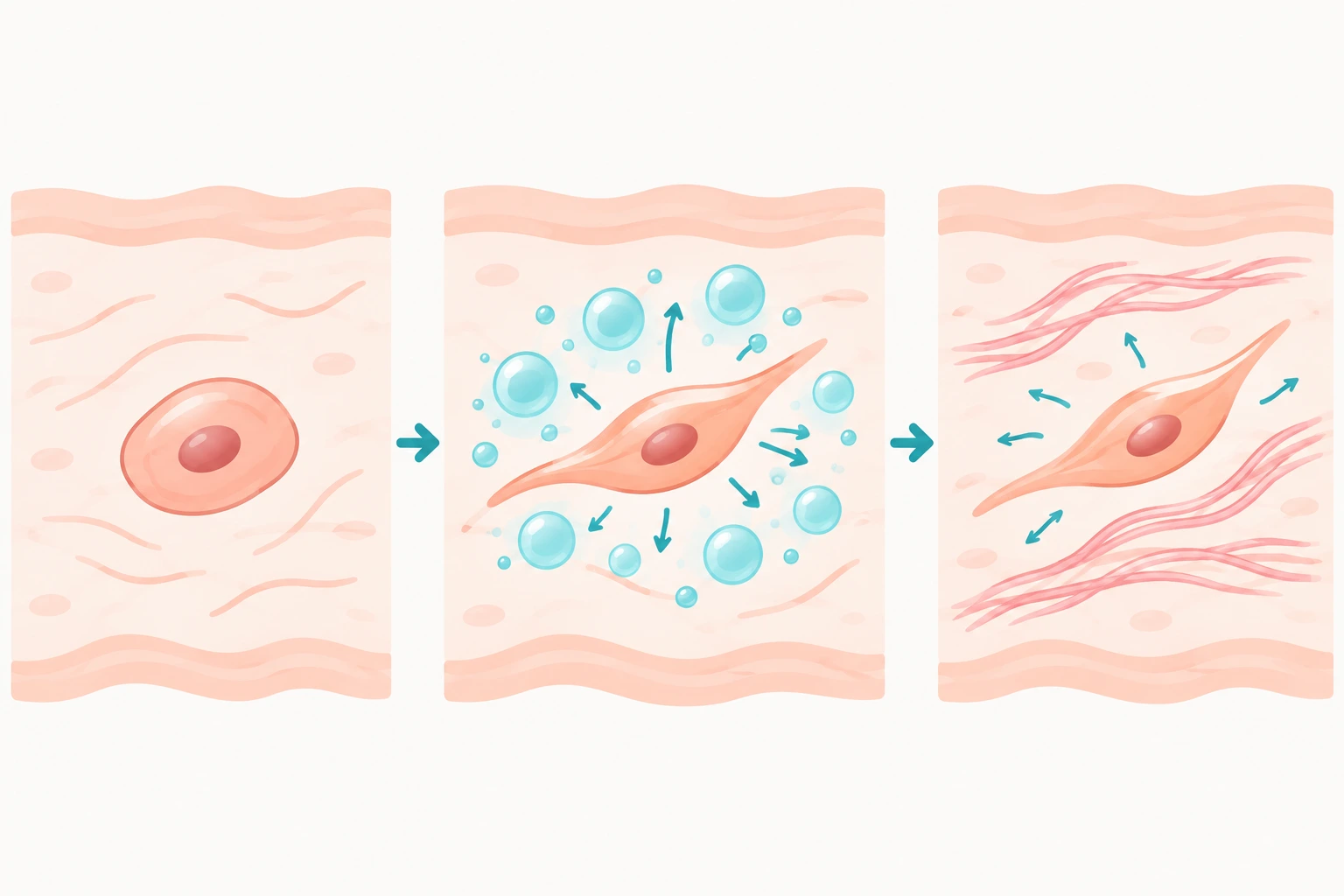
Once injected, the hyaluronic acid in a skin booster doesn’t just sit passively – it physically stretches the surrounding tissue as it absorbs water and expands. That stretching exerts a kind of gentle mechanical pressure on nearby fibroblasts, the cells responsible for producing collagen and elastin. In skin affected by aging, these fibroblasts often become somewhat inactive and collapsed; the physical stretching from a skin booster effectively “wakes them up,” prompting them to elongate and begin actively producing new structural proteins again.
This is the central reason skin boosters are typically discussed alongside broader anti-aging treatment planning rather than treated as a simple hydration product – the mechanism genuinely stimulates the skin’s own collagen-building process, rather than just adding temporary surface moisture.
What the Research Shows?
Research comparing topical hydration with injectable dermal approaches consistently points to the same structural distinction:
- Molecular size and penetration: Published research on transdermal delivery confirms that most active hydrating ingredients used in topical formulations are too large to cross an intact skin barrier, keeping their effect confined to the surface layer.
- Dermal thickness changes: Clinical studies using high-frequency ultrasound imaging have measured statistically significant, durable increases in dermal thickness following injectable hyaluronic acid treatment – a change topical application alone does not produce.
- Collagen stimulation: Research on injectable skin quality treatments describes a defined biological cascade, where mechanical stretching of dermal cells leads to measurable new collagen and elastin production, verified through tissue-level analysis.
- Duration of effect: While topical moisturizer’s hydrating effect is well documented to last only hours without reapplication, studies on injectable hyaluronic acid report structural skin improvements persisting for months at a time.
These findings reflect published dermatology and skin-barrier research; individual results vary based on skin condition, product formulation, and treatment history.
Skin boosters vs Moisturizer at a Glance
| Factor | Topical Moisturizer | Skin boosters |
|---|---|---|
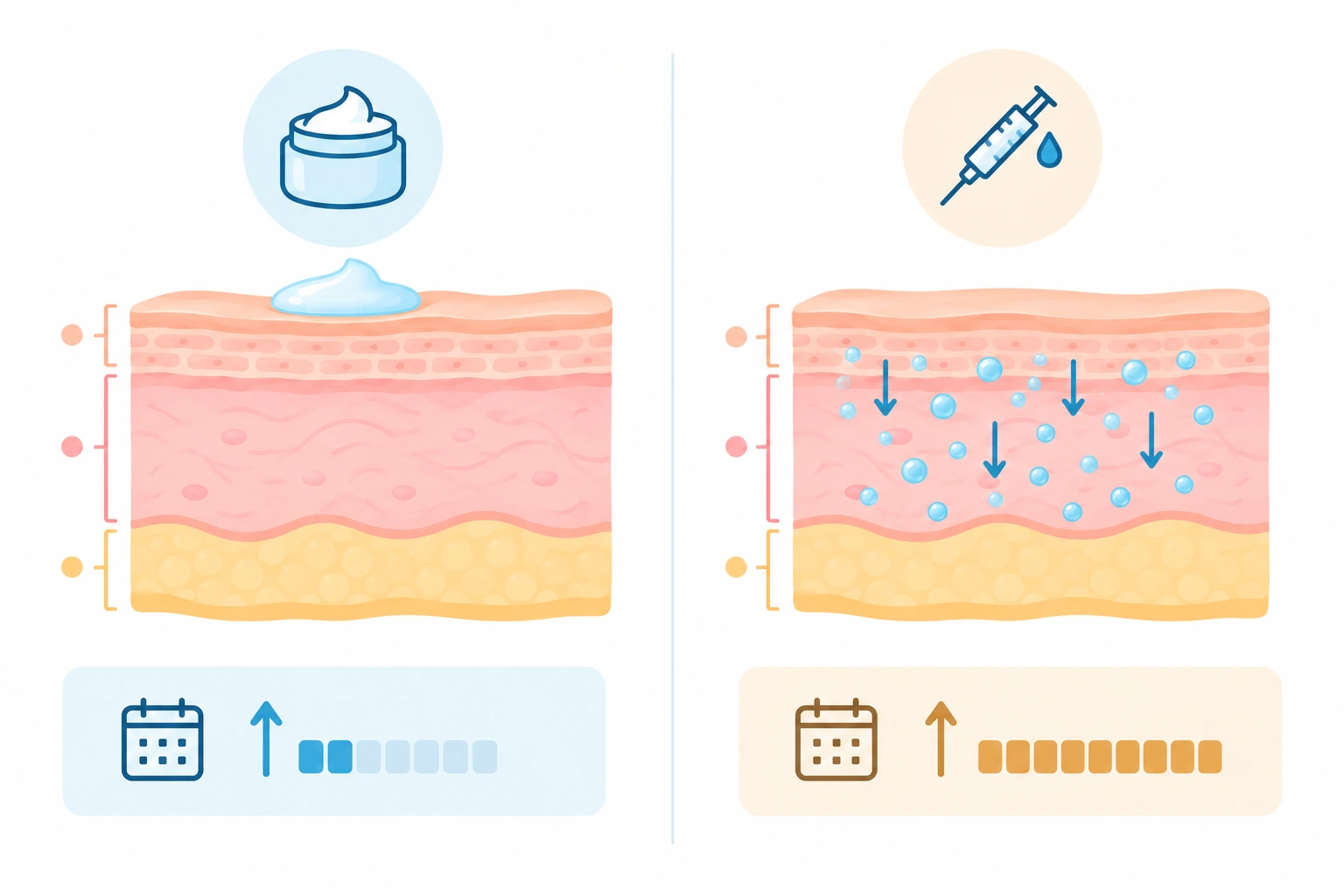
| Where it works | Surface layer (stratum corneum) | Deep layer (dermis) |
| How it’s delivered | Applied on top of skin | Injected beneath the skin barrier |
| Main effect | Slows water loss, softens surface | Stimulates collagen and elastin production |
| How long effects last | Hours, needs daily reapplication | Months to over a year |
| Best suited for | Surface dryness, daily barrier care | Deeper firmness, structural skin quality |
Moisturizer and skin boosters address different layers of the same skin – many people benefit from using both rather than choosing one over the other.
Doctor Review Block
This article has been medically reviewed by Dr. Tejansu Dalal, MD (Dermatology), for clinical accuracy. Skin boosters and moisturizer serve genuinely different purposes, and the right combination depends on an individual assessment of skin condition, concerns, and goals rather than a one-size-fits-all routine.
References & Citations
This article draws on dermatology and skin-barrier research, including findings published by the National Center for Biotechnology Information on skin booster classification and mechanisms, and reference material from the National Institutes of Health on the role and limitations of topical moisturizers. Clinical outcome figures reflect published dermatologic research.