
Walk into a consultation for pigmentation, redness, or dull skin, and you’ll often hear two different device names offered – IPL and laser. They sound similar, get used for overlapping concerns, and are frequently confused for the same thing. They aren’t, and the difference actually changes what kind of results to expect.
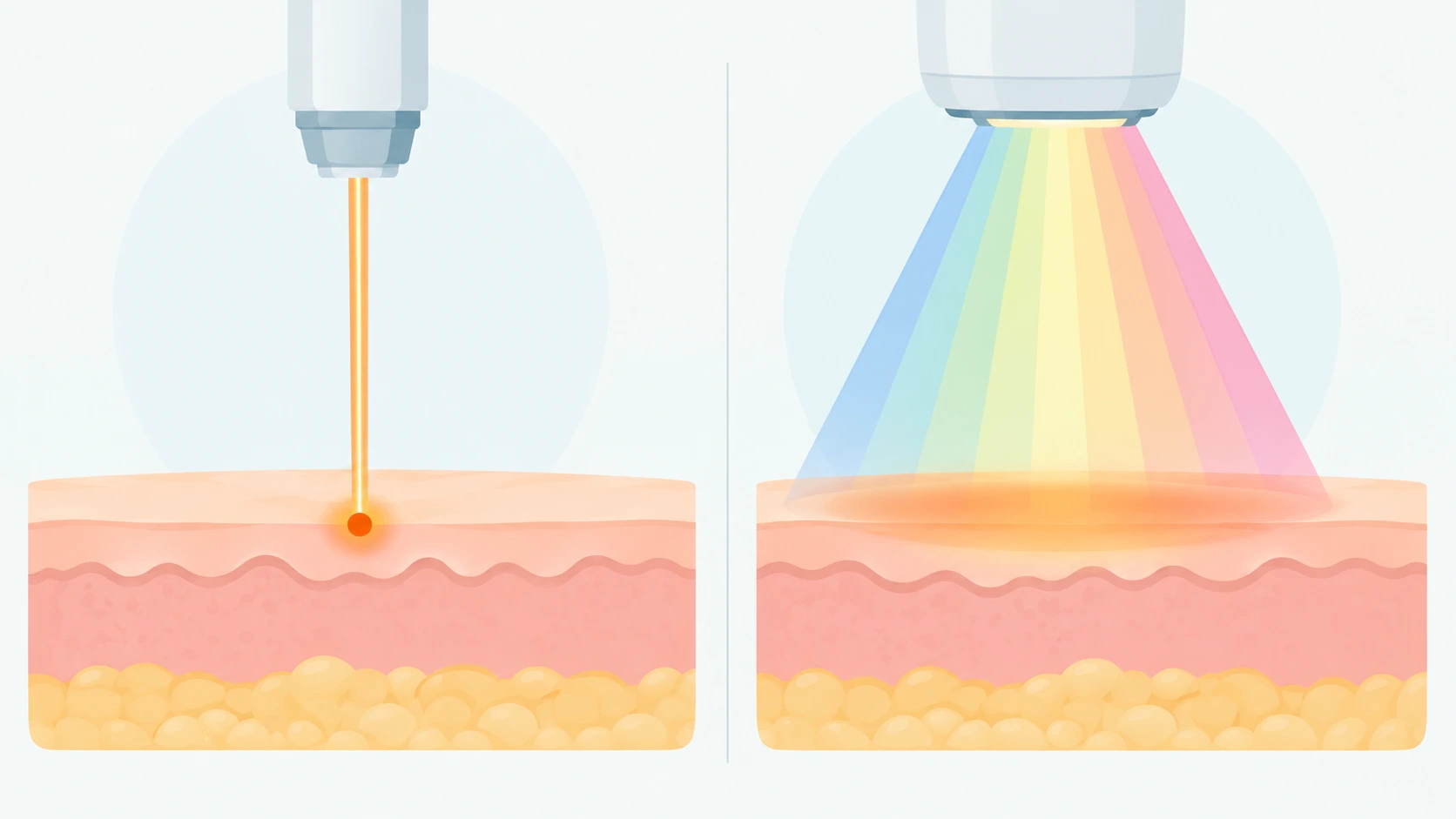
In the IPL vs laser comparison, the core difference is the type of light used. A laser produces one precise, focused wavelength of light aimed at a specific target – like a particular shade of red or brown. IPL produces a broad spray of multiple wavelengths at once, covering more ground in a single pass but with less precision on any one target. Lasers tend to suit focused, specific concerns and deeper skin tones better; IPL tends to suit widespread redness or sun damage over a larger area, mainly in lighter skin tones.
Key Takeaways
- A laser emits a single, focused wavelength of light; IPL emits a broad mix of wavelengths in one burst, which is the real difference behind the IPL vs laser debate.
- Lasers generally offer more precision for specific, well-defined concerns; IPL covers larger areas faster but with somewhat less targeted control.
- IPL carries a meaningfully higher risk of pigment changes in deeper skin tones, because its broad spectrum includes wavelengths that compete with melanin.
- For deep or structural concerns – such as significant sun damage or scarring – lasers typically dig deeper into the skin than IPL can reach.
- Neither device is universally “better” – the right choice depends on the specific skin concern, the area being treated, and natural skin tone.
Introduction
Both IPL and laser treatments work by directing light energy into the skin to improve tone, texture, redness, or pigmentation – which is exactly why the two get mixed up so often. But the kind of light each one produces, and how precisely it can be aimed, is genuinely different, and that difference shapes which concerns each is actually good at treating. This article breaks down how each technology works, which skin concerns suit which device, and why skin tone plays a bigger role in this decision than most people realize.
What Makes Light-Based Treatments Different From Each Other
A laser produces a single, specific wavelength of light – all of its energy is concentrated and aimed in one direction, like a tightly focused beam. IPL (Intense Pulsed Light) works differently: it releases a broad spread of many wavelengths at once, more like a wide flash than a narrow beam. Both rely on the same basic principle – light energy gets absorbed by a specific target in the skin, such as pigment or blood vessels, and converts to heat that triggers the skin’s natural repair process. The real distinction in IPL vs laser treatment isn’t what they’re trying to do, but how precisely they can aim while doing it.
Clinical Overview: How IPL and Laser Actually Work
Because a laser’s beam is a single wavelength, it can be tuned very specifically to a target – say, a particular tone of brown pigment or a particular size of blood vessel – and deliver energy almost exclusively to that target while mostly sparing everything around it. This is why lasers tend to perform well on focused, well-defined lesions like a single stubborn dark spot or a cluster of visible veins.
IPL’s broader spread of wavelengths means it interacts with several different targets in the skin at once – some pigment, some redness, some general texture – within a single pass. That makes it efficient for treating diffuse, spread-out concerns like overall sun damage or widespread mild redness across the cheeks, but it also means less of its energy is precisely focused on any single structure, which is part of why it generally works better on surface-level concerns than deep ones.
Diagnosis: Matching the Right Device to Your Concern
A dermatologist typically weighs a few specific factors before recommending IPL or laser:
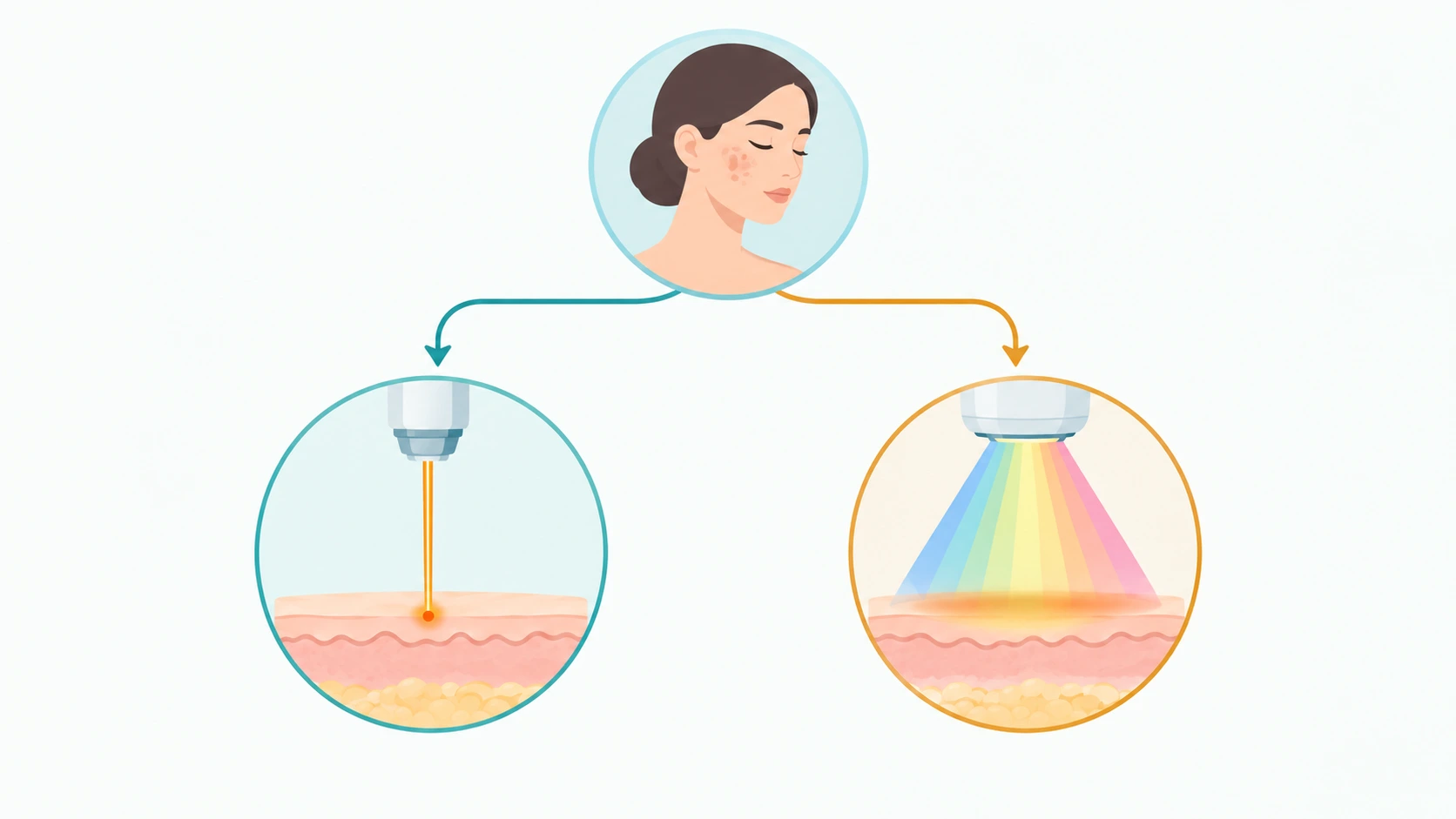
- How defined the concern is: A single dark spot, a cluster of visible veins, or a localized scar usually responds better to the targeted precision of a laser. Diffuse redness or overall sun damage spread across a wider area often suits IPL’s broader coverage better.
- How deep the concern sits: Surface-level dullness and mild pigmentation respond well to IPL. Deeper structural concerns – significant photoaging, deeper vascular lesions, or scarring that needs real tissue remodeling – generally need the focused depth a laser can deliver.
- Natural skin tone: This is one of the most important factors, and it isn’t optional – deeper skin tones carry meaningfully different risk profiles between the two technologies, covered in detail further below.
- How much downtime is realistic: Both generally involve mild redness and swelling that settles within a few days, though exact recovery varies by the specific device settings used.
Treatment: What a Session Actually Involves
A typical IPL or laser session starts with a skin evaluation to confirm which technology – and which specific settings – fit the concern being treated. A cooling gel or contact cooling device is usually applied first to protect the surface of the skin, followed by a series of light pulses across the treatment area. Most people describe the sensation as a mild snapping or warm pinching feeling.
Laser sessions, because they’re targeting a specific structure, are often quicker when the area is small and well-defined – a few passes over a localized spot or vessel. IPL sessions tend to cover broader areas like the full face or chest in a single pass, since the light spreads wider with each pulse. Afterward, mild redness, warmth, and occasional light swelling are expected for both, usually settling within a day or two, with some temporary darkening of pigmented spots as they prepare to flake off naturally over the following one to two weeks.
Choosing Based on Skin Tone
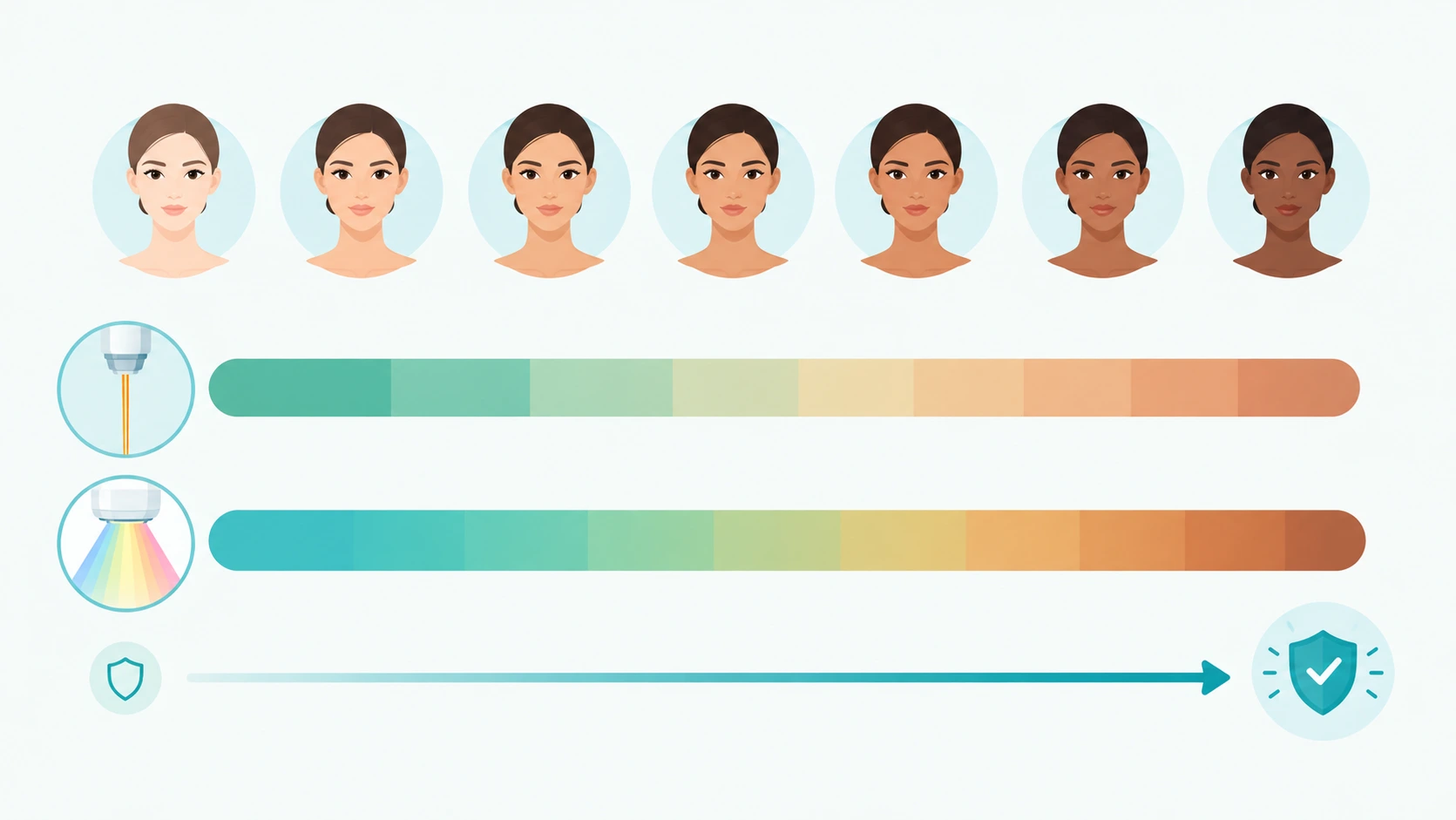
Skin tone changes this decision more than most people expect. IPL’s broad spectrum includes shorter wavelengths that are absorbed strongly by melanin – the pigment that gives skin its color. In deeper skin tones, this means IPL energy gets partly absorbed by the skin’s own surface pigment before it can reach its intended target, which raises the risk of unwanted dark or light patches afterward.
Lasers tuned to longer wavelengths largely sidestep this problem, because longer wavelengths pass through surface melanin more easily and reach their target with far less competing absorption. This is exactly why dermatologists generally lean toward specific long-wavelength lasers – rather than IPL – for patients with deeper skin tones, particularly for anything beyond very mild, conservative treatment.
This doesn’t mean IPL is unsafe for deeper skin tones in every case, but it does mean the settings have to be chosen far more conservatively, and a thorough in-person evaluation matters more here than almost any other factor in the IPL vs laser decision.
What the Research Shows
Published dermatologic research supports several specific points about how these technologies compare:
- Precision versus coverage is a real, measurable tradeoff: Research comparing focused lasers to broad-spectrum light consistently shows lasers achieving more targeted clearance of specific lesions, while broad-spectrum treatments show broader but shallower improvement across wider areas in a single session.
- Skin tone significantly changes complication rates: Studies on darker skin phototypes report meaningfully higher rates of pigment-related side effects with shorter-wavelength, broad-spectrum treatments compared to longer-wavelength lasers, which show notably lower complication rates in the same skin tones.
- Diffuse redness responds well to broad-spectrum treatment: Research on generalized facial redness and widespread background redness shows broad-spectrum light achieving results comparable to more targeted vascular lasers for this specific, spread-out type of concern.
- Deeper structural concerns favor focused technology: Research on deeper skin remodeling, such as significant sun damage or scar structure, consistently shows better outcomes with focused, longer-wavelength approaches than with broader, shallower light delivery.
These findings reflect published dermatologic research; which approach is right for an individual still depends on an in-person evaluation of the specific concern and skin tone.
Doctor Review Block
This article has been medically reviewed by Dr. Tejansu Dalal, MD (Dermatology), for clinical accuracy. Neither IPL nor laser treatment is inherently superior – the right choice comes down to matching the specific concern, its depth, and the patient’s natural skin tone to the technology best suited for it, which is exactly what an individual evaluation is for.
References & Citations
This article draws on dermatologic light-based therapy research, including findings published by the National Center for Biotechnology Information on light-based treatment of pigmentation and post-inflammatory changes, and reference material from the National Institutes of Health on the safety and efficacy of broad-spectrum light therapy. Clinical comparison data reflects published dermatologic light-therapy research.