Laser skin resurfacing can meaningfully improve scarring, deep lines, and sun damage – but how it works, and how long recovery actually takes, depends heavily on which type of resurfacing laser is used. Understanding that difference changes what to expect from the moment treatment ends.
Laser skin resurfacing works by using targeted heat to either remove the outer skin layer entirely (ablative) or heat it without breaking the surface (non-ablative), triggering the skin to rebuild itself with fresh collagen. Recovery ranges from just a few days of mild redness for gentler non-ablative treatments to one to two weeks of visible healing for fully ablative treatments, with final results continuing to improve for several months afterward.
Key Takeaways
- Laser resurfacing falls into three main categories – fully ablative, non-ablative, and fractional – each with a very different recovery experience.
- Fully ablative lasers remove the entire outer skin layer and deliver the strongest results, but require the longest, most involved recovery.
- Fractional lasers treat skin in a pattern of tiny columns, leaving healthy tissue in between to speed up healing while still triggering real collagen rebuilding.
- Visible “social downtime” (redness, swelling, peeling) is usually much shorter than the full biological healing process, which can continue improving skin for up to six months.
- Certain post-treatment steps – keeping skin consistently moist and avoiding specific skincare ingredients for a few weeks – meaningfully affect how smoothly recovery goes.
Introduction
Laser skin resurfacing is often talked about as one single treatment, but there are genuinely different categories of resurfacing lasers, and each one creates a different kind of injury to the skin, heals differently, and takes a different amount of time to show final results. Understanding which category a specific treatment falls into is the key to knowing what recovery will actually feel like – not just how “good” the laser supposedly is. This article walks through how resurfacing lasers actually work, what happens to skin during recovery, and what genuinely helps that process go smoothly.
The Three Types of Laser Resurfacing
Resurfacing lasers work by heating water inside skin cells, and the difference between types comes down to how much of the skin surface gets removed in the process.
| Type | What Happens to the Skin Surface | Typical Recovery |
|---|---|---|
| Fully ablative | Entire outer layer removed across the whole treated area | 10-14+ days, longest recovery |
| Fractional ablative | Tiny columns removed, surrounded by untouched skin | 5-7 days |
| Non-ablative (fractional) | Surface stays intact; heat delivered beneath it | 3-5 days, often just mild redness |
Fully ablative treatment delivers the most dramatic single-session improvement because it removes damaged tissue outright, but that also means a genuinely open wound that needs time to heal. Fractional treatments – whether ablative or non-ablative – leave small islands of healthy, untouched skin between each treated spot, which speeds healing considerably because those untouched areas can supply new cells to the treated ones.
Clinical Overview: What Happens to Skin During Treatment
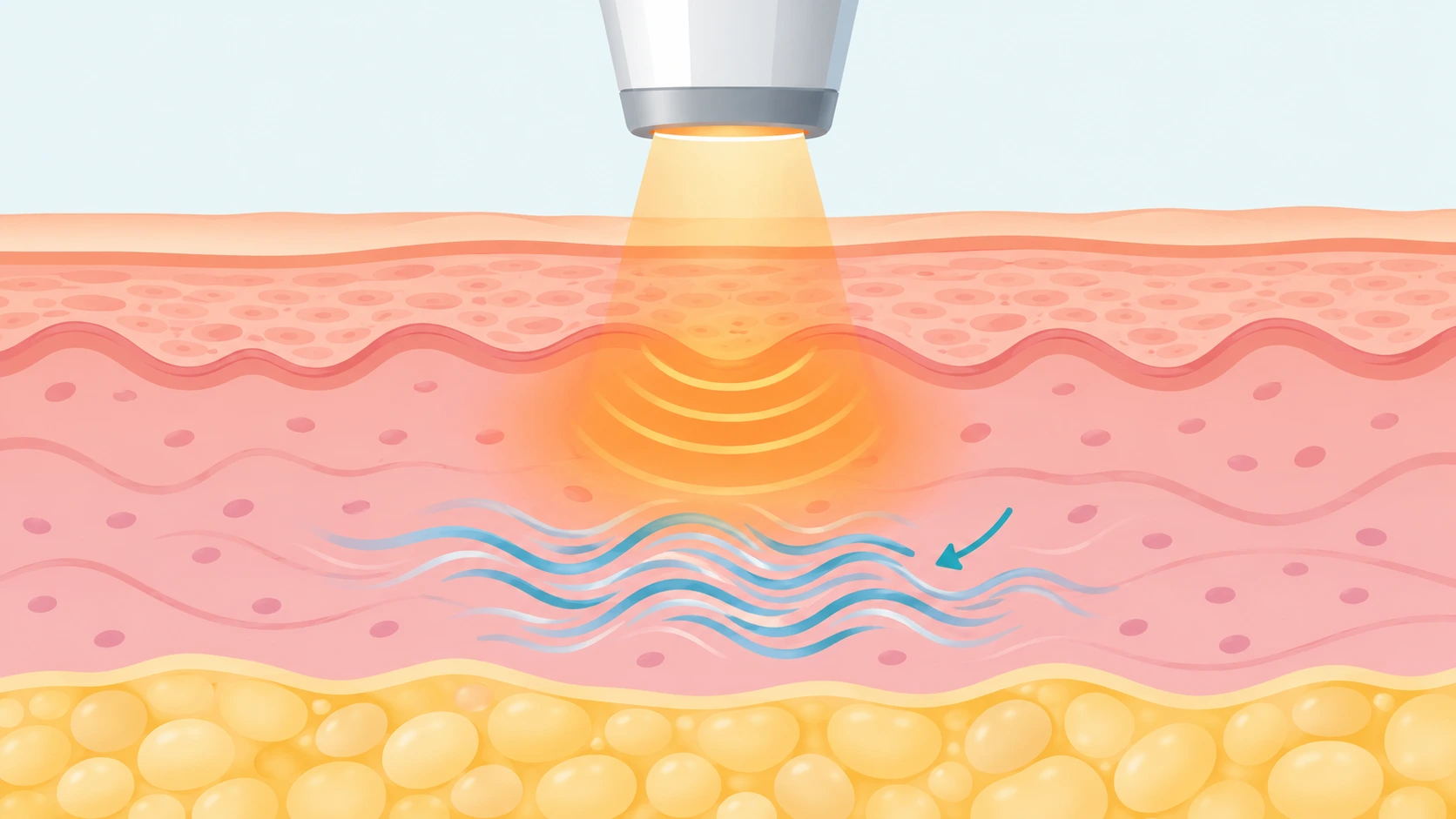
Regardless of type, laser resurfacing works through a process called selective photothermolysis – the laser’s energy is absorbed specifically by water in the skin, heating it enough to damage the targeted tissue while (ideally) sparing what’s around it. Fully ablative lasers heat tissue so intensely that it vaporizes instantly, removing it outright. Non-ablative lasers heat tissue to a lower temperature that damages it internally without vaporizing or breaking the surface, leaving the stratum corneum intact as a natural protective layer while deeper repair happens underneath.
That thermal injury – however it’s delivered – triggers the skin’s own repair response. Damaged tissue release signals that call in the cells responsible for cleaning up debris and, more importantly, prompt skin cells called fibroblasts to start producing fresh collagen. This new collagen production doesn’t happen overnight; it builds gradually and continues for months, which is exactly why resurfacing results keep improving well past the point where the skin looks “recovered” on the surface.
Diagnosis: Matching the Right Type to Your Skin
The right resurfacing approach depends on a few specific factors a dermatologist evaluates:
- Severity of the concern: Deep scarring or pronounced sun damage often responds best to fully ablative or fractional ablative treatment, while finer lines and mild texture issues often do well with gentler non-ablative options.
- How much downtime is realistic: Someone who can’t take a week or more away from normal activities is generally steered toward fractional or non-ablative options rather than fully ablative treatment.
- Skin tone: Deeper skin tones generally do better with non-ablative fractional treatment, since full ablative lasers carry a higher risk of causing lasting dark or light patches in melanin-rich skin.
- Cold sore history: Anyone with a history of oral herpes needs preventive antiviral medication before treatment, since the thermal stress of resurfacing can reactivate the virus even without a prior outbreak at the treatment site.
A thorough skin evaluation – not just the concern being treated – is what ultimately determines which type of resurfacing makes sense.
Treatment: The Recovery Timeline, Stage by Stage
Recovery from laser resurfacing follows a fairly predictable pattern, though the intensity and duration of each stage depends on which type was used.
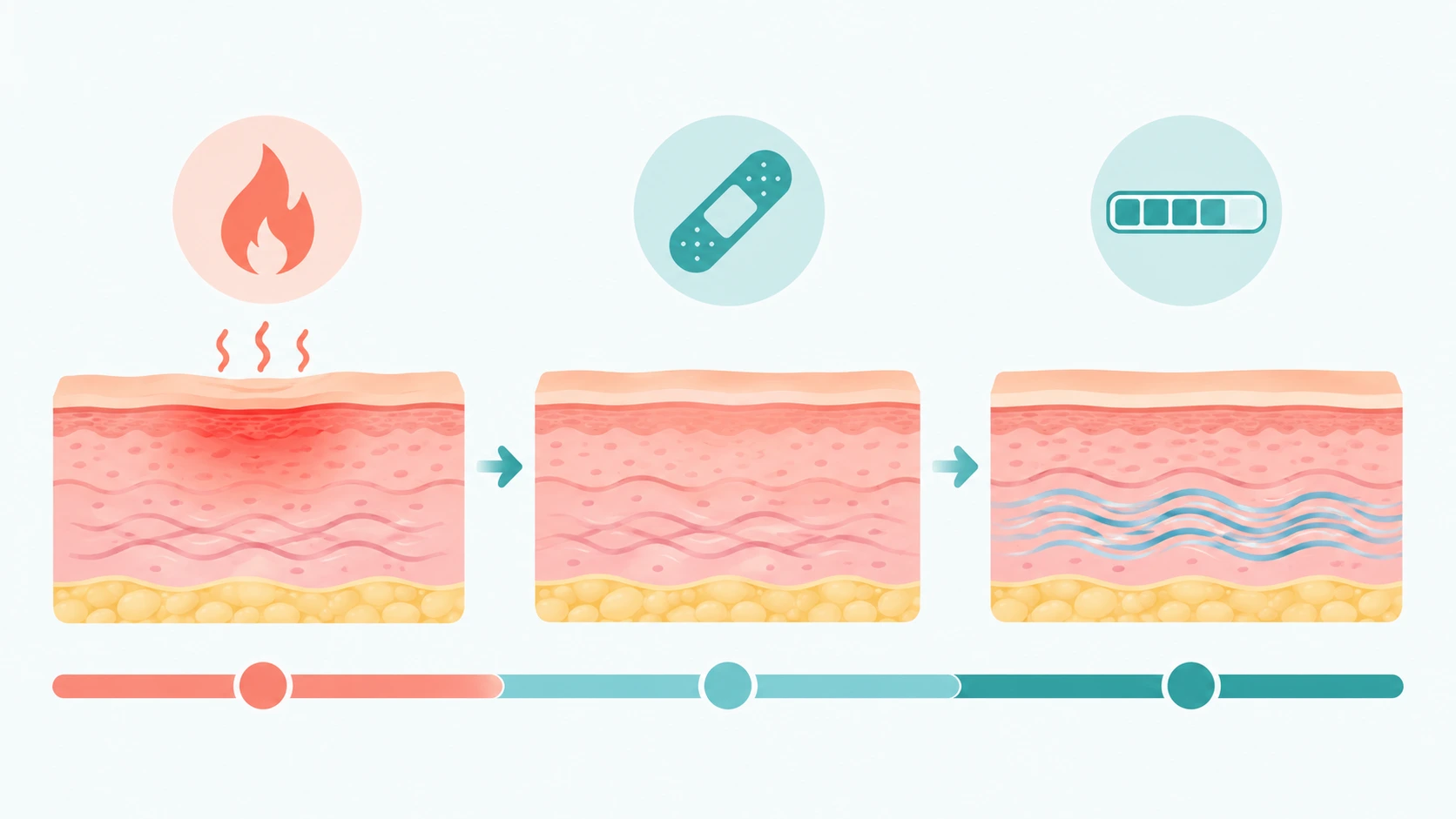
Days 1 to 3 – Initial inflammation. Redness, swelling, and a burning or stinging sensation are expected immediately after treatment. For ablative treatments, this stage also includes oozing and fluid discharge as the open wound responds to the injury.
Days 3 to 14 – Surface healing. New skin cells migrate across the treated area to close the wound. Ablative treatments show visible peeling and darkening of the surface during this window; non-ablative treatments typically show a milder, sandpaper-like roughness as damaged material works its way out.
Weeks 2 through several months – Deeper rebuilding. Once the surface has closed, the skin underneath keeps remodeling. Persistent pink or pale discoloration is common during this stretch and is a normal sign of active repair, not a complication. Final texture and firmness improvements generally peak between three and six months after treatment.
Medication Guide: What Actually Helps Recovery
| Step | Purpose | Typical Timing |
|---|---|---|
| Antiviral medication | Prevents cold sore reactivation from treatment stress | Started before treatment, continued ~7–10 days |
| Occlusive ointment (e.g., plain petroleum jelly) | Keeps the healing area moist, speeds surface closure | Continuously during the open-wound phase |
| Dilute vinegar-water soaks | Gently cleanses and discourages bacterial growth | Every few hours in the first 48–72 hours, ablative only |
| Mineral sunscreen | Protects new, sensitive skin from pigment changes | Daily from the moment skin closes, ongoing |
Retinoids, exfoliating acids, and vitamin C are typically paused for two to four weeks post-treatment, since healing skin absorbs these ingredients more intensely and can react poorly to them too soon.
What the Research Shows
Clinical research on laser resurfacing consistently supports several points relevant to what to expect:
- Collagen remodeling is gradual: Studies tracking tissue changes after resurfacing show new collagen production increasing over weeks and continuing for up to six months, explaining why final results take time to fully appear.
- Fractional treatment speeds healing without sacrificing results: Research comparing fractional and fully ablative approaches shows meaningfully faster re-epithelialization with fractional treatment while still achieving significant collagen-driven improvement.
- Moist wound care improves outcomes: Published recovery protocols consistently support continuous occlusive ointment use during the open-wound phase to reduce the risk of excessive scarring or delayed healing.
- Isotretinoin guidance has shifted: Updated consensus guidelines now support safely performing non-ablative and superficial fractional ablative resurfacing during or shortly after isotretinoin therapy, reversing the older blanket 6-to-12-month delay recommendation.
These findings reflect published dermatologic research; individual recovery experience and results vary by treatment type, skin characteristics, and aftercare followed.
Doctor Review Block
This article has been medically reviewed by Dr. Tejansu Dalal, MD (Dermatology), for clinical accuracy. The type of resurfacing laser used has a much bigger effect on recovery time than people often expect, which is why matching the right technology to the specific skin concern and downtime tolerance matters as much as the treatment itself.
References & Citations
This article draws on dermatologic laser research, including findings published by the National Center for Biotechnology Information on fractional laser resurfacing advances, and reference material from the National Institutes of Health on the spectrum of non-ablative, fractional, and ablative resurfacing. Clinical recovery data reflects published dermatologic surgery literature.