
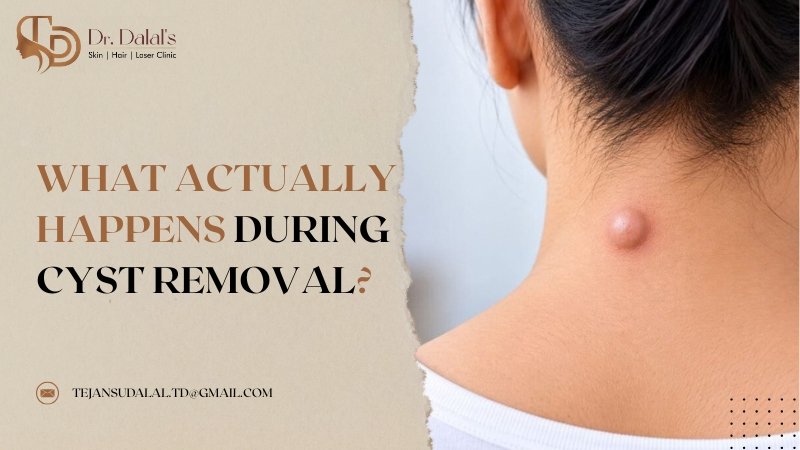
A cyst under the skin might seem simple enough to just “pop” at home – but doing that almost never removes it for good. Understanding what actually has to happen during proper cyst removal explains why the sac itself, not just its contents, is the real target.
Cyst removal works by taking out the entire sac that forms the cyst – not just draining what’s inside it. Simply squeezing or draining a cyst leaves its lining behind, which is exactly why it tends to come back. A proper removal procedure separates and removes this lining intact, closes the space it leaves behind in layers, and usually sends the tissue for lab examination to confirm it’s benign. Recovery is generally straightforward, with stitches (when used) typically removed within one to two weeks.
Key Takeaways
- A cyst is essentially a sac with its own lining – draining or squeezing only removes the contents, not the sac itself, which is why it often grows back.
- Whether a cyst can be removed right away or needs to calm down first depends on whether it’s currently inflamed or infected.
- Larger, long-standing cysts sometimes need a small amount of the overlying skin removed too, to avoid leaving loose, sagging skin behind.
- Proper closure of the space left behind matters just as much as removing the cyst itself, since poor closure can lead to fluid buildup or a slower recovery.
- Removed tissue is routinely sent for lab examination, because while the vast majority of cysts are entirely harmless, it’s standard practice to confirm this rather than assume it.
Introduction
Cyst removal sounds like a simple, almost minor procedure – and in most cases, it genuinely is. But what makes a removal actually successful, rather than something that grows back a few months later, comes down to a few specific details most people never hear about. This article walks through what a cyst actually is, how a clinician decides when and how to remove one, and what the recovery process actually looks like.
What a Cyst Actually Is Beneath the Surface?
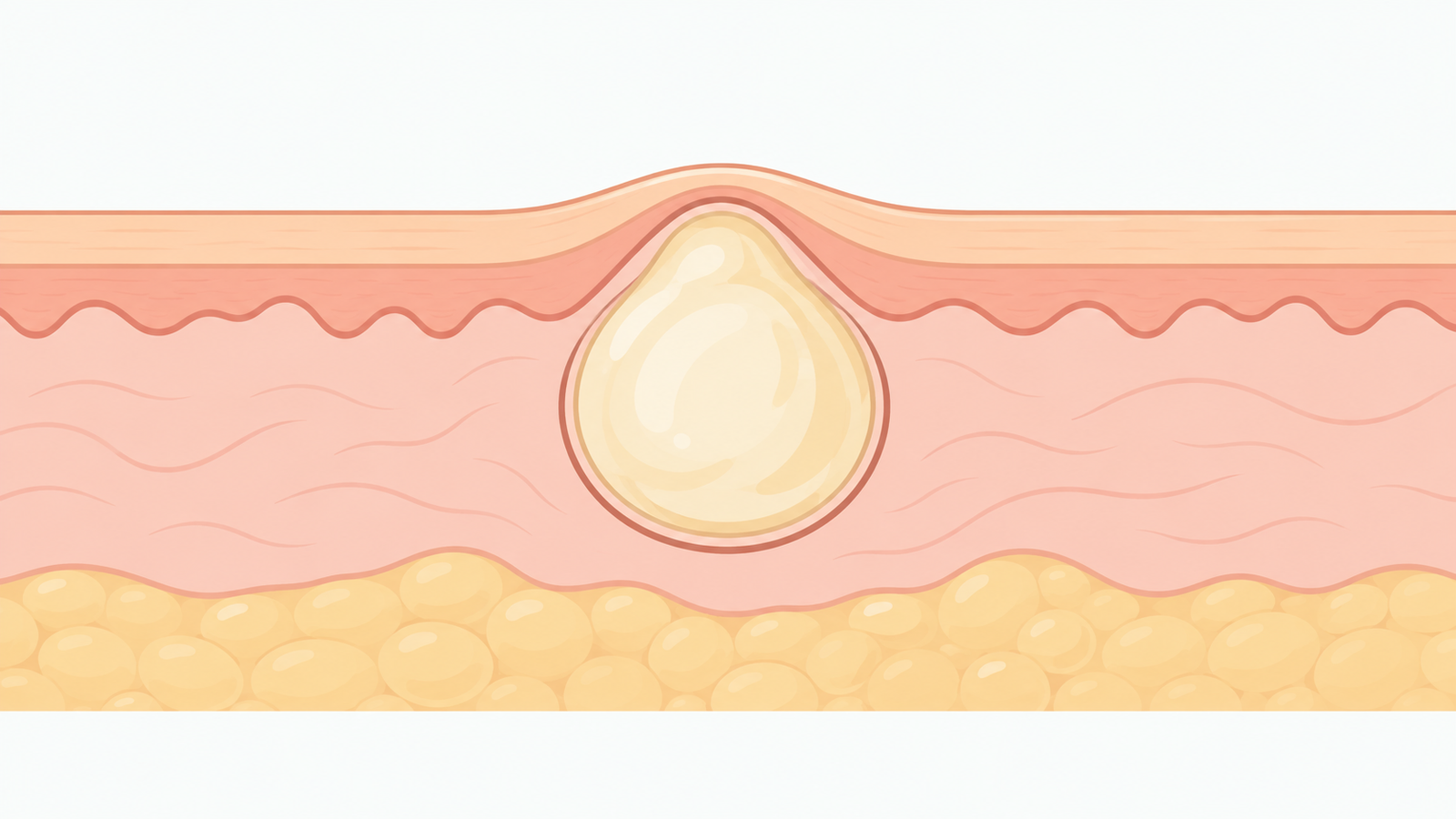
Most common skin cysts form when skin cells get trapped beneath the surface instead of shedding normally, creating a small sac with its own lining that slowly fills with a soft, keratin-based material. This sac is the actual structure causing the lump – not just the material sitting inside it.
This distinction matters enormously for treatment. Simply draining or squeezing a cyst clears out the visible contents, but the lining that produces that material stays behind and simply continues producing more, which is exactly why cysts handled this way so often return. True removal means taking the entire sac, lining and all.
Clinical Overview: Why Timing and Technique Matter
Not every cyst is ready for removal the moment it’s noticed. A calm, non-inflamed cyst – soft, mobile, with clearly defined edges – is generally a straightforward candidate for removal at any time. But a cyst that has become inflamed, tender, or infected is a different situation entirely: the tissue is fragile and swollen, making it very difficult to remove the sac cleanly, and attempting it at this stage raises the risk of leaving fragments behind or complications afterward.
When a cyst is inflamed but not yet infected, calming the inflammation first – often with a simple injected anti-inflammatory medication – allows a cleaner, more successful removal a few weeks later. When a cyst has become acutely infected and full of fluid, the immediate priority shifts to relieving pressure and discomfort, with full removal of the sac itself scheduled once the acute infection has settled down.
Diagnosis: What Gets Checked Before Removal
Before recommending removal, a clinician typically evaluates a few specific things:
- Size and mobility: Smaller, clearly mobile lumps with a defined edge can usually proceed straight to removal without further imaging.
- Depth and growth pattern: Larger lumps, ones that feel firmly attached to deeper tissue, or ones growing unusually quickly may need an ultrasound scan to confirm what’s actually underneath the skin before any procedure is planned.
- Current inflammation status: Whether the cyst is calm, mildly irritated, or actively infected directly determines whether removal can proceed now or needs to be scheduled after initial treatment.
- Location and skin tension: Where the cyst sits on the body affects both the removal approach and how the resulting wound is best closed for a clean result.
Treatment: What the Removal Procedure Actually Involves
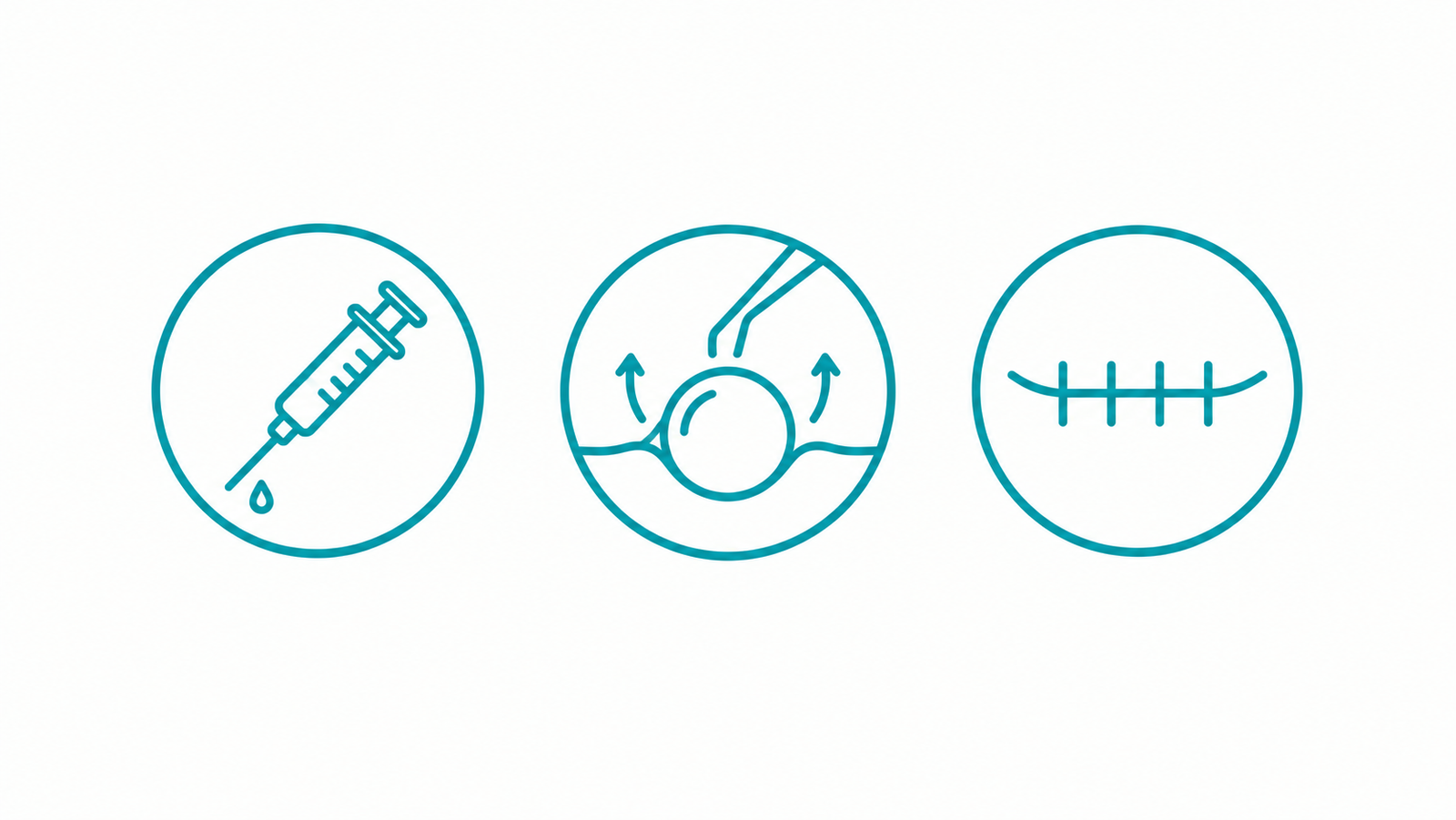
A standard cyst removal procedure begins with a local anesthetic injected around – not directly into – the cyst, which keeps the area numb while avoiding pressure that could rupture the sac prematurely. The clinician then makes a small incision, carefully separates the cyst’s sac from the surrounding tissue, and removes it as intact as possible. For long-standing or larger cysts, a small amount of the stretched overlying skin may also need to be removed, since skipping this step can leave loose, sagging skin behind.
Once the sac is out, the space it leaves behind is closed in layers – first beneath the surface to stop fluid from collecting, and then at the skin’s surface for a clean result. Smaller, well-defined cysts can sometimes be removed through a tiny opening without needing stitches at all, while larger or more established cysts generally need a more complete removal with proper layered closure. The entire procedure typically takes well under an hour for a straightforward case.
Recovery Guide: Healing and Aftercare
Mild swelling, light bruising, and a small amount of fluid at the site are normal in the first day or two after removal. Keeping the area clean, dry, and covered with a simple dressing for the first 24 to 36 hours helps the wound settle properly, and swimming or soaking the area should be avoided until it’s fully closed over. When stitches are used, they’re typically removed within about one to two weeks, depending on the location.
A detail that genuinely matters for long-term success: the removed tissue is routinely sent to a lab for examination. Skin cysts are overwhelmingly benign, but confirming that in every case – rather than assuming it – is standard, responsible practice, and it also provides peace of mind.
What the Research Shows?
Published surgical and dermatologic research supports several specific points about cyst removal:
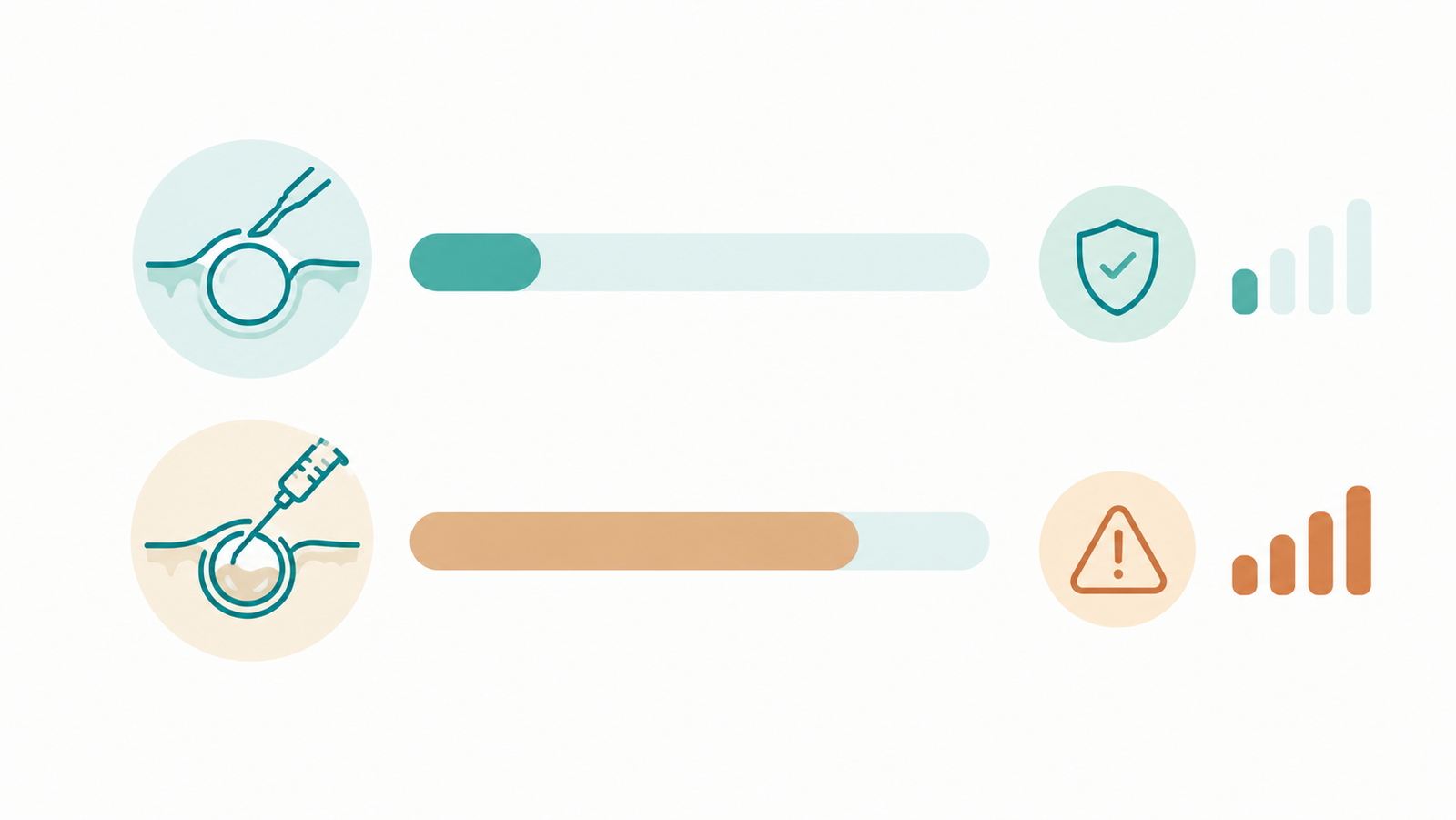
- Complete removal dramatically outperforms draining alone: Research comparing full removal techniques to simple drainage shows recurrence rates under 1 percent for complete removal, compared to very high recurrence when the sac lining is left behind.
- Technique choice involves a real trade-off: Studies comparing minimally invasive removal methods to standard full removal show a modest increase in recurrence risk (roughly 3 to 8 percent) with less invasive techniques, traded off against a smaller resulting scar – a genuine choice rather than one approach being simply “better.”
- Newer radiofrequency-based techniques show promising results: Research on radiofrequency-assisted removal reports successful complete removal in the large majority of non-scarred cases, with a notably smaller visible scar, particularly relevant for areas like the face.
- Lab examination occasionally catches something unexpected: Research confirms that a very small percentage of long-standing or repeatedly irritated cysts show unexpected changes under the microscope, reinforcing why routine lab examination of all removed tissue remains standard practice even though it is rarely necessary.
These findings reflect published surgical and dermatologic research; the right approach for any individual case still depends on an in-person evaluation.
Doctor Review Block
This article has been medically reviewed by Dr. Tejansu Dalal, MD (Dermatology), for clinical accuracy. Successful cyst removal comes down to taking out the entire sac, not just its contents, and closing the resulting space properly – details that make the difference between a procedure that resolves the issue for good and one that leads to it coming back.
References & Citations
This article draws on dermatologic surgical research, including findings published by the National Center for Biotechnology Information on the clinical management of epidermoid cysts, and reference material from the National Institutes of Health on epidermal inclusion cyst diagnosis and treatment. Clinical outcome figures reflect published dermatologic surgery research.