
Almost everyone who starts acne treatment asks the same question: “Will my pimples go away for good?” The honest answer is more hopeful than most people expect, but also more nuanced. Acne can be controlled for years, and some people stay clear without any medicine at all. But acne is a long-term skin condition, not a one-time infection, so what you do after the pimples clear matters as much as how you clear them.
Acne treatment can give long-lasting clearance, but no one can promise a permanent cure for everyone. Acne is a chronic, oil-gland and hormone-driven condition, so pimples can return when treatment is stopped. Some strong treatments can keep skin clear for years after they end. Others only work while you keep using them. The single best way to prevent a comeback is a simple maintenance routine, usually a retinoid cream, continued after the pimples clear. People who keep up maintenance relapse far less often than those who stop completely.
Key Takeaways
- Acne is a chronic condition linked to oil glands, blocked pores, hormones and inflammation. Clearing visible pimples does not remove the tendency to get them again.
- A strong prescription medicine given by a dermatologist can give long drug-free clearance, but even then, pimples return in some people. Relapse is reported in roughly 1 in 10 to 6 in 10 people across studies, depending on how it is measured.
- Hormone-based treatments work only while you take them. Stopping can bring back a flare in about 3 to 6 months.
- Stopping treatment too early is one of the biggest reasons acne returns.
- A maintenance routine after clearance, often a retinoid cream, sharply reduces relapses.
- Younger age at treatment and being female are linked to a higher chance of relapse, but this can be planned for.
Introduction
Many people stop their acne treatment the moment their skin looks clear. Three months later, the breakouts are back, and they conclude that the treatment “did not work.” In reality, the treatment worked, and the plan simply ended too soon.
Understanding why acne returns, who is more likely to relapse and what a good maintenance plan looks like can save you months of frustration. This article explains it in simple terms, so you can approach acne treatment as a long-term skin plan rather than a short course.
What Acne Is and Why It Is Long-Term?
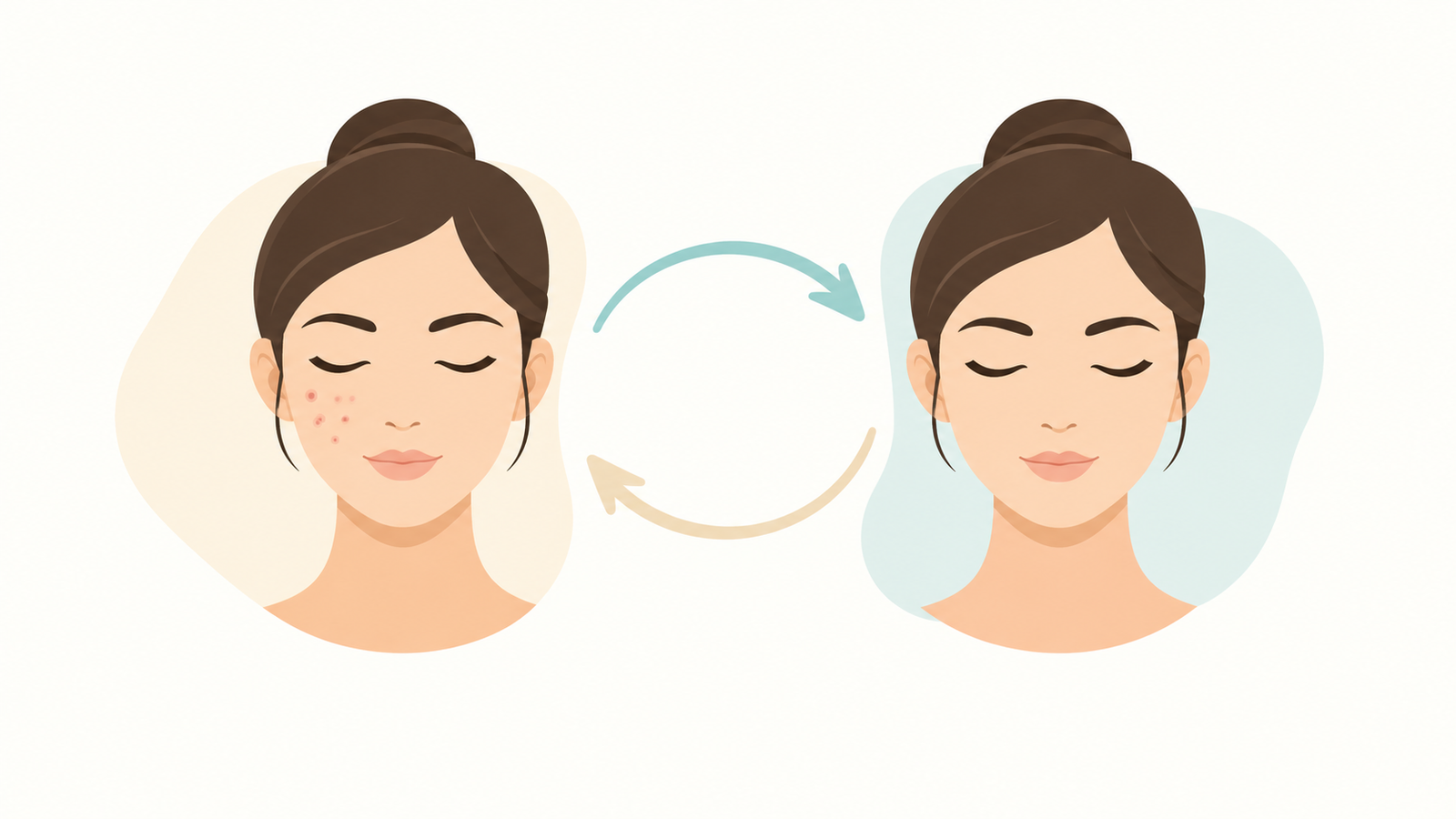
Acne starts in the hair follicle and its oil gland. Four things work together: the oil gland makes too much oil, dead skin cells stick together and block the pore, a normal skin bacterium multiplies and the body reacts with inflammation. This produces blackheads, whiteheads, red pimples and, in some people, deep painful lumps and scars.
Hormones and genes control how active your oil glands are. That is why acne often begins at puberty, can flare around periods, stress or hormone changes and may continue into your 30s and 40s, especially in women.
Clinical Overview: Why Pimples Come Back
Every visible pimple begins as a tiny blocked pore, called a microcomedone, which is too small to see. Medicines that clear visible pimples do not necessarily change the tendency to form these tiny plugs. When treatment stops, the oil gland and the lining of the pore return to their old behaviour, and new plugs begin to form. Within weeks to months, they turn into visible pimples.
Three patterns explain most relapses:
- The treatment suppressed acne but did not change the gland. Antibiotics, hormonal medicines and most creams work only while you use them.
- Treatment ended early. Stopping before the planned course is finished greatly increases the chance of relapse.
- Hormones kept driving the oil glands. In adult women, ongoing hormone activity can restart acne as soon as hormonal treatment is stopped.
Diagnosis: Who Is More Likely to Relapse
A thorough assessment helps predict your risk of a comeback and shapes your plan. A best dermatologist in ahmedabad for skin will look at the type of acne, how severe it is, how long you have had it, any scarring and whether hormones, products or lifestyle may be involved.
Factors linked with a higher chance of acne returning include:
- Starting treatment at a younger age, during peak puberty
- Being female, especially with hormone-related acne along the jawline
- Stopping a course early or using medicine inconsistently
- Moderate to severe acne with deep nodules
- No maintenance treatment after clearance
None of these mean acne will definitely return. They simply help your doctor decide how long to treat and how closely to follow you up.
Treatment: Clearing Acne and Keeping It Clear
Effective acne treatment has two phases: first clearing the pimples, then keeping them away.
Phase 1: Clearing. Doctors start with the gentlest treatment likely to work and step up if needed. Options include retinoid creams, anti-inflammatory and anti-bacterial creams, short courses of oral medicines for inflamed acne and a hormonal evaluation when the pattern suggests it. For severe, scarring or stubborn acne, a stronger prescription medicine that shrinks the oil gland may be used under close monitoring. This is the treatment most likely to give a long drug-free break, but it must be prescribed and supervised by a doctor, with regular check-ups and, for women, strict pregnancy precautions.
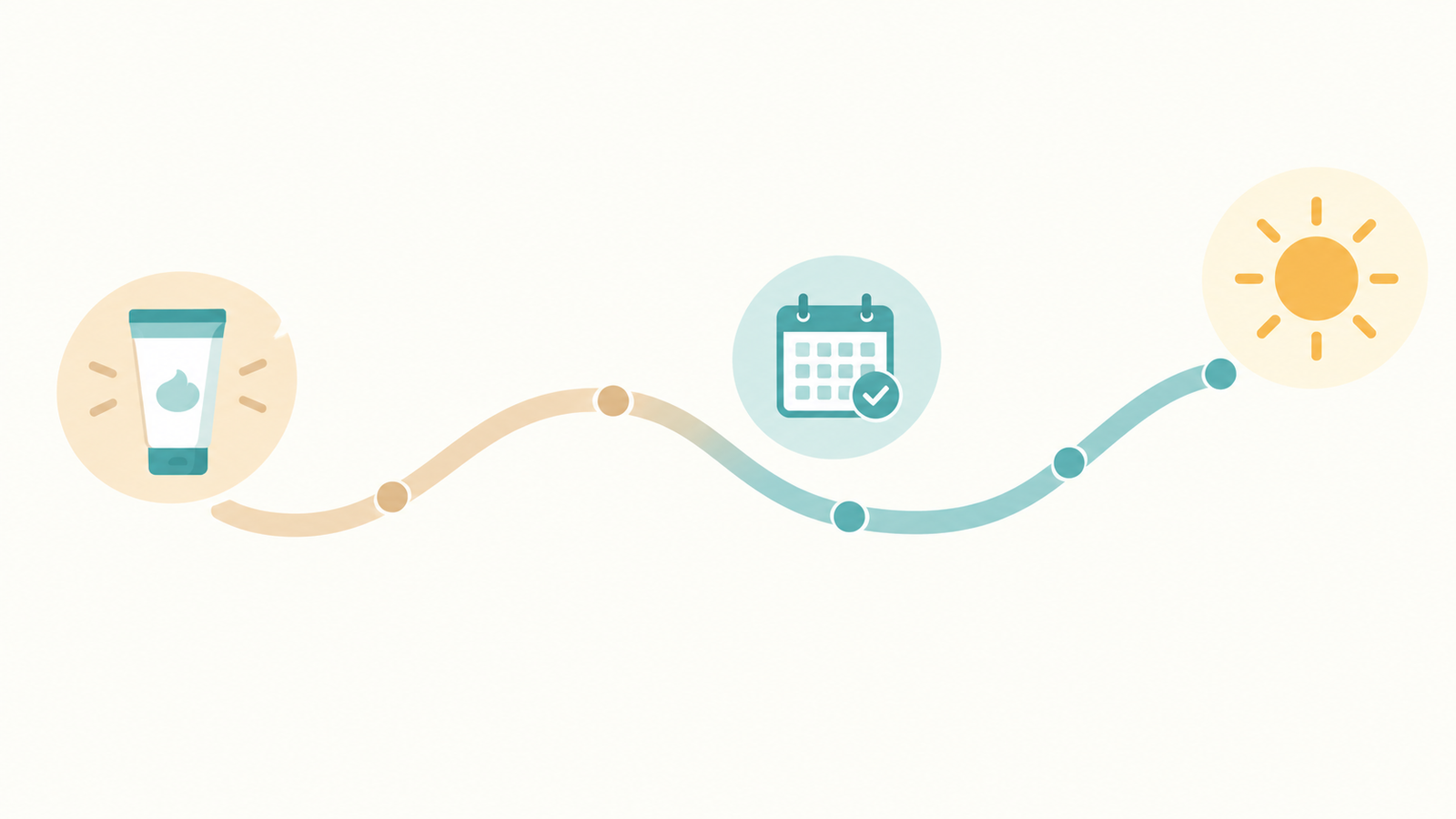
Phase 2: Maintenance. This is the step most people skip. After clearance, a retinoid cream, often with a gentle anti-bacterial or pigment-fading cream, is continued to stop new pore plugs from forming. Studies show that people who continue a retinoid cream relapse far less often than people who stop altogether.
If treatment relies on hormone-based medicines, your doctor will also plan for the possible flare after stopping and may add a cream-based maintenance step. Skin-friendly habits also help: gentle cleansing, non-greasy moisturiser and sunscreen, and avoiding picking or squeezing. A good skin plan from a skin treatment in ahmedabad clinic combines treatment, maintenance and scar care in one roadmap.
Maintenance Guide by Acne Type
| Acne Pattern | Why It Tends to Return | Common Maintenance Approach | How Long Maintenance Usually Continues |
|---|---|---|---|
| Blackheads, whiteheads and mild red pimples | Pores keep blocking | Retinoid cream at night | Often long-term, with the frequency adjusted if the skin gets irritated |
| Adult female hormonal acne | Hormones keep stimulating oil glands, with possible rebound after stopping hormonal medicine | Retinoid plus a hormone-targeting option, as advised by the doctor | Ongoing, with regular review |
| After a strong prescription course | Oil glands may partly recover, and the risk is higher in females and younger patients | Retinoid, sometimes with a gentle anti-bacterial cream, started soon after the course ends | A year or two at minimum, as advised |
| Stubborn red acne with dark marks | Skin bacteria strains and leftover pigment | Pigment-calming cream plus a retinoid | Long-term, as advised |
This table shows general patterns. Your doctor decides the exact plan after examining you.
What the Research Shows?
Published studies on acne relapse show a few consistent findings:
- Relapse is common but varies: After a strong prescription course, relapse has been reported in about 10% to 60% of people across studies, depending on follow-up time and how relapse is defined. In one very large real-world study, about 22% needed further prescription treatment and about 8% needed a repeat course.
- Timing of relapse: Around 4 in 10 relapses appear within 6 months of stopping, but about a third appear after more than a year, so long follow-up matters.
- Who relapses more: Females and people treated at a younger age have a higher chance of relapse. Stopping treatment early raises the chance roughly four-fold.
- Hormone-based treatments need continuity: They do not change the oil gland permanently. A flare can appear in about 3 to 6 months after they are stopped.
- Maintenance works: In studies, patients who moved to a retinoid cream after clearing had relapse rates under 10%, compared with more than 40% to 50% in those who did not use maintenance.
- Newer options exist: Some newer light and laser-based approaches have kept skin clear for 1 to 2 years in studies, but they are newer and are not right for everyone.
These findings come from published reviews and studies. Your own result depends on your acne type, hormones, treatment consistency and follow-up.

Doctor Review Block
This article has been medically reviewed by Dr. Tejansu Dalal, MD (Dermatology), for clinical accuracy. The most common mistake I see is stopping treatment as soon as the skin looks clear. A few extra months of maintenance protect the results far better than any new treatment later.