
If you have looked into non-surgical options for thinning hair, you have probably seen PRP, PRF and GFC offered side by side and wondered what the real difference is. All three use your own blood. The difference lies in what is taken from that blood and what is injected back into the scalp. This guide explains how GFC treatment differs, what the evidence shows so far, and who is most likely to benefit.
GFC treatment differs from PRP because it injects only the growth signals from your blood, not the platelets and blood cells themselves. The blood is processed so that the platelets release their growth factors first, and the cells are then spun out. What is injected into the scalp is a clear, cell-free liquid rich in growth factors. Early studies suggest this may give faster gains in hair density and thickness with less soreness than PRP, but the studies are small and more research is needed. GFC works only if the hair roots are still alive, so it suits early to moderate thinning, not smooth, fully bald areas.
Key Takeaways
- GFC injects only the growth factors from your blood, not the blood cells.
- It is a refinement of PRP, with a more standard preparation.
- Early studies are encouraging, but they are small and short, and more research is needed.
- It works only if hair roots are still alive, so it suits early to moderate thinning.
- Most plans use a few sessions followed by maintenance, with results over 3 to 6 months.
- It works best together with other medical care, and the cause of hair loss should be checked first.
- Tell your doctor about blood thinners, low platelets or any scalp infection.
Introduction
Hair thinning is rarely fixed by one treatment alone. Medicines, scalp care and procedures that use the body’s own growth signals are often combined. Growth factor treatments became popular because they are non-surgical and use a person’s own blood, which lowers the chance of allergic reactions.
PRP has been used for years. GFC is a newer way of using the same idea. Many people are told that it is “more advanced” without being told why, or how strong the evidence really is. The honest picture is that GFC is a sensible refinement with promising early results, but the research is smaller and newer than the research on PRP.
What GFC Treatment Is?
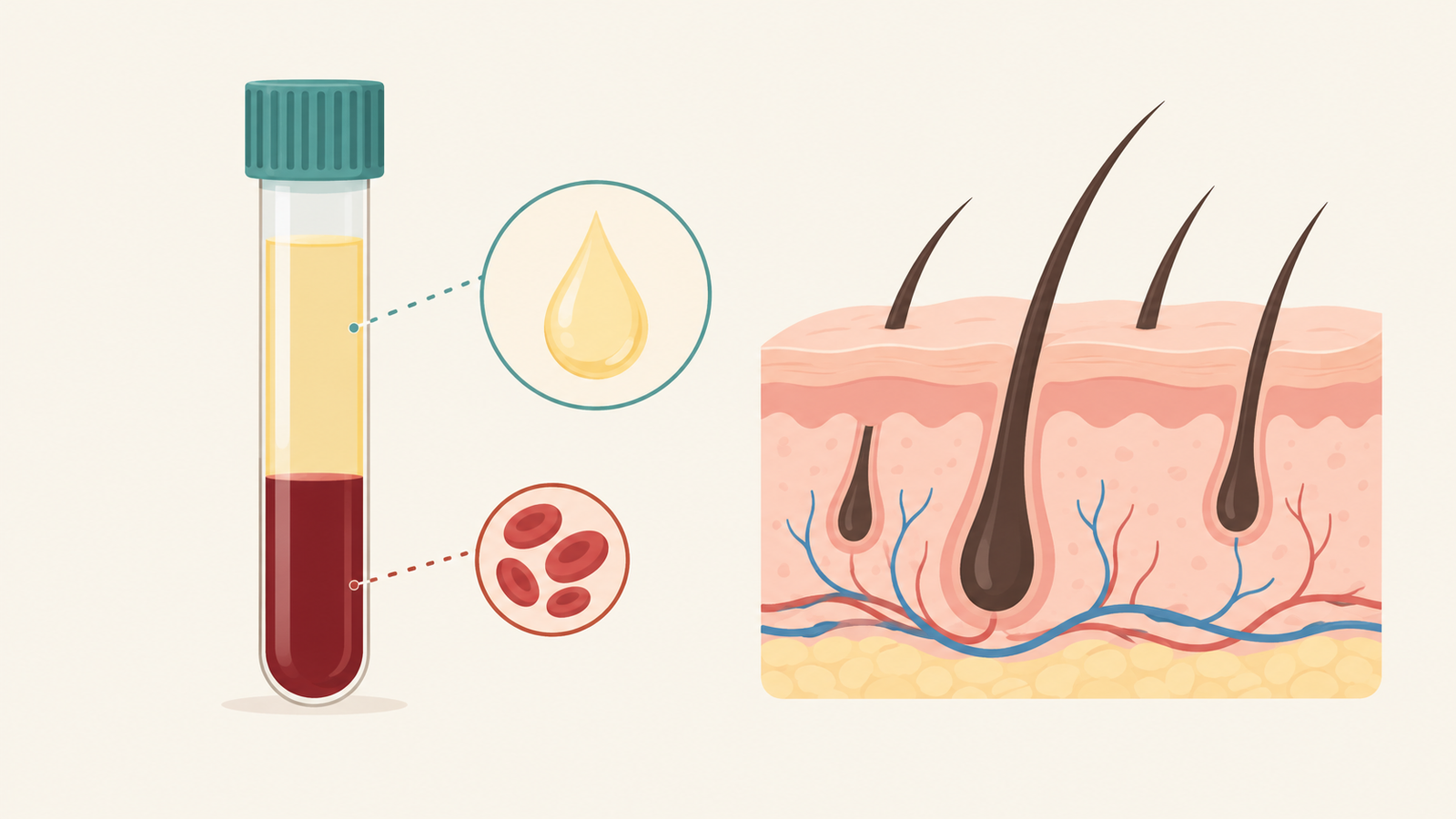
GFC stands for growth factor concentrate. It is a treatment that uses a small sample of your own blood. Platelets in the blood carry natural growth signals that help tissues repair and grow. In GFC treatment, these signals are released and concentrated, and the clear liquid that contains them is injected into thinning areas of the scalp.
It is used for early to moderate pattern hair loss, diffuse thinning, hair shedding after illness or stress, and to support hair after a transplant.
How GFC Treatment Works?
Hair grows in cycles, and in pattern hair loss the follicles slowly shrink and spend less time in the growing stage. Growth factors act as signals that can help the follicle in several ways:
- Waking up follicle cells: Some growth factors encourage the cells at the base of the hair to multiply and restart growth.
- Improving blood supply: Others help new tiny blood vessels form around the follicle, so it gets more oxygen and nutrients.
- Supporting thicker hair: Others help the follicle stay in the growing stage for longer, so thin, short hairs can become thicker.
GFC delivers these signals in a concentrated, cell-free form. Because the liquid has no leftover blood cells, there is less to cause irritation at the injection site.
GFC, PRP and PRF Compared
| Feature | PRP | PRF | GFC |
|---|---|---|---|
| What is injected | Platelets and some other blood cells in plasma | Platelets caught in a soft protein mesh | Cell-free liquid with released growth factors |
| How blood is processed | Spun to separate the platelet layer | Spun more slowly to form a mesh | Platelets are activated first, then cells are spun out |
| Release of growth signals | Over a short time after injection | Slow release as the mesh breaks down | Already released and ready to act |
| Soreness after injection | Can be more noticeable | Mild to moderate | Usually mild and short |
| Evidence base | Larger, with many studies | Smaller | Newest and smallest |
This is a general comparison. Results depend on how each clinic prepares the sample, and no single option is best for everyone.
What the Research Shows?
- GFC is a refinement of the same idea as PRP: It aims to deliver growth signals more consistently, because the preparation is closed and standard, and does not depend on how well a platelet layer is collected by hand.
- Early results look encouraging: A published report on a new regimen using growth factor concentrate for hair loss described gains in hair count and thickness in people with pattern hair loss.
- GFC compared with PRP: A trichoscopic study comparing PRP and GFC in men and women with pattern hair loss looked at hair density and shaft thickness on scalp imaging. Some comparative studies suggest GFC may give faster early gains, but they are small, short and not all done in the same way.
- Comfort: Because the liquid has no extra blood cells, soreness after injection is usually mild and short, often settling within hours.
- Not a cure: Hair loss that is driven by hormones keeps progressing, so improvements need maintenance sessions and usually work best alongside other medical treatment.
- Evidence limits: Studies use different preparation methods, small groups and short follow-up. Some of the claims on clinic websites, such as exact multiples of growth factor concentration, come from preparation tests, not from patient results.
So it is fair to say GFC is promising and often better tolerated, but it is not yet proven to beat PRP for every person.
How GFC Treatment Is Done?
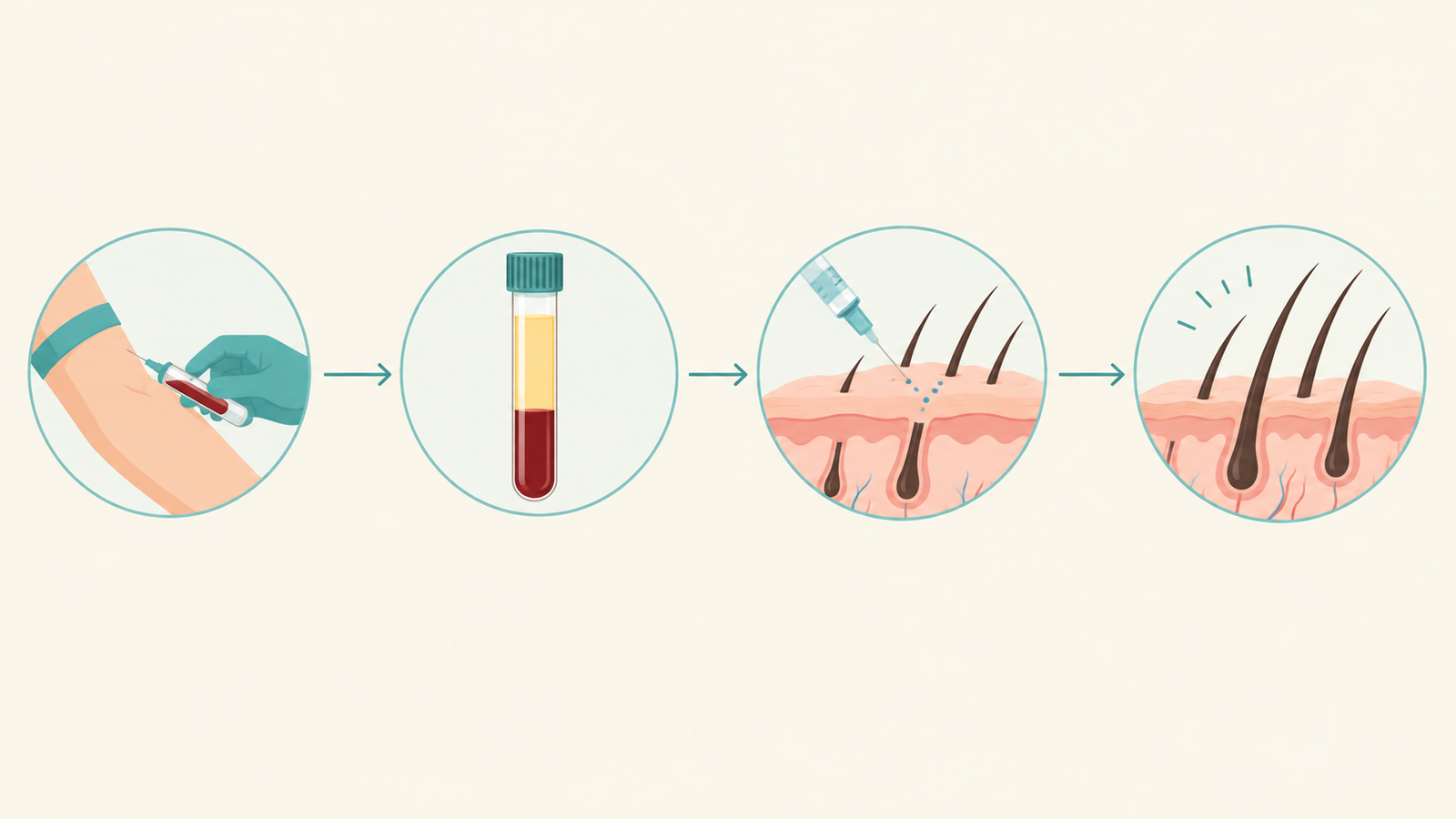
A planned GFC treatment starts with a scalp check, a look at your pattern of loss and your medical history. The procedure itself usually follows these steps:
- A small amount of blood is drawn from your arm.
- The blood is processed in a closed system so the growth factors are released and separated from the cells. This takes a short while.
- The clear liquid is injected into the thinning areas of the scalp using very fine needles.
- You can usually go back to normal activities the same day.
How many sessions: Many plans use 3 to 4 sessions spaced a few weeks apart, followed by maintenance sessions every few months. Your doctor sets the plan based on your hair loss and response. A hair specialist doctor ahmedabad will adjust it if your response is slow.
What you may feel: Mild tenderness, a feeling of tightness or slight redness at the injection sites, which usually settles within a day.
Results timeline: Less shedding may be noticed within a few weeks. Thicker hair and new growth are usually seen over 3 to 6 months. Results are gradual, not instant.
Who Is a Good Candidate?
GFC works by signalling hair roots that are still alive. It cannot bring back hair where the roots have disappeared.
Usually suitable:
- Early to moderate pattern hair loss in men and women
- Diffuse thinning
- Hair shedding after illness, stress or delivery that has not recovered
- People who want extra support after a hair transplant
Less likely to help:
- Smooth, shiny, long-standing bald areas with no visible hair roots
- Scarring hair loss that is still active. This usually needs control first.
Must be checked first, or may need to wait:
- Low platelet count or other blood disorders
- Active scalp infection
- Use of blood thinners, which can affect platelets
- Any other significant health condition. Tell your doctor about all your medicines.
The best dermatologist doctor in ahmedabad will also look for causes that treatment alone cannot fix, such as thyroid problems, low iron or other nutrient gaps, and hormonal imbalance.
Doctor Review Block
This article has been medically reviewed by Dr. Tejansu Dalal, MD (Dermatology), for clinical accuracy. In my experience, growth factor treatments work best when they are part of a full plan. That includes finding the cause of hair loss, using proven medicines where needed and setting realistic expectations about how much thicker hair can become.
References & Citations
This article draws on published research on growth factor treatments for hair loss, including a report describing a new regimen using growth factor concentrate for hair loss, available through the National Institutes of Health, and a trichoscopic study comparing PRP and GFC in pattern hair loss, published through the National Library of Medicine. Descriptions reflect published studies and general clinical practice.