

Oily skin that shines by noon, pores that look bigger in every photo and blackheads that return a few days after a facial are some of the most common skin complaints. A carbon peel is often offered as a quick answer. It can clear the pores and take the shine off straight away, and early studies suggest it may help over a series of sessions. But it is not magic, and it does not suit every skin. This guide explains what it can and cannot do for oily skin and open pores.
Yes, a carbon peel can help oily skin and open pores, especially in people with oily, congested skin who want less shine, cleaner pores and a smoother look. Pores look clearer within a day or two, and small studies suggest oil on the skin surface can fall after a course of sessions. It does not permanently shrink pores, and results need repeat sessions and good skin care. It is less suitable for dry or very sensitive skin, active skin infections, pregnancy and some medicines. A doctor should check your skin and medicines first.
Key Takeaways
- A carbon peel cleans out pores and lifts oil and debris, so skin looks clearer soon after.
- It may lower surface oil for some weeks, but the effect fades without repeat sessions.
- It does not permanently shrink pores, and its effect on skin firmness is modest.
- It suits oily, congested skin with blackheads and mild to moderate acne best.
- It is less suited to dry or very sensitive skin, and should be avoided in pregnancy, active infections and after some medicines.
- Research is early, mostly small studies, and results vary between people.
- Sun protection and a good home routine are needed to keep the results.
Introduction
Pores do not open and close like doors. Their size depends on how much oil the skin makes, how much dead skin and oil is stuck inside them, and how firm the skin around them is. As we age, or after years of sun, the skin around pores loses firmness and the pores look larger. Oily skin makes this worse, because extra oil stretches the pore opening and traps debris that forms blackheads and pimples.
A carbon peel works on the oil and the clogging inside the pore. That is why people with oily, congested skin ask about it. The real question is how much it can do, how often it needs to be repeated and who should avoid it.
What a Carbon Peel Is?
A carbon peel, also called a Hollywood facial, is a quick skin treatment in which a thin layer of liquid carbon is applied to the face and then treated with a laser. The carbon sinks into the pores and sticks to oil and dead skin. When the laser light is absorbed by the carbon, it breaks the carbon into tiny pieces and lifts away the oil and debris with it.
It is called a peel, but it is not like a chemical peel that causes flaking. The surface of the skin is not removed, and there is usually little or no downtime.
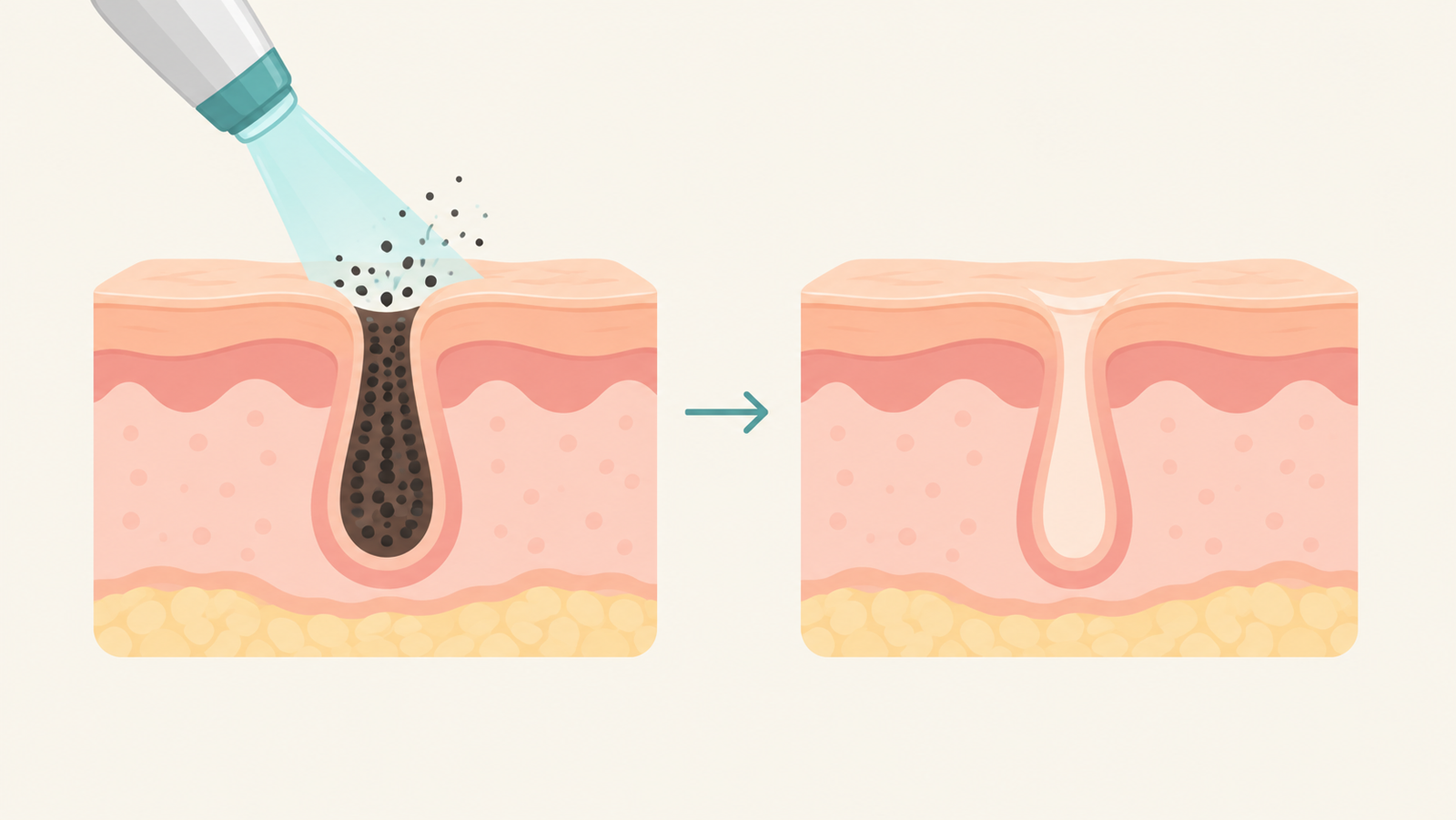
How a Carbon Peel Works on Oil and Pores?
1. It cleans out the pore. The carbon settles into pores and attaches to oil and dead skin cells. When the laser treats it, the carbon and the debris around it are lifted out. This is why the skin looks cleaner and smoother soon after.
2. It may lower oil for a while. The gentle heat from the laser reaches the oil glands near the pore. Small studies report that oil on the skin surface can drop after treatment and stay lower for some weeks. This effect fades without repeat sessions.
3. It may support firmer skin around the pore. The heat may stimulate new collagen over the following weeks. Firmer skin around the pore opening can make pores look slightly tighter. This is a modest effect, and it builds slowly over a course of sessions.
4. It may calm pimple-causing bacteria. Less oil and less clogging give the bacteria that cause pimples less to feed on, which may help mild to moderate acne.
Who It Suits and Who Should Avoid It?
Usually suitable:
- Oily or combination skin with visible pores
- Blackheads and mild to moderate acne
- Dull, congested skin that needs a quick refresh
- People who want a low-downtime option before an event
Less suitable or needs care:
- Dry or very sensitive skin, which can become tight or irritated
- Deep acne scars or loose skin, which usually need other treatments
- People with a recent tan or very recent sun exposure
Needs to wait or avoid:
- Pregnancy or breastfeeding
- Active skin infection, cold sores or open wounds on the face
- Oral acne medicine taken in the last few months. Tell your doctor about every medicine you take.
- Skin conditions that flare after skin injury, such as psoriasis or vitiligo, which need a doctor’s advice first
A consultation with the best dermatologist in ahmedabad for skin includes a look at your skin type, your acne, your medicines and your skin tone, and whether a carbon peel is the right tool for you.
What the Research Shows?
- Small and short studies: Most research on carbon peels is in small groups with short follow-up, and some are reviews of past patient records, not controlled trials. This means results are promising but not proven to the standard of larger trials.
- Pore and texture: In a study of people with oily skin, enlarged pores and mild to moderate acne treated over three monthly sessions, most people showed clear improvement in pore appearance and skin texture, with only brief redness in some.
- Acne: A report on laser carbon peel for inflammatory acne described fewer active pimples and better skin texture after treatment, with few side effects.
- Skin quality: A report on the carbon peel laser technique to improve skin quality described smoother texture and reduced oiliness.
- Oil on the skin: Some studies measured a fall in surface oil of up to about 3 in 10 after a session, lasting some weeks. This differs between people and between clinics.
- Safety: Side effects reported are mild and short, mostly brief redness, warmth or a prickling feeling, and temporary dryness. Colour changes in the skin are reported as uncommon, including in darker skin tones, but they are not impossible, so settings and skin tone must be matched by the doctor.
So the honest summary is that a carbon peel can improve oil, congestion and the look of pores for a limited time, and a course of sessions may give a longer lasting effect. The evidence is early, and pores are not permanently made smaller.
Carbon Peel Compared With Other Options
| Feature | Carbon Peel | Chemical Peel | Microneedling | Resurfacing Laser |
|---|---|---|---|---|
| Main aim | Clear pores, lower oil, refresh | Dissolve dead skin and clogging | Build collagen, treat scars | Deep resurfacing |
| Best for | Oily, congested skin, open pores | Blackheads, mild pigment | Acne scars, deep texture | Deep scars, sun damage |
| Direct effect on oil | Yes, for some weeks | Indirect | No direct effect | Not the aim |
| Downtime | Little or none | Days of flaking | A few days of redness | One to two weeks |
| Risk of dark marks | Reported low | Higher if unsuitable | Low to moderate | Higher in deeper skin tones |
A doctor may combine treatments, or choose one based on your skin type and your main concern.
What to Expect Before, During and After
A planned carbon peel takes about half an hour.
Before:
- Stop strong exfoliating products such as retinoid creams and acid based products for a few days before treatment, if your doctor advises it
- Avoid sun exposure and tanning
- Tell your doctor about medicines, recent procedures and skin conditions
During:
- The skin is cleaned and a thin layer of liquid carbon is applied and left for a short time
- The laser is passed over the face in a couple of passes
- Most people feel mild warmth or tingling
After:
- Mild redness usually settles within hours
- Skin may feel tight or slightly dry for a day or two
- Use sunscreen daily and a gentle, non-clogging moisturiser
- Avoid saunas, very hot showers and heavy exercise for a day or two, as advised
- Restart your usual products when your doctor says
How often: A single session gives a quick clean-up. Many plans for oily or acne-prone skin use a short series of sessions a few weeks apart, followed by occasional maintenance sessions. The pore-clearing glow usually fades within days to a few weeks, which is why repeat sessions are needed. Your doctor will set your own plan. A cosmetic dermatologist clinic in ahmedabad can also combine it with a home routine for oily skin.

Doctor Review Block
This article has been medically reviewed by Dr. Tejansu Dalal, MD (Dermatology), for clinical accuracy. In my experience, a carbon peel works best as a part of a plan for oily skin, together with the right home products, and not as a one-time fix. Honest expectations about how long the glow lasts make people far happier with the results.
References & Citations
This article draws on published research on carbon peel lasers, including a report on laser carbon peel for inflammatory acne and a report on the carbon peel laser technique to improve skin quality, both available through the National Institutes of Health. Descriptions reflect small published studies and general clinical practice.