
Eczema isn’t one single condition – it’s an umbrella term for several different skin reactions that all cause itching, redness, and inflamed skin, but happen for very different reasons. Knowing which type you’re actually dealing with is the first real step toward treating it properly.
Eczema is a broad term for several chronic, itchy, inflammatory skin conditions – the most common being atopic dermatitis – caused by a weakened skin barrier, an overactive immune response, and, often, an imbalance in the skin’s natural bacteria. Treatment ranges from daily moisturizing and mild topical creams for flare-ups to newer targeted medications for more persistent or severe cases.
Key Takeaways
- “Eczema” covers several distinct skin conditions – atopic dermatitis, contact dermatitis, dyshidrotic eczema, and others – not just one single disease.
- The most common form, atopic dermatitis, happens because of a weakened skin barrier combined with an overactive immune response, not just “sensitive skin.”
- A genetic change affecting a skin protein called filaggrin is found in a large share of atopic dermatitis cases, and it directly affects how well skin holds onto moisture.
- Skin affected by eczema is frequently colonized by a specific bacteria that makes inflammation worse – this is part of why some flares respond to more than just moisturizer.
- Treatment is typically stepped – starting with daily skin care and mild creams, moving to stronger topical options, and only reaching newer injectable or oral medications for cases that don’t respond to simpler treatment.
Introduction
“Eczema” is one of those words used so broadly in everyday conversation that it’s easy to assume it means one single thing. It doesn’t. Underneath that one word sits a whole group of related but distinct skin conditions, each with its own triggers, appearance, and treatment approach. This article explains what eczema actually is, why it develops, how dermatologists tell the different types apart, and what current, evidence-based treatment actually looks like – from basic daily care to the newer targeted medications now available.
Eczema Isn’t Just One Condition
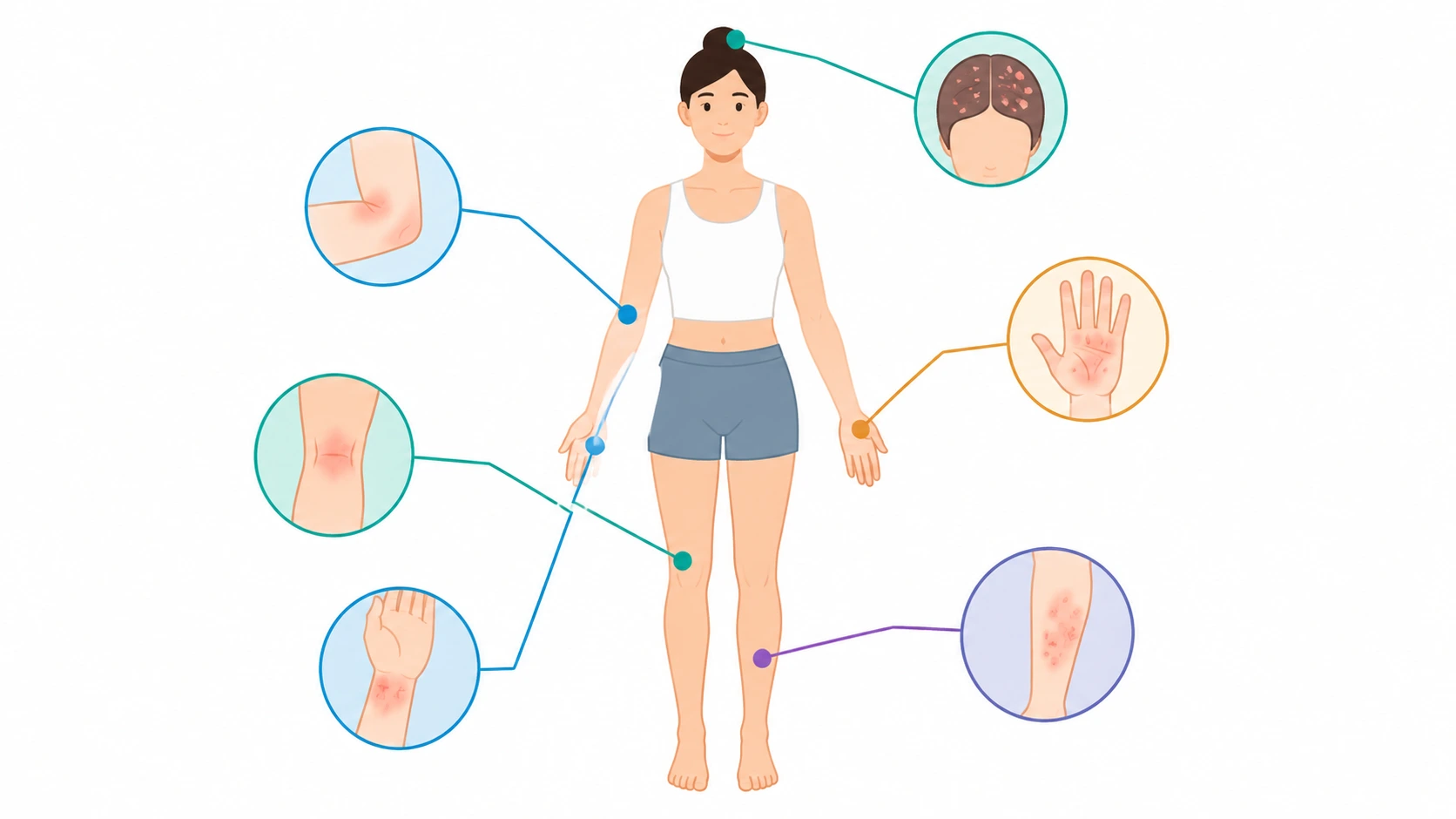
The word eczema is really an umbrella term covering several different inflammatory skin reactions that share some common features – itching, redness, dryness, and inflamed patches – but come from different root causes. Atopic dermatitis is by far the most common type and the one most people mean when they say “eczema,” but it sits alongside several other distinct forms, including irritant and allergic contact dermatitis, dyshidrotic eczema, nummular eczema, seborrheic dermatitis, and a few others.
| Type of Eczema | What Typically Causes It | Where It Usually Shows Up |
|---|---|---|
| Atopic dermatitis | Genetics, immune overactivity, barrier dysfunction | Elbow creases, behind knees, face, neck, hands |
| Irritant contact dermatitis | Direct skin damage from chemicals or friction | Hands, forearms, exposed areas |
| Allergic contact dermatitis | Delayed allergic reaction to a specific substance | Contact site – wrist, earlobes, around the eyes |
| Dyshidrotic eczema | Sweat gland issues, stress, certain allergens | Palms, soles, sides of fingers |
| Nummular eczema | Very dry skin, minor skin injury, bacteria | Lower legs, forearms, trunk |
| Seborrheic dermatitis | Overreaction to a common skin yeast | Scalp, sides of nose, eyebrows, chest |
Recognizing which type is actually present matters, because treatment that works well for one type may do very little for another.
Clinical Overview: Why Eczema Actually Happens
Atopic dermatitis, the most common and most researched form of eczema, develops through a combination of three interconnected problems working together, not any single cause on its own.
A weaker skin barrier. Skin relies on a protein called filaggrin to help form a tight, moisture-retaining outer layer. In many people with atopic dermatitis, a genetic change in the gene that produces filaggrin means this protein doesn’t work properly, so the skin loses water more easily and lets irritants and allergens in more easily too.
An overactive immune response. Once the barrier is compromised, the immune system reacts more aggressively than it should to ordinary environmental exposures, releasing signaling chemicals that cause the itching, redness, and swelling that define an eczema flare. This same immune response is also what makes affected skin so intensely itchy – a specific immune signal targets nerve endings directly, which is why eczema itching can feel so different from ordinary dry-skin itchiness.
An imbalance in skin bacteria. Healthy skin hosts a balanced community of bacteria that helps keep inflammation in check. In eczema-affected skin, one particular bacteria tends to overgrow, and it actively worsens inflammation rather than just being a passive bystander – which is part of why some stubborn flares need more than moisturizer alone to settle down.
Together, these three factors create a self-feeding cycle: a weaker barrier lets more irritants in, which triggers more immune activity, which further damages the barrier and disrupts the skin’s bacterial balance.
Diagnosis: Telling the Types of Eczema Apart
Dermatologists distinguish between eczema types mainly by looking at three things: where on the body it appears, what it looks like up close, and what seems to trigger it.
- Pattern and location: Atopic dermatitis favors the inner elbows, behind the knees, and the face and neck, while dyshidrotic eczema specifically affects the palms, soles, and sides of the fingers with small, deep, intensely itchy bumps.
- Appearance of the lesions: Nummular eczema forms distinctive coin-shaped patches, while allergic contact dermatitis typically produces sharply defined, often blistering patches exactly where the trigger substance touched the skin.
- Trigger history: A clear link to a new soap, jewelry, or chemical points toward contact dermatitis, while a personal or family history of allergies, asthma, or hay fever makes atopic dermatitis more likely.
- Chronicity and texture: Skin that has thickened and developed a leathery texture from repeated scratching over time is typical of long-standing, poorly controlled eczema regardless of the specific type.
A thorough history and physical exam is usually enough for an experienced dermatologist to identify the type, though patch testing is sometimes used when allergic contact dermatitis is suspected but the trigger isn’t obvious.
Treatment: How Eczema Is Actually Managed
Modern eczema treatment follows a stepped approach, starting with the basics and escalating only as needed.
Step 1 – Daily barrier care. Regular use of a fragrance-free moisturizer, gentle low-pH cleansers, and avoiding known irritants form the foundation of management for every type and severity of eczema. This alone meaningfully reduces how often flares happen.
Step 2 – Topical anti-inflammatory treatment. For active flares, a dermatologist typically prescribes a topical corticosteroid matched in strength to the affected area, or a topical calcineurin inhibitor for sensitive areas like the face and skin folds, where steroid creams are used more cautiously.
Step 3 – Newer non-steroidal topical options. For people who need more than occasional topical steroid use, several newer topical medications target specific inflammatory pathways without the longer-term skin-thinning risk associated with steroids.
Step 4 – Targeted systemic treatment. For moderate-to-severe eczema that doesn’t respond adequately to topical treatment, options now include injectable biologic medications and oral medications that block specific immune signals directly, offering an alternative to older, broader immune-suppressing drugs.
Treatment for an underlying condition like eczema is always matched to severity, the specific type identified, and how the skin has responded to previous treatment – there’s no single regimen that fits every case.

Medication Guide
| Treatment Type | How It Works | Typically Used For |
|---|---|---|
| Moisturizers / barrier creams | Replace lipids lost from the skin barrier | All eczema types, ongoing daily use |
| Topical corticosteroids | Broadly reduce inflammation in the skin | Active flares, short courses |
| Topical calcineurin inhibitors | Block specific immune cell activation locally | Face, neck, skin folds, long-term flare prevention |
| Newer non-steroidal topicals | Target specific inflammatory pathways | Ongoing control without steroid-related skin thinning |
| Biologic injections / oral medications | Block specific immune signals driving inflammation | Moderate-to-severe cases not controlled by topical treatment |
Oral corticosteroids (steroid pills) are generally avoided for ongoing eczema management, since stopping them often triggers a worse rebound flare than the original one.
What the Research Shows
Several points about eczema causes and treatment are now well established in dermatology research:
- Filaggrin and barrier function: Genetic changes affecting filaggrin production are documented in a substantial share of atopic dermatitis cases and are directly linked to reduced skin hydration and increased water loss.
- Bacterial involvement: Research has found a specific bacteria present on the large majority of eczema-affected skin, compared to a small minority of healthy skin, and this bacteria is shown to actively worsen inflammation through several mechanisms.
- Targeted treatment outcomes: Clinical trials of newer targeted injectable and topical medications report consistent, significant improvement in both skin clearance and itch severity for people with moderate-to-severe disease that didn’t respond well to standard topical treatment.
- Steroid rebound risk: Published treatment guidelines specifically advise against routine use of oral corticosteroids for eczema due to a well-documented pattern of significant flare rebound once the medication is stopped.
These findings reflect current published dermatology research; the right treatment plan for any individual still depends on an in-person evaluation.
Doctor Review Block
This article has been medically reviewed by Dr. Tejansu Dalal, MD (Dermatology), for clinical accuracy. Eczema covers several distinct conditions, and an accurate diagnosis of the specific type present is what actually determines which treatment approach will work – not assumptions based on how “eczema” is usually described.
References & Citations
This article draws on dermatology research, including findings published by the National Center for Biotechnology Information on the skin barrier and microbiome in eczema, and reference material from the National Institutes of Health on the pathophysiology of atopic dermatitis. Clinical treatment guidance reflects published dermatology practice guidelines.