
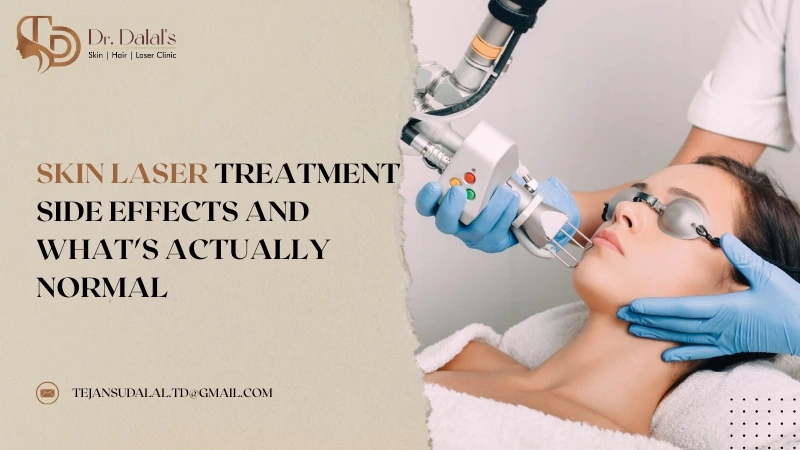
Redness, swelling, and a bit of peeling after a laser session are usually nothing to worry about – but a narrow line separates normal healing from a genuine complication. Knowing exactly where that line sits is what makes laser treatment feel predictable instead of alarming.
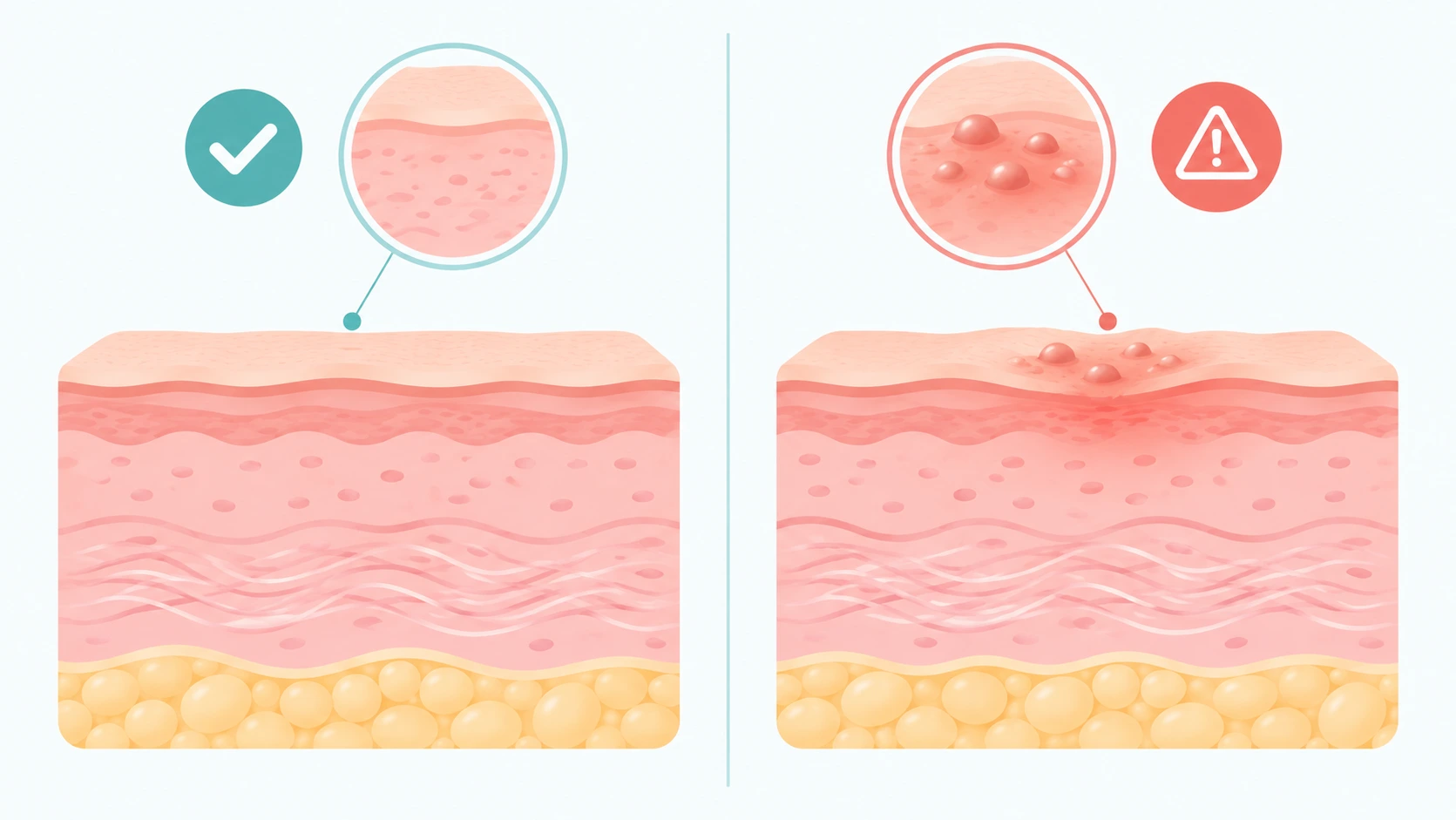
Most side effects after skin laser treatment – redness, swelling, mild warmth, and some peeling – are a normal, expected part of healing and settle within days to a couple of weeks depending on the laser used. What’s not normal is pain that worsens instead of improves, pus or thick colored discharge, spreading redness, fever, or clustered painful blisters – these point to a complication that needs prompt attention rather than home care.
Key Takeaways
- Redness and swelling are expected after almost any laser treatment – how long they should last depends heavily on which type of laser was used.
- A sandpaper-like, slightly dark, rough texture in the days after a fractional laser is a normal healing byproduct, not a sign something went wrong.
- Pain that gets worse instead of better, thick colored discharge, or spreading redness are not normal and need prompt medical attention.
- Clustered painful blisters after laser treatment can signal a cold sore virus reactivating – even in people with no prior history of cold sores.
- Darker skin tones carry a higher risk of temporary or lasting pigment changes from certain laser types, which is why pre-treatment skin preparation matters more for some patients than others.
Introduction
Almost everyone who has a laser treatment experiences some redness and swelling afterward – but knowing which reactions are simply part of normal healing, and which ones signal something has actually gone wrong, isn’t always obvious. This article breaks down exactly what a normal laser recovery looks like, what counts as a genuine complication, and which specific factors – including skin tone and laser type – change what to expect.
Why Side Effects Happen in the First Place
Every laser treatment works by delivering controlled heat into the skin, and that controlled injury is exactly what triggers the body’s healing response – which is also what produces the redness, swelling, and warmth people notice afterward. The intensity and length of these effects depends heavily on how much of the skin surface was affected: a laser that removes the entire outer layer produces a much longer, more visible reaction than one that leaves the surface intact and works beneath it.
In other words, side effects aren’t a sign that treatment went poorly – they’re a direct, expected consequence of how the laser achieves its results in the first place.
Clinical Overview: Normal Healing Versus a Real Complication
| Laser Type | Normal Downtime | What’s Expected to Be Seen |
|---|---|---|
| Fully ablative (CO2) | 10–14 days | Significant redness, swelling, oozing, crusting |
| Fully ablative (Erbium) | 7–10 days | Moderate-to-severe redness, light crusting |
| Fractional ablative | 5–7 days | Moderate redness, swelling, dark speckled texture |
| Non-ablative fractional | 1–3 days | Mild redness, sandpaper-like texture, slight bronzing |
| Vascular lasers | 0–4 days | Mild redness, occasional temporary bruising-like marks |
One of the most commonly misunderstood normal reactions is a dark, rough, sandpaper-like texture that appears two to three days after a fractional laser. This happens because the treated skin pushes out thermally damaged debris and pigment as it heals – a completely natural process that clears on its own within about a week without any picking or scrubbing.
Diagnosis: Reading the Warning Signs Correctly
A few specific signs reliably separate a normal reaction from one that needs prompt attention:
- Direction the pain is moving: Pain that steadily improves day by day is normal; pain that gets worse, or that suddenly intensifies after initially feeling fine, is not.
- Color and texture of discharge: Clear or slightly blood-tinged fluid in the first day or two after an ablative treatment is expected; thick, yellow, green, or foul-smelling discharge at any point is not.
- Pattern of redness: Redness confined to the treated area that gradually fades is normal; redness that spreads beyond the treated borders, especially with increasing warmth, points toward infection.
- Appearance of blisters: A uniform, fine, sandpaper-like speckled texture is a normal healing byproduct; clustered, painful, fluid-filled blisters – particularly around the mouth – can indicate a reactivated cold sore virus, which can happen even without a prior history of outbreaks.
- Timing of new symptoms: New or worsening symptoms appearing well after the expected healing window (rather than right at the start) are more likely to represent a developing complication than ordinary healing.
Treatment: What Helps Side Effects Resolve Faster
A few specific, well-supported steps meaningfully shorten and ease the normal side-effect period:
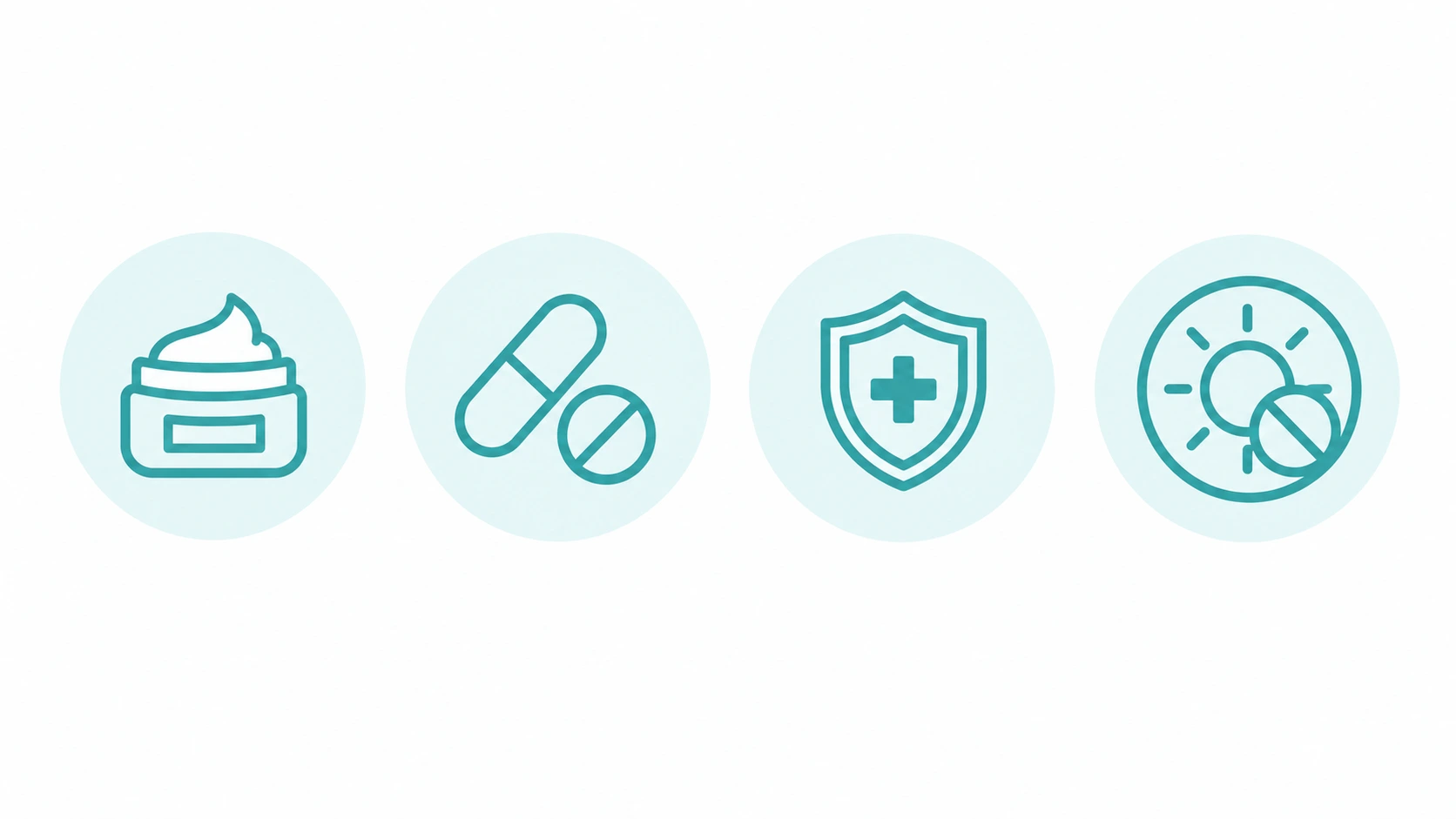
Keeping the area consistently moist. For ablative treatments especially, applying a plain occlusive ointment regularly – rather than letting the area dry out – speeds surface healing and reduces discomfort.
Antiviral prevention started before treatment. For anyone undergoing a treatment with meaningful thermal intensity, starting an antiviral medication before the session and continuing through healing substantially lowers the risk of a cold sore flare-up, even in people with no known history of one.
Early, targeted anti-inflammatory care for higher-risk skin. For patients at higher risk of pigment-related side effects, a brief course of a prescribed topical anti-inflammatory applied right after treatment has been shown to meaningfully reduce the chance of lasting discoloration compared to no early intervention.
Daily mineral sunscreen once skin has closed. Sun protection starting the moment skin has re-sealed is one of the simplest, most effective ways to prevent lingering discoloration from turning into a longer-term issue.
Getting a tailored laser treatment recovery plan – rather than relying on generic aftercare advice – is what actually keeps side effects within the normal, expected range for your specific skin and treatment type.
What the Research Shows
Published dermatologic research supports several specific points about laser side effects and their management:
- Early steroid use lowers pigment risk substantially: Clinical trials on ablative laser resurfacing found that applying a potent topical corticosteroid for a few days immediately after treatment reduced post-inflammatory hyperpigmentation rates from roughly 75% down to around 39%, compared to using a plain ointment alone.
- Skin tone meaningfully affects risk level: Research comparing different fractional laser types found pigment-related side-effect rates ranging from 0% in the gentlest non-ablative systems up to over 39% with fully ablative treatment in deeper skin tones, directly tied to how much thermal energy reaches the epidermis.
- Routine antiviral prevention is now standard: Clinical guidelines now recommend antiviral medication for all patients undergoing significant facial resurfacing regardless of cold sore history, since reactivation has been documented even in patients without a known history.
- Persistent symptoms past the expected window reliably predict complications: Research distinguishing normal healing from true complications found that redness or pain extending meaningfully beyond typical recovery windows, rather than simply being present, is what actually signals a developing problem.
These findings reflect published dermatologic laser research; what counts as normal for a specific treatment still depends on an individual evaluation.
Doctor Review Block
This article has been medically reviewed by Dr. Tejansu Dalal, MD (Dermatology), for clinical accuracy. Most side effects after laser treatment are a predictable, manageable part of healing – but knowing exactly which signs cross the line into a genuine complication is what allows for prompt, appropriate care when it’s actually needed.
References & Citations
This article draws on dermatologic laser safety research, including findings published by the National Center for Biotechnology Information on current laser resurfacing technologies, and reference material from the National Institutes of Health on nonablative fractional laser resurfacing in skin of color. Clinical outcome figures reflect published dermatologic surgery research.