
A softer jawline and slightly dropped cheeks are some of the first changes people notice in the mirror, and they have little to do with surface skin. The change begins in the deeper support layer under the skin, which is exactly where HIFU treatment is designed to work, with no cuts and no stitches.
HIFU treatment uses focused ultrasound energy to gently heat the deep support layer under the skin, which tightens it right away and then triggers new collagen over the following months. The skin surface stays untouched, so there is little or no downtime. Results usually build over 3 to 6 months and typically last about 12 to 18 months. It works best for mild to moderate sagging, early jowls and a softening jawline, most often in people aged 30 to 55. Heavy, loose skin folds usually need a surgical approach instead.
Key Takeaways
- HIFU treatment works below the skin surface, in the deep support layer that holds the cheeks and jawline up, which is why it can lift without surgery.
- Different treatment depths do different jobs. Deeper settings lift and sharpen, while shallower ones refine texture and fine lines.
- Results are gradual. A mild tightening may be felt early, but the best lift appears around 3 to 6 months and lasts roughly 12 to 18 months.
- The best candidates have mild to moderate laxity. Very thin faces need extra care, and severe sagging is better handled surgically.
- Mild redness and swelling are common and short-lived. Serious side effects are rare when the treatment is planned and delivered by an experienced clinician.
Introduction
As we age, the cheeks slowly slide down, the jawline loses its crisp edge, and jowls begin to form. The causes are layered: gravity, weaker collagen, shifting fat and loosening support tissue. Creams cannot reach that depth, and surgery feels like a big step for early changes. HIFU treatment sits in between. This article explains how it works, what a session involves, who it suits best, how long results last and how it compares with other lifting options.
What HIFU Treatment Does Beneath the Skin
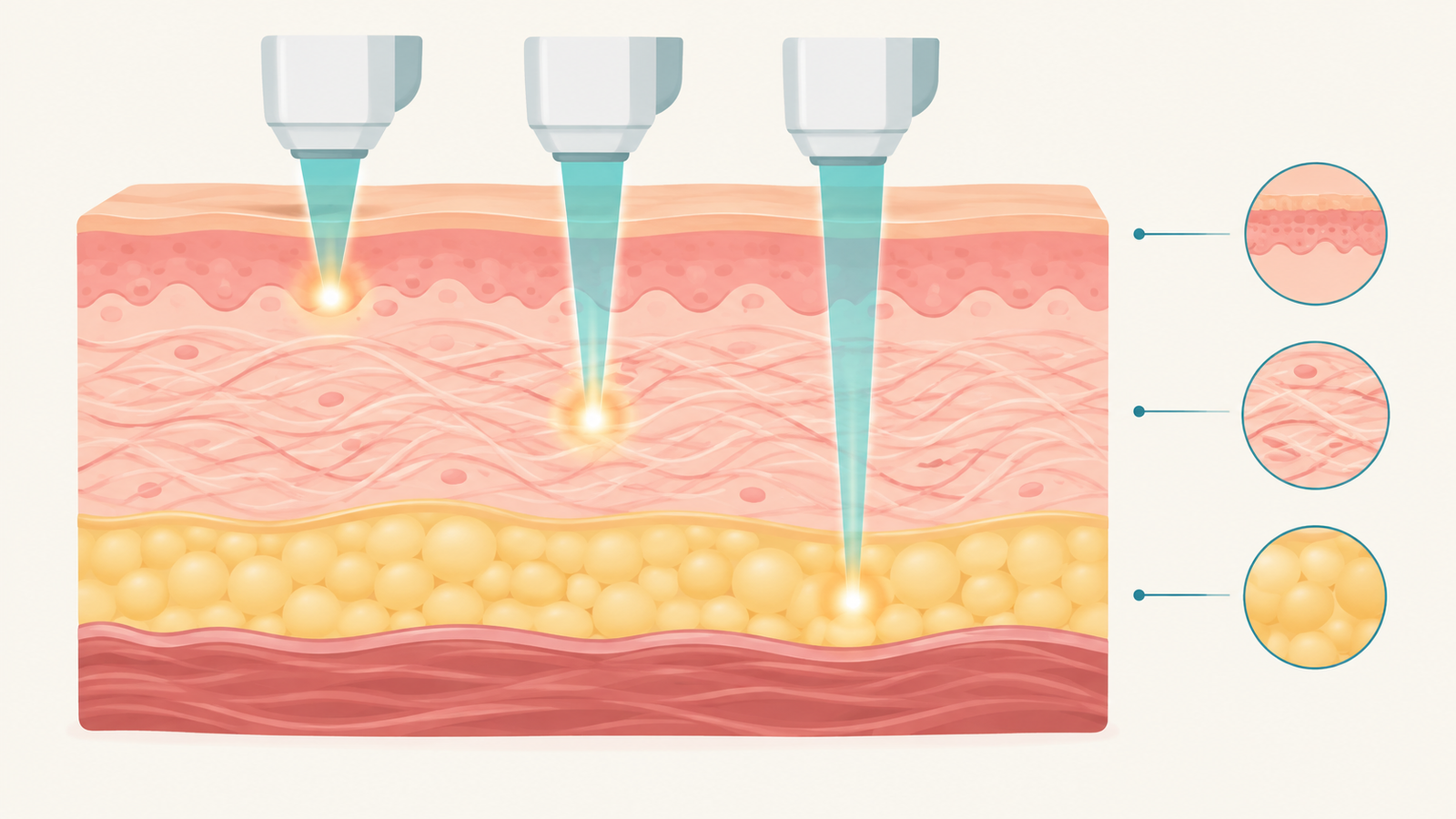
HIFU stands for high-intensity focused ultrasound. A handheld device sends ultrasound beams through the skin and brings them together at a precise depth, in much the same way a magnifying glass focuses sunlight onto one small spot. The energy passes through the upper skin harmlessly and creates tiny points of controlled heat only where it is aimed.
The deep target is a firm, thin support layer under the skin and fat, the same layer a surgeon tightens during a facelift. Heating it causes it to contract, which gently pulls up the cheeks and tightens the jawline. Because the heat stays below the surface, the top layer of skin is not damaged, which is why there are no wounds to heal.
Clinical Overview: Depth, Heat and New Collagen
Different treatment tips reach different depths, and each one has a different job:
- Shallow depths (about 1.5 to 2 mm): refine skin texture and soften fine lines.
- Middle depth (about 3 mm): thickens and firms the deeper skin layer by boosting collagen.
- Deep depth (about 4.5 mm): tightens the support layer, lifting the cheeks and sharpening the jawline.
- Deepest depth (about 6 mm): reaches the fat layer and can be used for fullness under the chin.
After the heat is delivered, the body responds in three steps. First comes an immediate mild tightening as existing collagen fibres shorten. Over the next few days, the body clears the tiny heat-treated areas. Then, from about one month to six months, the skin builds fresh collagen and elastic fibres. This slow rebuilding is why the best results are seen months later and not on the day of the session.
Diagnosis: Who Is a Good Candidate
Before treatment, a dermatologist looks at the face as a whole, checking skin laxity, bone structure, fat distribution and skin thickness. Candidates generally fall into three groups:
- Good candidates: People roughly between 30 and 55 with mild to moderate sagging, early jowls, a blurring jawline and skin that still springs back well. These patients typically see the most noticeable tightening and lift.
- Limited-benefit candidates: People with heavy, hanging skin folds, a higher body weight or significant fullness under the chin. They may see only a modest change, and surgery or a combined plan is often a better fit.
- Not suitable for now: Anyone with an active skin infection, open wounds, a metal implant in the treatment area or pregnancy, or who has had fillers or threads placed very recently.
Very thin, slender faces need special care. Deep energy in an area with little natural fat can make the face look more hollow. In these cases, a skilled clinician limits deep treatment to the jawline and chin area and uses shallower settings on the cheeks.
Treatment: What a Session Involves
A HIFU treatment session begins with a cleansed face and a thin layer of gel. The clinician marks the treatment zones, then moves the device in straight lines along planned directions, usually upward and backward along the natural lift lines of the face. Each line delivers a row of tiny heat points. The number of lines depends on the area: a focused jawline or chin session needs far fewer lines than a full face and neck plan, and too few lines is one of the most common reasons results look underwhelming.
Technique matters as much as the machine. Clinicians often apply gentle upward pressure with the device so that the heat points anchor the tissue in a lifted position. Over the cheeks and jawline, some patients feel a warm, tingling or sharp sensation, especially near bony areas. Puffing out the cheeks with air during certain passes can reduce this by keeping the energy away from the teeth and bone. A full session usually takes 30 to 90 minutes, and most people return to normal activities straight away. Mild redness or swelling can appear and usually settles within a day or two. Some people also feel light tenderness along the jawline for a few weeks.
Lift Options Compared: Where HIFU Fits
| Option | How It Works | Typical Duration of Results | Typical Downtime |
|---|---|---|---|
| HIFU | Focused ultrasound heats the deep support layer and stimulates collagen | About 12 to 18 months | None to minimal; short-lived mild swelling |
| Radiofrequency tightening | Spreads heat through the upper and middle skin layers | About 6 to 12 months | None to a day of mild redness |
| Absorbable thread lift | Threads physically reposition and support sagging tissue | About 12 to 18 months | 3 to 7 days of swelling or bruising |
| Hyaluronic acid fillers | Restore lost volume and soften shadows | About 6 to 18 months | 1 to 3 days of mild swelling |
| Surgical facelift | Surgically tightens deep tissue and removes extra skin | 10 years or more | 3 to 4 weeks |
Each option solves a different problem. HIFU is best for mild to moderate looseness, and many people combine it with another treatment for a more complete result. The right plan is decided with a dermatologist.
What the Research Shows
Published research on focused ultrasound for the face supports several points:
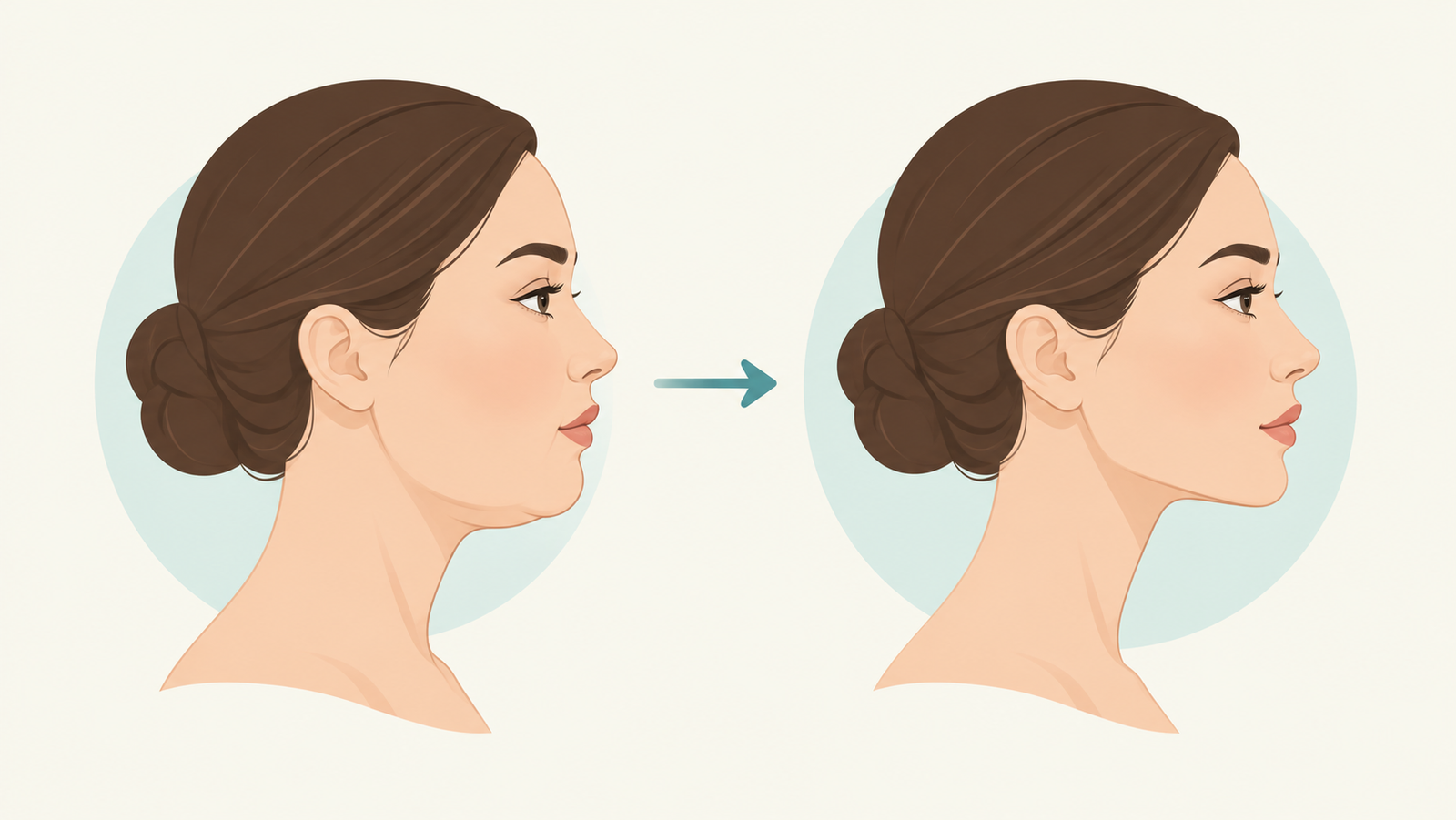
- It lifts and tightens without surgery: Reviews of studies report visible improvement in the jawline, cheeks and the area around the mouth after treatment.
- Results build over time: Photographic assessments show improvement continuing for up to six months after a single session, with the lifting effect generally maintained for 12 to 18 months before natural ageing resumes.
- Combining treatments can help: Studies of HIFU paired with radiofrequency report very high improvement ratings, because deep tightening and surface firming work together.
- The safety record is favourable: Side effects are mostly mild and temporary, including redness, swelling and tenderness. Bruising occurs in a small share of patients, and temporary numbness or mild muscle weakness is rare and settles within weeks.
These findings reflect published research; individual results depend on skin quality, facial structure and the clinician’s technique.
Doctor Review Block
This article has been medically reviewed by Dr. Tejansu Dalal, MD (Dermatology), for clinical accuracy. HIFU gives its best results when the patient is chosen carefully and the energy is planned for each part of the face. A well-matched candidate with realistic expectations is usually very satisfied, while a poorly matched one is often disappointed.
References & Citations
This article draws on facial rejuvenation research, including findings published by the National Center for Biotechnology Information on facial lifting with focused ultrasound, and a systematic review indexed by the National Institutes of Health on the use of focused ultrasound in skin. Timelines and safety details reflect published clinical research.