
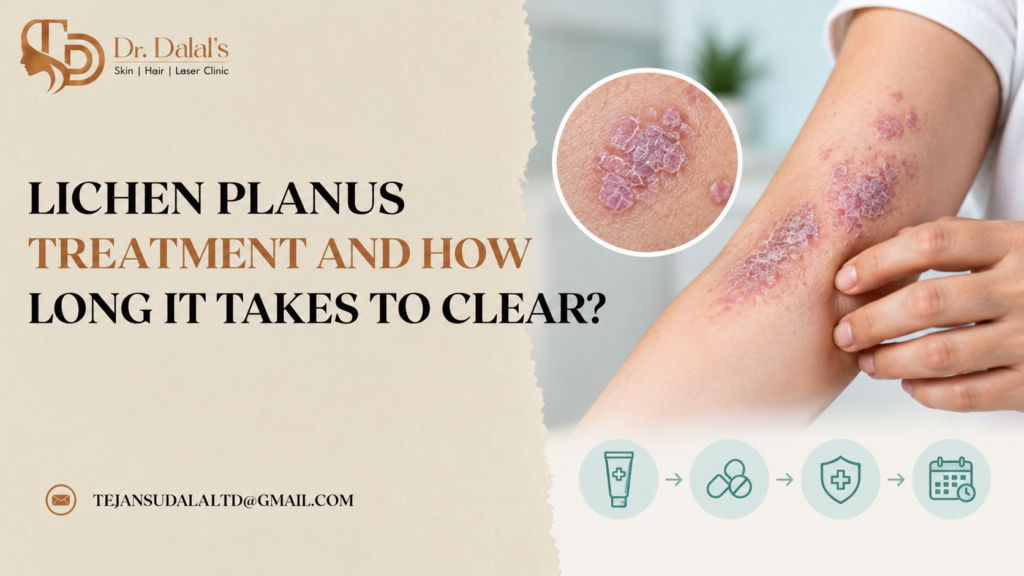
The first question almost everyone asks after a lichen planus diagnosis is simple: how long will this last? The answer is not the same for everyone. On the skin, it often settles by itself within one to two years. In the mouth, on the nails or on the scalp, it can stay for years and needs steady care. Knowing which type you have is the key to knowing what to expect.
Key Takeaways
- Lichen planus is an immune condition in which the body’s own cells attack the lowest layer of the skin or mucous membrane. It is not an infection and is not contagious.
- Lichen planus on the skin often clears by itself, about half of people within 6 to 12 months and up to three quarters within one to two years, but the dark marks left behind can take years to fade.
- Lichen planus in the mouth rarely clears by itself and usually needs long-term control and regular check-ups.
- Scalp and nail lichen planus can cause permanent damage if not treated early, so they need prompt attention.
- Strong steroid creams are the first step for most people, and newer treatments are available for stubborn cases.
Quick Answer Box
How long lichen planus takes to clear depends on where it is. On the skin, most cases settle within 12 to 24 months, although darker marks can remain longer. In the mouth, it often comes and goes for years and rarely disappears completely. On the scalp, treatment can calm the inflammation in about 3 to 9 months, but hair already lost does not grow back. On the nails, regrowth takes 6 to 12 months once the inflammation is controlled. Lichen planus treatment aims to relieve itching and pain, speed up healing and prevent scarring, and the plan depends on the type and severity.
What Lichen Planus Is and What Triggers It?
Lichen planus is a long-lasting inflammatory condition. The body’s immune cells mistakenly attack the basal cells, the bottom layer of the skin or lining of the mouth. This damage causes the typical itchy bumps, mouth sores, nail changes or scalp inflammation. The exact starting cause is usually not found, but several triggers have been linked to it. These include infection with the hepatitis C virus, injury to the skin, which can make new patches appear along a scratch line, and certain medicines. In many people, no trigger is ever identified.
Overview: The Main Types
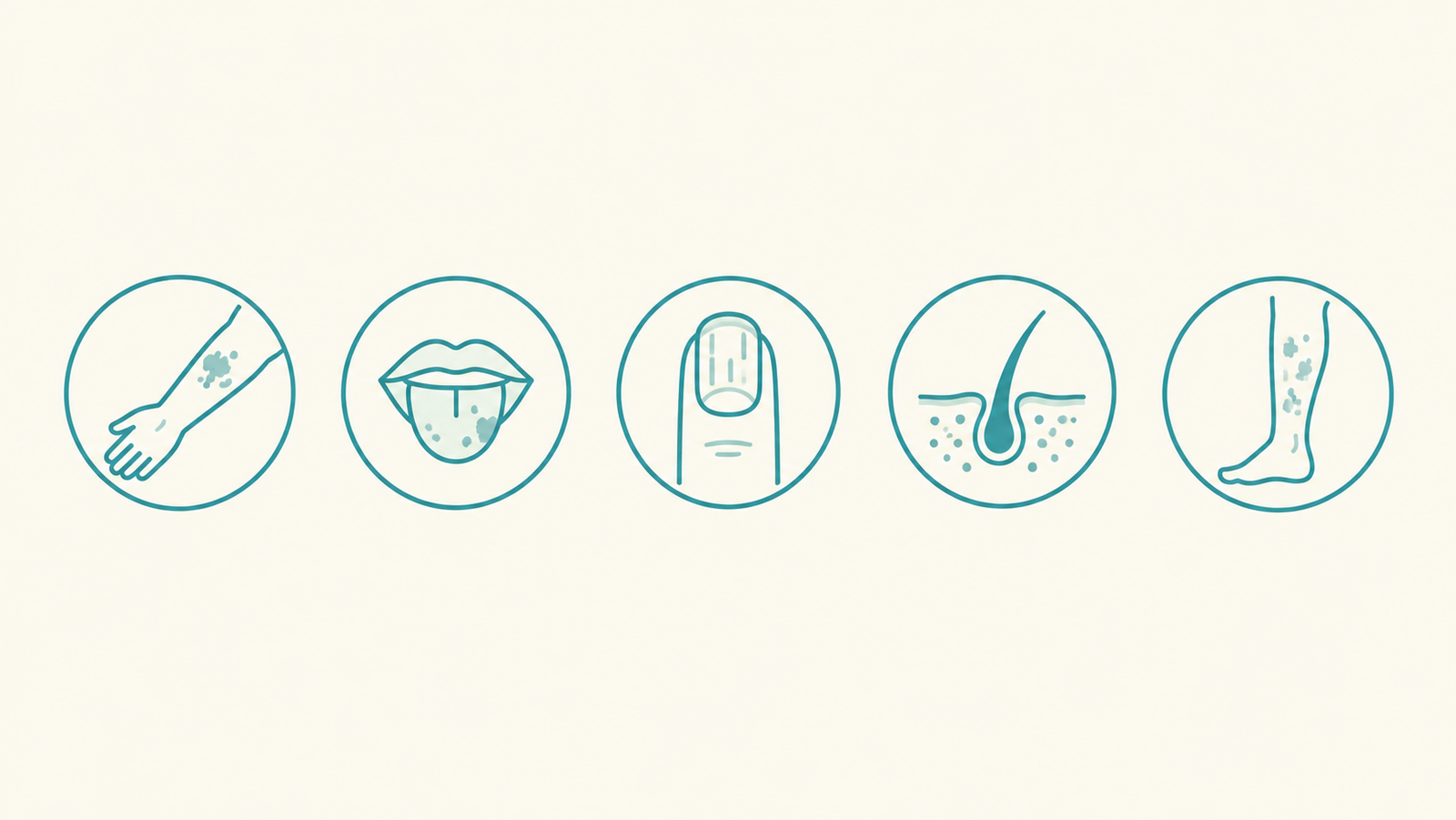
Lichen planus looks different depending on where it appears:
- On the skin: flat-topped, purple, shiny and very itchy bumps, often on the wrists, ankles, lower back and shins, sometimes with fine white lines on the surface. After it clears, a dark mark often remains.
- Thick, raised plaques: a stubborn form on the shins and ankles that can stay active for years.
- Inside the mouth: a lace-like white pattern on the inner cheeks, or painful red sores that burn when eating spicy or acidic food.
- On the scalp: red, scaly skin around hair roots that can cause scarring and permanent hair loss.
- On the nails: ridging, thinning and splitting that can lead to permanent nail damage.
- In the genital area: pain, burning and scarring changes that need specialist care.
Diagnosis: How Lichen Planus Is Confirmed
Diagnosis starts with a careful examination. A dermatologist looks for the typical purple, flat-topped, itchy bumps, the fine white lines on their surface and the lace-like pattern in the mouth. Because other conditions can look similar, such as psoriasis, eczema-type rashes, fungal infections and some blistering diseases, a small skin or mouth sample may be taken to confirm the diagnosis. The sample shows a typical pattern of inflammation along the lowest layer of the skin. A blood test for hepatitis C may be advised in some patients, and a review of recent medicines is also part of the assessment.
A sample is especially important for sores in the mouth or genital area that do not heal, because long-standing erosive lichen planus needs closer monitoring.
Clinical Overview: How Long Each Type Lasts
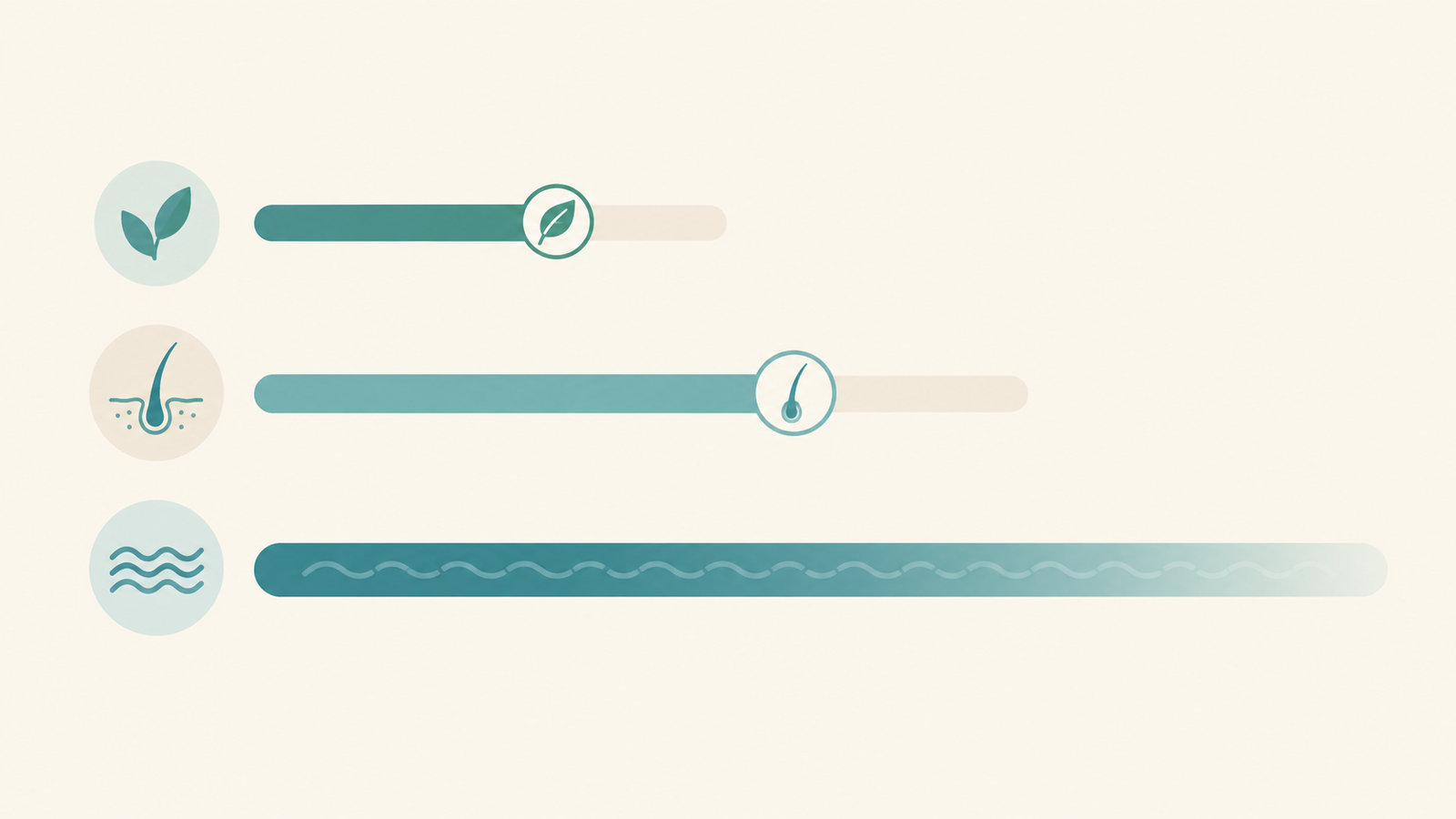
Skin. Classic lichen planus on the skin tends to settle by itself. About half of people clear within 6 to 12 months, and up to three quarters within one to two years. The itch usually eases first, as the bumps flatten and turn into brown or grey marks. These marks, called post-inflammatory dark patches, are especially common in darker skin and can take several more years to fade. The thick, raised type on the shins is different. It can stay active for years unless it is actively treated.
Mouth. Lichen planus in the mouth rarely clears by itself. The lace-like type often causes few symptoms but follows a long, up-and-down course. Fewer than about one in five people clear over five years. The painful, erosive type can last for many years, with flares of burning pain triggered by spicy or acidic food. The goal is to keep it calm and healed rather than to remove it permanently.
Scalp. Treatment can calm active inflammation in about 3 to 9 months, but the hair follicles that have been scarred cannot recover. Early treatment is therefore the only way to protect hair.
Nails. Nail lichen planus is treated urgently because the nail root can be permanently damaged. When inflammation is controlled, healthy nail regrowth takes about 6 to 12 months because nails grow slowly.
Genital area. This form usually follows a long course. Without treatment it can cause scarring and narrowing, so early and ongoing specialist care is important.
Type and Timeline Guide
| Type | Typical Sites | What You Notice | How Long It Usually Lasts |
|---|---|---|---|
| Classic skin | Wrists, ankles, lower back, shins | Itchy purple flat bumps, fine white lines | About 6 to 24 months; dark marks may last longer |
| Thick, raised skin plaques | Shins and ankles | Thick, rough, very itchy plaques | Often years without active treatment |
| Mouth, lace-like | Inner cheeks, tongue | White lacy pattern, often few symptoms | Years, with flares and calm periods |
| Mouth, erosive | Cheeks, tongue, gums | Painful red sores, burning with spicy food | Long-term, needs ongoing control |
| Scalp | Crown, hairline | Redness, scaling, scarring hair loss | Inflammation calms in about 3 to 9 months; lost hair is permanent |
| Nails | Fingernails, toenails | Ridging, thinning, splitting | Regrowth about 6 to 12 months once controlled; risk of permanent damage |
| Genital | Genital skin and lining | Pain, burning, scarring | Long-term, needs specialist care |
These timelines are typical ranges. Individual courses vary, and the right plan is decided after an examination.
Treatment: Calming the Inflammation
Modern lichen planus treatment focuses on three goals: settle the itching and pain, speed up healing and prevent scarring. For limited skin disease, the first step is usually a very strong steroid cream or ointment, used twice a day for a few weeks and then reduced to a gentler schedule to keep the skin calm. Thick plaques may need a covered dressing or a small steroid injection directly into the plaque every few weeks, because the thick skin blocks cream from getting in. In the mouth and on delicate skin, steroid gels or rinses are used first, and steroid-free ointments that calm the immune cells are used for longer-term control when prolonged steroid use risks thinning or yeast infection.
For widespread or severe flares, a short course of steroid tablets can bring fast relief, but it must be tapered carefully because long use causes serious side effects. When the condition is stubborn, steroid-sparing tablets that calm the immune system are used for longer-term control, with regular blood tests. These include medicines that slow immune cell activity and a few vitamin A-related or anti-malarial tablets chosen according to the type. Newer targeted tablets and creams that block the immune signals behind lichen planus have shown quick relief in small studies of difficult cases, including mouth, nail and scalp disease. They are still being studied, require health screening before use and are generally kept for people who have not responded to usual treatment.
Good skin and mouth care supports treatment. A skin specialist in Ahmedabad can plan creams, injections and follow-up together, and the best dermatologist in Ahmedabad for skin will also advise you to avoid scratching, which can trigger new patches along the scratch line. For mouth disease, avoiding tobacco and alcohol, treating sharp teeth or poorly fitting dentures and avoiding foods that burn can reduce flares.
What the Research Shows?
Published research on lichen planus supports several points:
- Skin disease often resolves on its own: About half of people with classic skin lichen planus clear within 6 to 12 months and up to three quarters within one to two years.
- Mouth disease is long-lasting: Spontaneous clearing is uncommon, and the course is typically chronic with relapses.
- Early treatment protects hair and nails: Anti-inflammatory treatment can calm scalp disease within months, but scarred follicles do not recover, and uncontrolled nail disease can permanently damage the nail root.
- Long-standing erosive mouth disease needs monitoring: The risk of it turning into mouth cancer is low, around 0.4% to 1.5%, but it is the reason for regular specialist check-ups and for investigating any sore that does not heal.
- Newer treatments show promise: Targeted medicines that block the immune pathway have helped difficult cases in small studies, but larger studies are still needed.
These findings reflect published research; individual courses depend on the type, site and the specialist’s assessment.
Doctor Review Block
This article has been medically reviewed by Dr. Tejansu Dalal, MD (Dermatology), for clinical accuracy. Lichen planus is very different from person to person, and the biggest mistake is treating all types the same. Skin disease usually settles with time and simple treatment, while mouth, nail and scalp disease need earlier, longer and more careful management.
References & Citations
This article draws on dermatology research on lichen planus, including a clinical overview published by the National Center for Biotechnology Information on lichen planus, and reference material from the National Institutes of Health on cancer risk in long-standing oral lichen planus. Timelines and risk figures reflect published clinical research.