

Hives that appear once after a medicine or an infection usually fade within days. Hives that return almost every day for weeks, with no clear trigger, are a different problem. They are not an allergy that you can simply avoid, and they do not respond to quick fixes. The good news is that there is a clear step-by-step way to bring them under control, and most people can get to a point where the itching and swelling stop.
Daily hives that continue for more than six weeks are called chronic spontaneous urticaria, and urticaria treatment follows a stepwise plan. The first step is a daily non-sedating antihistamine taken regularly, not only when hives appear. If hives continue after two to four weeks, a specialist can carefully increase the dose. If hives still persist, an injectable medicine that targets the immune pathway behind the condition is added. A small group needs further options, and long-term steroid tablets are avoided. Keeping a symptom diary helps your doctor judge how well the treatment is working.
Key Takeaways
- Hives that come back daily or almost daily for more than six weeks have a different cause from short-lived hives and need a different approach.
- In most people, no outside trigger is ever found. The condition comes from the body’s own immune system activating skin mast cells.
- Antihistamines work best when taken every day on schedule. Sedating, older antihistamines are discouraged.
- If standard doses are not enough, treatment moves up in steps. Doctors increase the antihistamine dose first, then add an injectable medicine.
- Long courses of steroid tablets are not recommended, because they cause serious side effects and hives often flare again when they are stopped.
Introduction
Urticaria, or hives, are itchy, raised welts that appear on the skin, last a few hours and fade without a trace, only for new ones to appear elsewhere. Some people also develop swelling of the lips, eyelids or hands. When this keeps happening almost every day for more than six weeks, it is chronic urticaria. Because it can last months or even years, it disturbs sleep, work and mood. This article explains why it happens, how doctors assess how severe it is and how treatment is stepped up until the hives are controlled.
Why Hives Keep Coming Back?
Hives happen when mast cells in the skin release histamine and other chemicals. Histamine makes tiny blood vessels leak fluid into the skin, which creates the raised welt, and it stimulates nerve endings, which causes itching. In short-term hives, the trigger is usually something outside the body, such as an infection, a medicine or a food. In chronic spontaneous urticaria, there is generally no outside trigger. The mast cells are being switched on again and again from inside, which is why the hives keep appearing without a clear reason.
Because this is an ongoing immune process, it is not caused by something you ate yesterday or a soap you used. Searching for hidden triggers, or stopping many foods, usually does not help and can add stress. Swelling deeper in the skin, called angioedema, occurs together with hives in up to half of people with the chronic form.
Clinical Overview: Two Types of Chronic Hives
Researchers now recognise two main patterns behind chronic spontaneous urticaria:
- Autoallergic type: the body makes allergy-type antibodies against its own tissues. These people often have a high level of total IgE in the blood and usually respond quickly to an injectable medicine that targets IgE.
- Autoimmune type: the body makes a different type of antibody that directly switches on mast cells. These people often have low total IgE, tend to have more severe disease, may have a thyroid problem or vitiligo along with the hives, and may respond more slowly or incompletely to IgE-targeted treatment.
This difference matters because it helps predict which treatment is likely to work and how quickly. A simple blood test for total IgE is often part of the assessment.
Diagnosis: Measuring and Tracking Hives
Chronic hives are diagnosed mainly from the story and the examination. The key features are hives that come and go within 24 hours, are very itchy and leave the skin normal afterwards. Lesions that stay in one place for more than a day, are painful or leave bruises or marks may need a skin sample to rule out other conditions. Doctors may also order a few basic blood tests, including total IgE and thyroid tests.
To judge severity and to see if treatment is working, doctors use a simple weekly diary called the urticaria activity score. Each day you record the number of hives and how severe the itch is, both from 0 to 3, so the daily total is up to 6 and the weekly total is up to 42. A score of zero means no symptoms, a low score means well-controlled disease and a high score means treatment needs to be stepped up. A short four-question control test is also used in clinic visits. Tracking in this way helps avoid both under-treatment and moving to stronger medicines too soon.
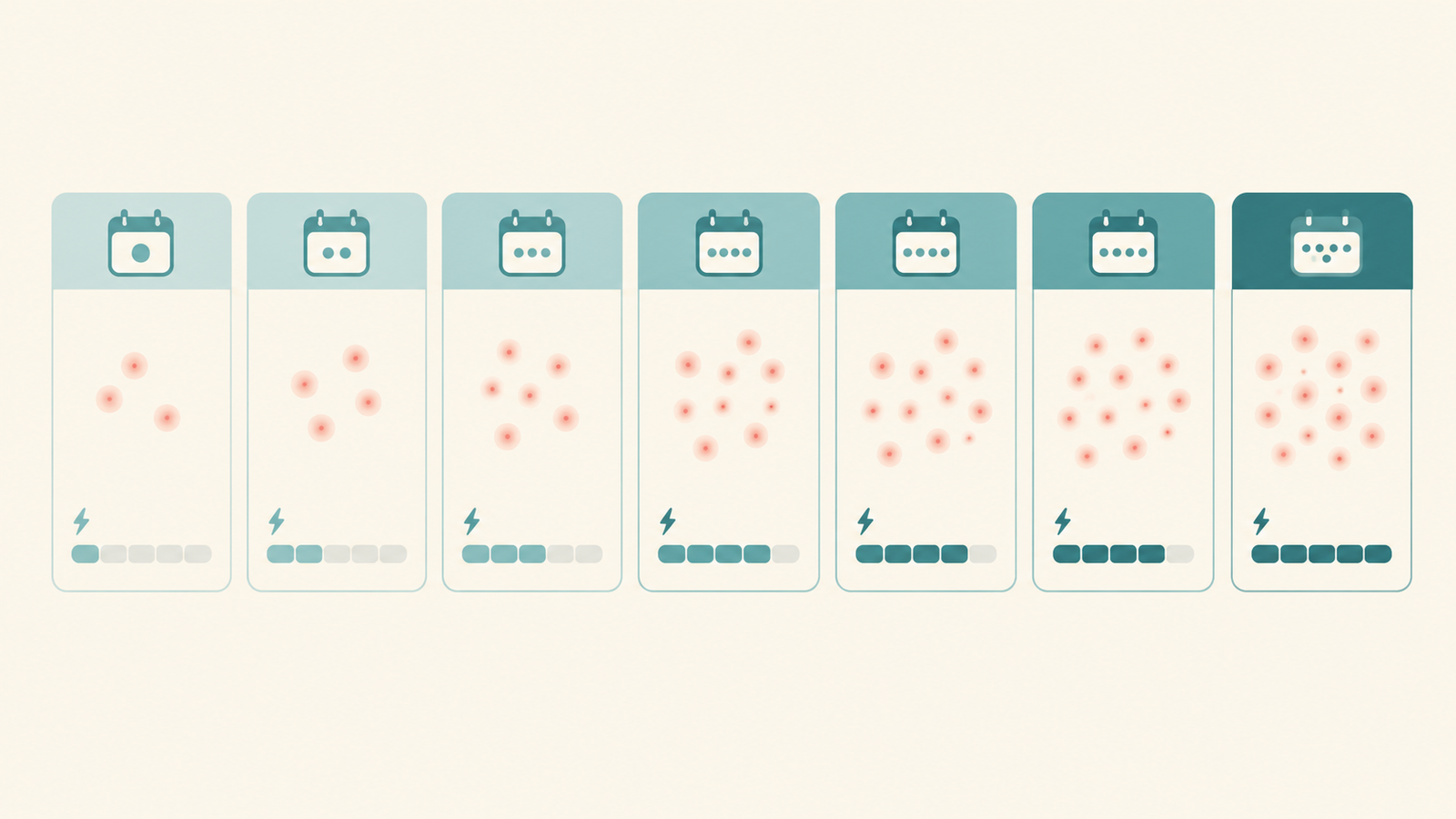
Treatment: Stepwise Control of Daily Hives
Modern urticaria treatment follows international guidelines and aims for complete control of hives with as little medicine and as few side effects as possible. The first step is a modern non-sedating antihistamine, taken every day at a steady dose. Older antihistamines that cause drowsiness are discouraged because they disturb sleep and thinking. It is important to take the medicine regularly, because it works by keeping histamine receptors blocked all the time, not just when a welt appears.
If hives keep appearing after two to four weeks, the second step is a higher dose of the same antihistamine, which can be increased up to four times the usual dose under medical supervision. This helps a good share of people who did not respond to the standard dose. Doctors advise against mixing several different antihistamines, because it does not add benefit and makes it harder to judge what is working.
If daily hives continue despite a higher dose, the third step is an injectable medicine that blocks IgE, given once every four weeks. It controls hives in most people, and in studies about one in three still have symptoms at the standard dose and may need an adjusted schedule. Hives return in about half of people within weeks of stopping, but restarting the medicine brings control back in nearly nine out of ten. For people with low IgE or those who do not respond to the first injection, another targeted injectable that blocks a different immune signal has been shown to reduce hives and itch when added to antihistamines.
For the small group who remain uncontrolled, a low-dose immune-calming tablet can be used. It works well but needs regular checks of kidney function and blood pressure. Long-term steroid tablets are advised against, as they can cause weight gain, high blood pressure, bone thinning and rebound flares. A short rescue course of no more than about ten days may be used for a severe flare while the main treatment is being stepped up.
Treatment Step Guide: What Each Step Offers
| Step | Treatment | Who It Is For | Key Points |
|---|---|---|---|
| 1 | Daily non-sedating antihistamine at standard dose | Everyone with chronic hives | Take it every day, not only when hives appear |
| 2 | Same antihistamine at a higher dose | Hives continue after 2 to 4 weeks | Doctor-supervised; do not combine different antihistamines |
| 3 | Injectable medicine targeting IgE, every 4 weeks | Hives continue despite higher dose | Works especially well with high IgE; relapse is common after stopping, but restarting restores control |
| 3 (alternative) | Injectable medicine targeting a different immune signal | Low IgE or poor response to the first injection | Added to antihistamines |
| 4 | Low-dose immune-calming tablet | Severe hives not controlled by earlier steps | Needs kidney and blood pressure monitoring |
| Rescue only | Short steroid course, up to about 10 days | Severe flare while treatment is stepped up | Not for long-term use |
The right step depends on symptom severity, blood test results and response to earlier treatment. It is always chosen together with a doctor.

Living With Chronic Hives
Chronic hives can feel unpredictable, but a few habits help. Take your medicine at the same time every day, and keep your symptom diary so the doctor can adjust treatment. Avoid known aggravating factors for you, such as pain-relief tablets that worsen hives in some people, overheating, tight clothing and heavy stress. Cool showers, loose cotton clothing and keeping nails short to avoid scratching can bring comfort. Do not stop treatment as soon as the hives disappear. Doctors usually continue it for a period and then reduce it slowly, because stopping too early often leads to a return of symptoms.
Chronic hives often settle by themselves over time, but in some people they last for years. Care from a specialist is especially useful if the hives are not controlled after a few weeks of regular antihistamines, if there is swelling of the face or lips, or if hives are affecting sleep or daily life.

What the Research Shows?
Published research and international guidelines on urticaria support several points:
- Chronic hives are driven by the immune system from within: Most cases have no external trigger, and two immune patterns have been described, with different responses to treatment.
- Higher antihistamine doses help many people: Guidelines recommend increasing the dose of a modern antihistamine up to four times the usual dose before moving on, and this controls hives completely in a large share of those who did not respond to the standard dose.
- Injectable medicines add control: An injection that blocks IgE reduces hives and itch in most people who do not respond to antihistamines, and restarting it after a relapse restores control in the large majority.
- Long-term steroids are not recommended: Guidelines advise against regular steroid tablets because of their side effects and the rebound flares when they are stopped.
These findings reflect published research; each person’s plan depends on symptoms, test results and a specialist’s judgment.
Doctor Review Block
This article has been medically reviewed by Dr. Tejansu Dalal, MD (Dermatology), for clinical accuracy. The most common mistake with chronic hives is to treat them only when they appear, or to keep searching for a trigger that does not exist. A steady daily plan, a simple symptom diary and timely stepping up of treatment are what bring lasting control.
References & Citations
This article draws on research on chronic hives, including a review published by the National Center for Biotechnology Information on the causes and mechanisms of chronic spontaneous urticaria, and reference material from the National Institutes of Health on the international guideline for the definition, diagnosis and management of urticaria. Treatment steps reflect published clinical guidance.