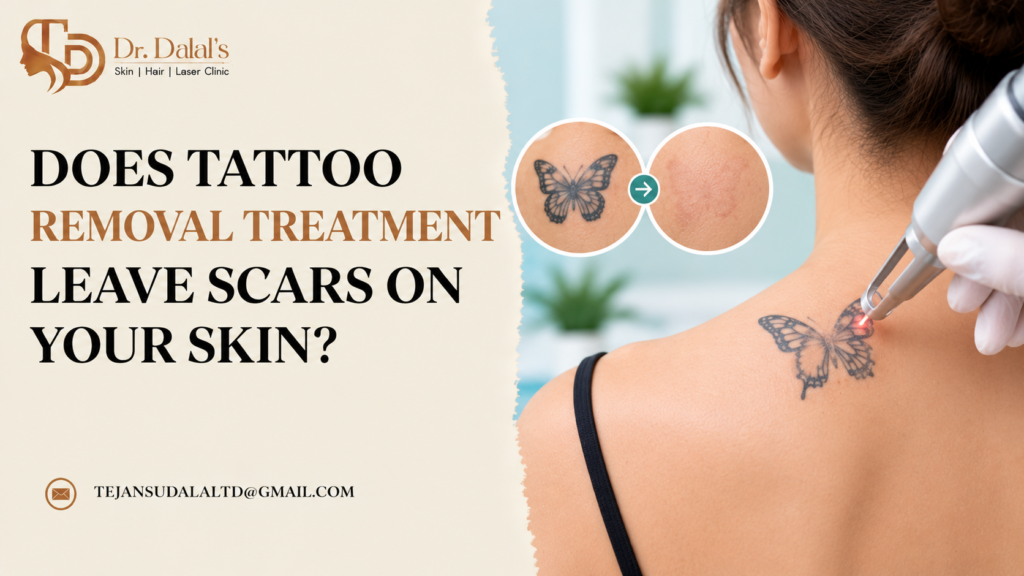
“Will it leave a scar?” is the question almost everyone asks before removing a tattoo. The fear is understandable, because older removal methods such as cutting, sanding or caustic creams did leave permanent marks. The reassuring news is that when modern laser tattoo removal is done properly by a trained doctor, true scarring is rare. The less well known news is that scarring risk is not the same for everyone, and several avoidable mistakes raise it.
Tattoo removal treatment rarely leaves a true scar when it is done with a modern laser by a trained doctor. Studies report raised scars in roughly 0.1% to 0.3% of cases, and keloids almost never, mostly in people who are prone to them. Temporary colour changes and slight texture changes are more common and usually improve with time. The risk is much higher with older methods such as cutting, sanding or caustic creams, which almost always leave permanent marks. Your risk also depends on your skin tone, the laser settings, the gap between sessions and how you care for the skin afterwards.
Key Takeaways
- With modern laser treatment done by trained doctors, true raised scarring occurs in only about 3 in 1,000 people or fewer, and keloids are extremely rare.
- Older methods such as cutting, sanding and caustic creams carry a high or near-certain risk of permanent scars.
- Temporary skin colour changes and texture changes are more common than true scars, and most settle with time.
- Darker skin, a tendency to form keloids, a poor choice of laser settings, sessions too close together and picking at blisters raise the risk.
- Good aftercare and sun protection protect your skin between sessions.
- If a scar does form, it can be treated, and early review gives the best results.
Introduction
For many people, a tattoo that once felt meaningful no longer fits their life. They want it gone, but they do not want to swap an unwanted tattoo for a visible scar.
The honest answer has two parts. First, the method matters enormously. Laser removal works very differently from older methods and is far gentler on the skin. Second, even with lasers, how the treatment is done, who does it and how you look after your skin all affect the result. This article explains the real risks, what is common and what is rare, and how to lower your chance of any lasting mark.
What Tattoo Removal Is and How It Works?
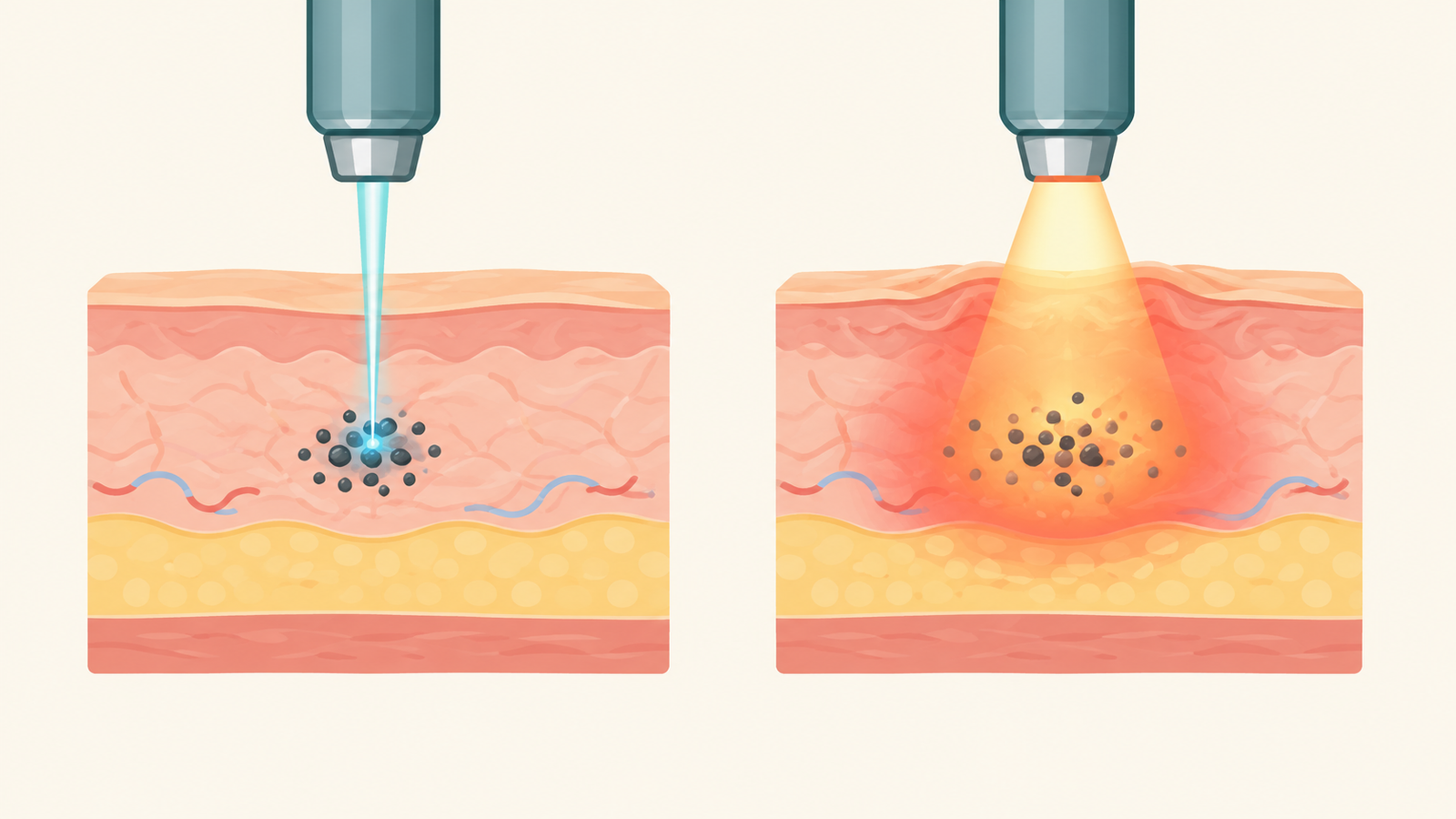
A tattoo is made of ink particles placed deep in the skin, in the dermis, where the body cannot easily remove them. Laser tattoo removal uses very short pulses of light that are absorbed by the ink and break it into tiny fragments. Over the following weeks, the body’s own cleaning cells slowly carry these fragments away, and the tattoo fades. Because this takes time, several sessions are needed.
The key point for scarring is that the laser targets the ink, not the surrounding skin structure. This is why it is gentler than methods that destroy skin to reach the ink.
Clinical Overview: How a Scar Can Form
A scar forms when the skin is hurt deeper than it can repair normally. During laser treatment, the light energy is meant to stay inside the ink particles. If too much energy is used, or heat spreads into the skin around the ink, the surrounding tissue is injured. The body responds with inflammation and then builds dense, disorganised scar tissue in place of normal skin.
Newer picosecond lasers deliver energy in even shorter pulses than older nanosecond lasers, so they produce less heat in the surrounding skin. This may lower the chance of colour change and scarring. Both types are considered safe in trained hands, and the skill of the operator matters more than the machine alone.
Older methods work in a different, much riskier way. Surgery cuts out the inked skin and always leaves a line. Sanding and salt-rubbing remove skin layers down into the dermis, and caustic creams burn the skin chemically. These methods cannot tell ink from healthy skin, so deep damage and scarring are expected.
What the Research Shows?
Published studies give a clear picture of how often problems happen:
- True raised scars after laser: About 0.1% to 0.3% of cases when treatment follows standard protocols. In one study of over 1,000 patients, the rate was about 0.28%, with no keloids.
- Keloids: Extremely rare after laser, and seen almost only in people who are genetically prone to them.
- Texture changes and “ghosting”: A slightly shiny, wrinkled or leathery look, or a faint pale outline where the tattoo was, can occur and is more common than true scarring. Up to about 4% to 8% of people having many sessions notice such changes.
- Colour changes: Temporary darkening or lightening occurs in about 8% to 22% of people with darker skin, and usually settles over 6 to 12 months.
- Older methods: Surgery always leaves a linear scar. Sanding and caustic products carry a high to very high risk of thick, permanent scarring, and in one review of chemical removal, deep scars occurred in a majority of cases.
- Who treats matters: Complication rates, including raised scars, are significantly higher when treatment is done by untrained or non-medical operators.
These findings come from published reviews and studies. Your own risk depends on your skin, the tattoo and the quality of the treatment.
Removal Methods and Scar Risk
| Removal Method | How It Works | Scar Risk | Other Effects |
|---|---|---|---|
| Laser (modern, in trained hands) | Light breaks up ink while the skin structure stays mostly intact | Very low | Temporary redness, blistering or colour change; texture changes are uncommon |
| Surgical cutting | The inked skin is cut out and the wound closed | Certain, as a line scar | Suits only small tattoos |
| Sanding or salt-rubbing | Skin layers are rubbed away | High | Uneven texture, patchy colour, long healing |
| Caustic creams or acids | Skin is chemically burned | Very high, with a risk of keloids | Unpredictable results and burns |
This table shows general patterns. A doctor will advise what suits you after examining your skin.
Diagnosis: Who Is at Higher Risk
A proper assessment before the first session is the best way to prevent a problem. A best dermatologist doctor in ahmedabad will look at your skin type, the age, colour and depth of the tattoo, its location and your medical and scar history before planning treatment.
Factors that raise the risk include:
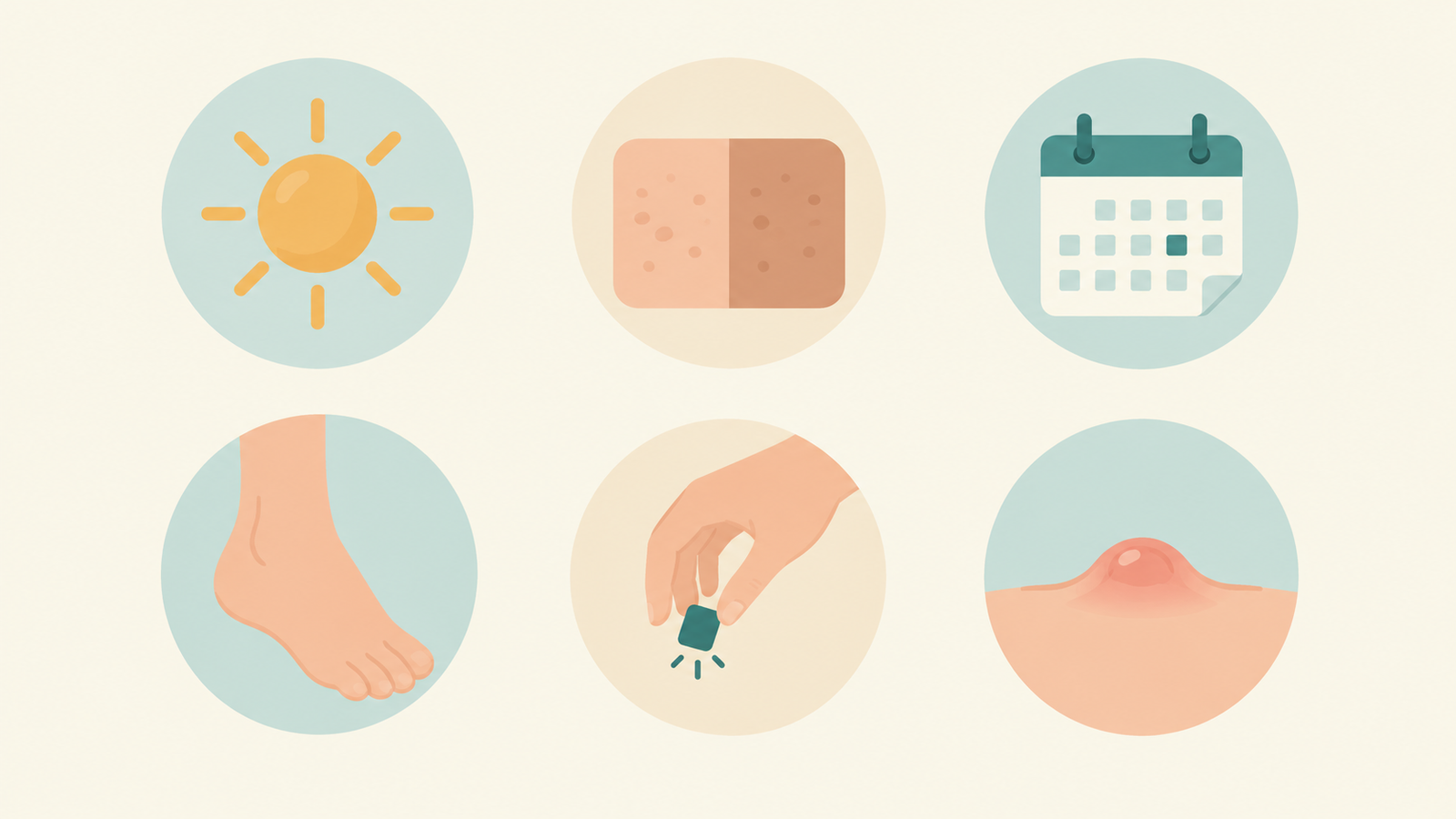
- Darker skin tone: Skin pigment absorbs some of the laser light, which can cause blistering or colour change. A longer-wavelength laser and a small test spot first are usually advised.
- A personal or family tendency to keloids: This is the single biggest risk for raised scars, and should always be mentioned.
- Recent tan: Tanned skin absorbs more light and burns more easily.
- Tattoo location: Ankles, feet, the breastbone and the shoulder have poorer blood supply or more tension and heal more slowly.
- Treatment too soon after the last session: Skin needs time to repair, and cutting this short adds up injury.
- An untrained operator, or aggressive settings: Too much energy, overlapping pulses and skipping a test patch are common avoidable causes of scars.
- Picking blisters or crusts, or an infection: These can turn a minor reaction into a lasting mark.
Treatment: Safer Removal and Aftercare
Safe tattoo removal treatment starts with the right planning. For many people, a small test spot is treated first, especially in darker skin, and checked after two to four weeks before the full tattoo is treated. The doctor chooses the laser type and settings for your skin tone and ink colours, and stops or lowers the energy if the skin shows early warning signs such as pinpoint bleeding.
Spacing sessions. Research suggests the skin needs about 6 to 8 weeks at minimum to clear ink and repair itself, and longer gaps, around 8 to 12 weeks, are gentler on the skin and often work as well. Booking sessions too close together raises the risk of lasting texture change.
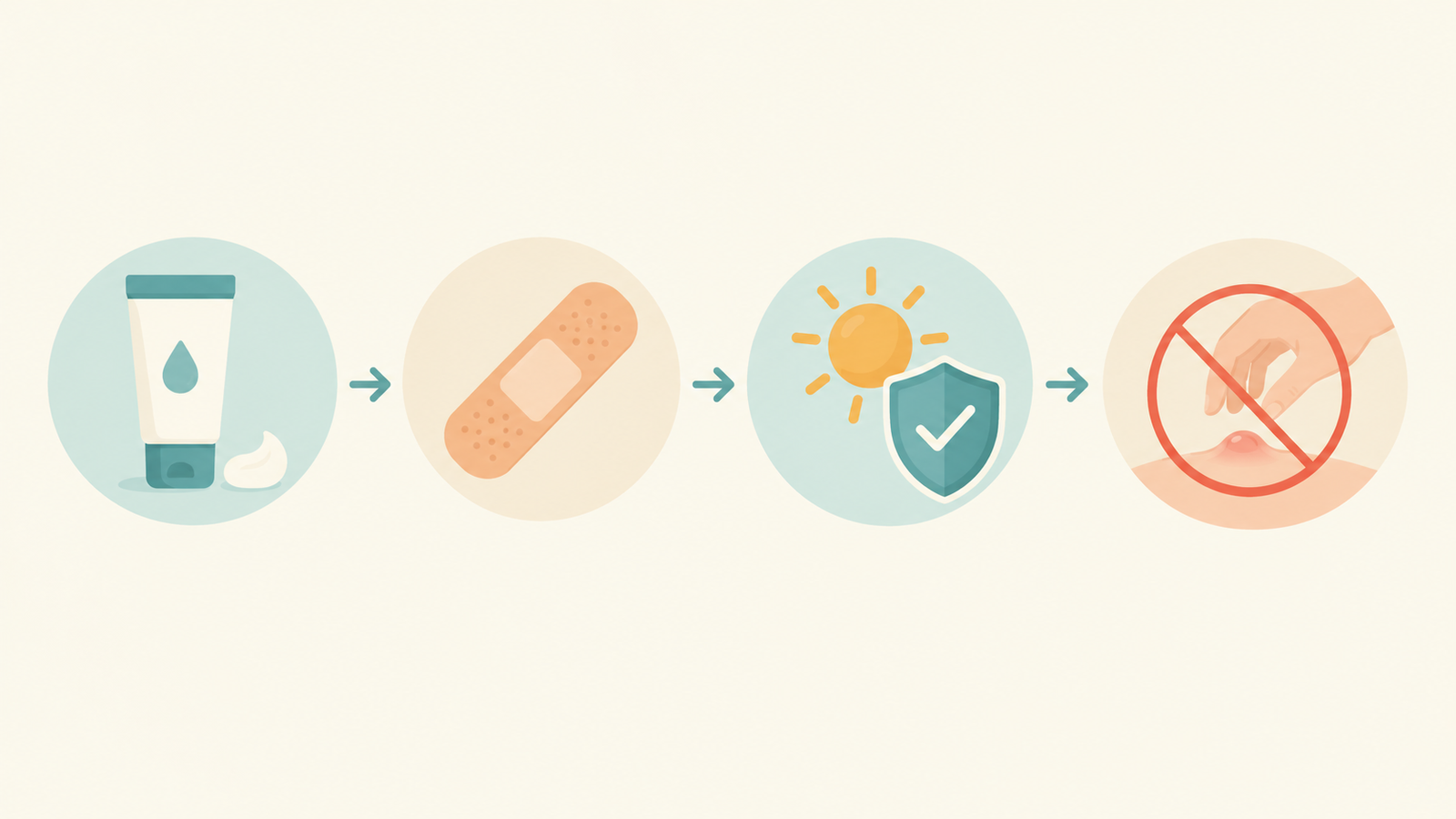
Aftercare helps protect your skin. After each session, keep the area clean, apply the soothing ointment your doctor recommends, do not pick or pop blisters and do not scratch crusts. Protect the area from the sun with clothing or a broad-spectrum sunscreen, since sun exposure can darken the treated skin. Report any spreading redness, pus or increasing pain early. A trusted skin treatment in ahmedabad clinic will give clear written aftercare instructions and a follow-up schedule.
If a scar does form, it can usually be improved. Options include scar-smoothing laser treatment, steroid-based injections for raised scars and light-based treatment for redness, often in combination. Early review gives the best chance of a good result.
Doctor Review Block
This article has been medically reviewed by Dr. Tejansu Dalal, MD (Dermatology), for clinical accuracy. Most of the scarring I see comes from home methods or hurried treatment by untrained hands, not from properly done laser removal. Patience between sessions and honest sharing of your scar history protect your skin more than anything else.
References & Citations
This article draws on published research on tattoo removal safety, including a clinical overview of laser tattoo removal published by the National Center for Biotechnology Information and a study of the incidence of raised scarring and keloid formation after laser treatment available through the National Institutes of Health. Risk figures reflect published clinical studies.