
Ear piercing looks like a small, quick decision. It is a tiny surgical procedure, though, and the place you choose changes how likely it is to heal smoothly. Studies of ear piercing report that complications such as infection, allergy, embedded earrings and scars are common, and they are not evenly spread: they depend on the instrument, how clean the process is, what the first earring is made of and where on the ear the hole is placed. This guide explains the real differences between a doctor, a professional piercer and a roadside or mall parlour, so you can choose with your eyes open.
For earlobe piercing, especially in babies and children, a clinic with sterile single-use equipment and proper aftercare advice is the safest choice. For the upper ear cartilage, the instrument and the skill of the person matter even more, and a piercing gun should be avoided. Roadside and mall parlours that use reusable spring-loaded guns carry the highest risk, because the gun cannot be fully sterilised and it crushes tissue instead of cutting it. Complications are reported in roughly 1 in 4 earlobe piercings and up to 4 in 10 cartilage piercings. Lobes usually heal in 6 to 8 weeks, and cartilage takes 3 to 12 months.
Introduction
Most people never think about ear piercing as a medical question. A piercing is quick, the earring looks pretty and the shop is nearby. Problems usually appear days later: a red, swollen, warm earlobe, an itchy rash around the stud or an earring that is hard to turn.
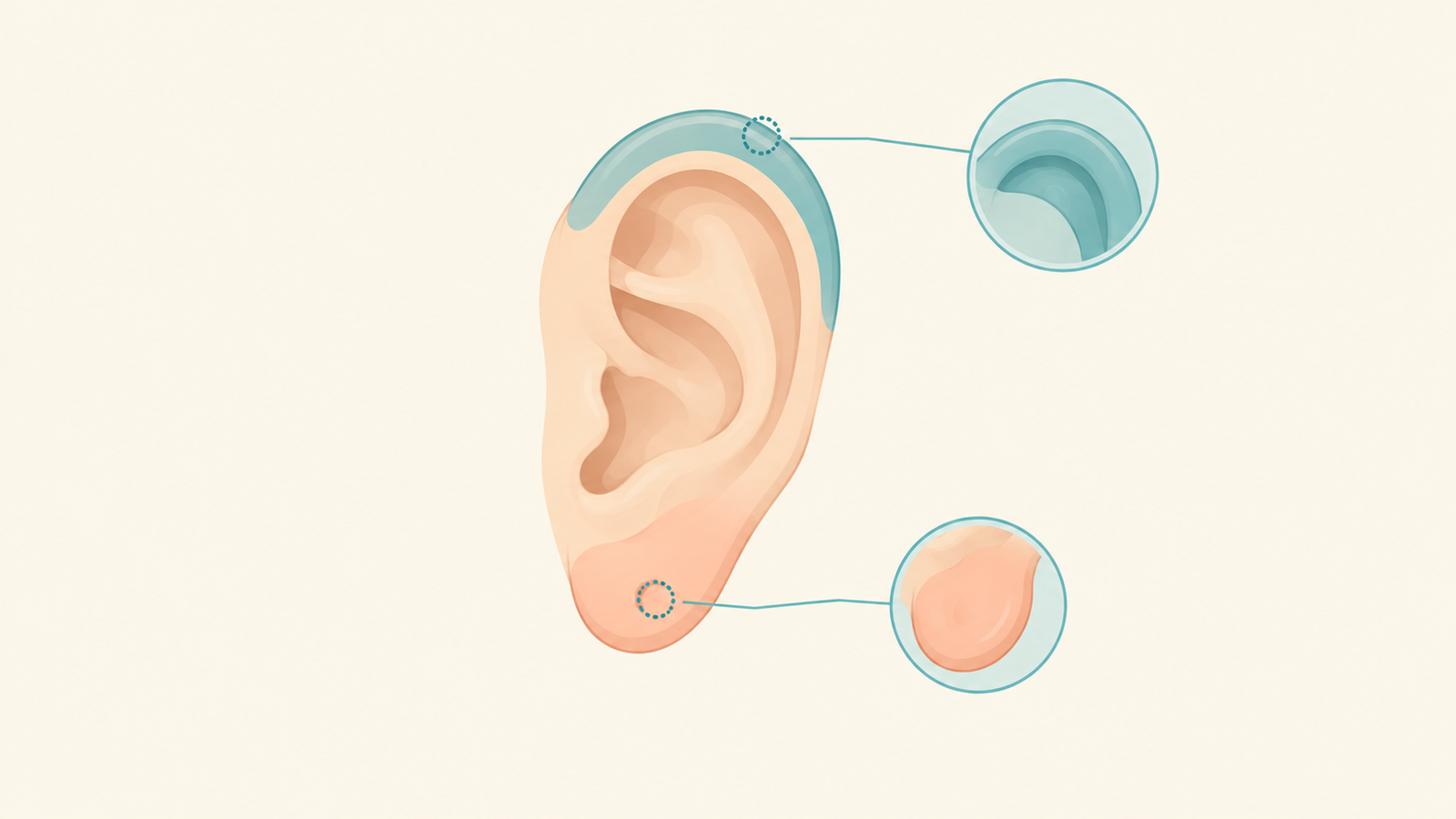
The ear has two very different parts. The soft lobe heals quickly because it has a rich blood supply. The harder upper ear is made of cartilage, which has a poor blood supply and heals slowly, so infections there can be stubborn and serious. A good piercing decision considers both the place on the ear and the person being pierced, from a baby to a teenager to an adult with sensitive skin.
Key Takeaways
- Ear piercing is a small surgical procedure, and the setting changes the risk.
- Spring-loaded guns crush tissue and cannot be fully sterilised, so they carry the highest risk.
- For soft lobes, sterility, jewellery material and post length matter as much as the instrument.
- For cartilage, a gun can crack the cartilage and invite a serious infection. A trained person with a hollow needle is the safer method.
- A tight butterfly back can trap moisture and swell into the skin, so a longer post that allows for swelling is safer at first.
- Starting jewellery should be nickel-free. Early metal exposure can lead to a lifelong nickel allergy.
- People who get keloids or thick scars should talk to a doctor before piercing.
- For babies, doctors advise waiting until the first vaccines are done, and until the child can take part in aftercare when possible.
What Ear Piercing Involves?
An ear piercing makes a small channel through the skin, or through skin and cartilage, so that an earring post can sit in it. The body treats this channel as a wound. It must heal around the jewellery, which is why the wound can become inflamed, infected or irritated if the process or the jewellery is wrong.
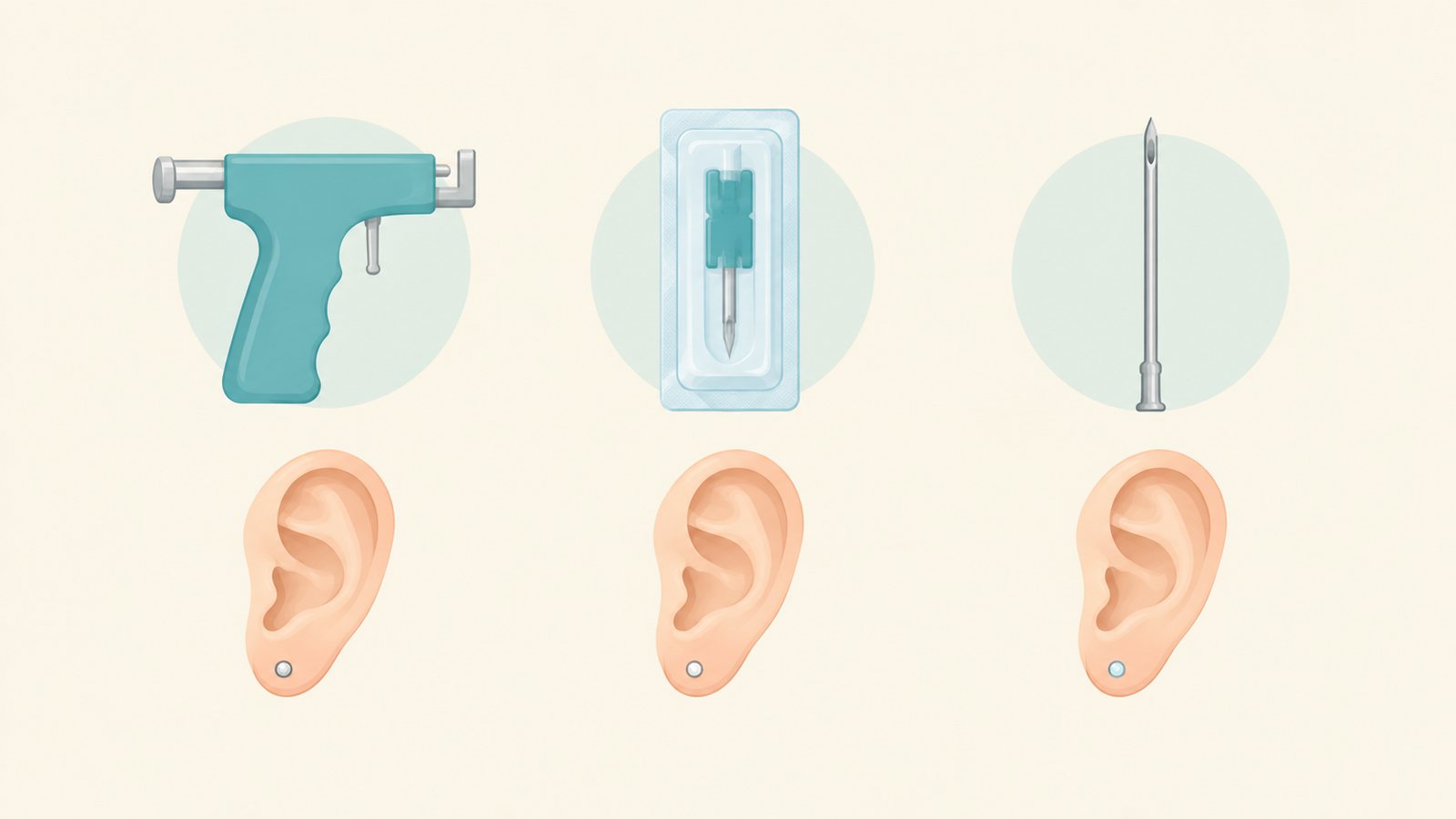
The three common methods are:
- A spring-loaded gun: a blunt stud is pushed through the ear with a sudden spring force.
- A hand-pressed sterile cassette: the stud sits inside a sealed single-use unit and is pressed through slowly by hand, without a spring snap.
- A hollow needle: a sharp, single-use needle makes a clean opening, and the jewellery follows it.
Clinical Overview: Lobe, Cartilage and the Instruments
The earlobe is soft, fleshy and well supplied with blood. It heals quickly, usually in 6 to 8 weeks. At the cell level, soft lobe tissue copes with different instruments relatively well. In lobes, most problems come from what happens afterwards: a tight back that squeezes swollen skin, a post that is too short, jewellery that is not clean or a metal that irritates the skin.
The upper ear is made of cartilage. Cartilage has no blood vessels of its own and depends on the thin layer around it for nourishment. Force from a blunt gun can crack the cartilage and tear the layer away from it. With a poor blood supply, the body fights infection less well, so healing takes 3 to 12 months, and infection can spread through the cartilage. A common germ in these infections thrives in such conditions. In severe cases, pus can collect around the cartilage and the ear can lose its shape permanently.
The instruments compared:
- A gun crushes and compresses the tissue instead of cutting it, causes more swelling and has plastic parts that cannot be fully sterilised, so tiny splashes of blood can contaminate it.
- A sterile single-use cassette removes the contact between the stud and the reusable device, and avoids the spring snap, which makes it well suited to lobes and children.
- A hollow needle makes a clean opening with less crush injury and is the preferred method for cartilage when done by a trained person.
What the Research Shows?
Published studies and reviews of ear piercing complications show a consistent picture:
- Complications are common: They are reported in about 25% of earlobe piercings and up to 40% of cartilage piercings.
- Guns crush; needles cut: A gun forces a blunt stud through tissue, causing more compression and swelling. A sharp hollow needle makes a cleaner opening.
- Gun hygiene is a problem: The plastic body of a reusable gun cannot withstand the heat sterilisation used for surgical instruments.
- Cartilage is a high-risk site: Studies of piercing techniques in cartilage show damage from blunt force, and infection of cartilage is typically caused by a germ that can lead to abscess, tissue death and a permanently deformed ear.
- Tight backings cause embedded earrings: Embedded earrings happen mostly in the earlobe, mostly in children under 10, often after piercing with a gun and a short post that cannot allow for swelling. Removal usually needs a small procedure under local anaesthesia.
- Metal matters: Children with pierced ears were reported to have a much higher rate of nickel allergy than children without piercings, around 31% in one study against 2%. Early exposure to nickel in cheap jewellery is a major cause.
- Keloids and thick scars occur at piercing sites: The earlobe is among the most common places for keloids. People with a family history and those pierced from the teenage years onwards are at higher risk, and keloids often come back after being cut out.
- Age and timing: Pediatric guidance says piercing is low risk when done under sterile conditions, but advises waiting until the child is old enough to take part in aftercare and, if tradition requires an infant piercing, until the first routine vaccines are done, around 2 to 4 months.
- Heart conditions need a check: Children with certain heart conditions are at risk from the bacteria that enter the blood through minor skin procedures, so their doctor should be asked first.
These findings come from published studies and reviews. Rates differ by population and setting, and your own risk depends on your skin, your history and the care taken.
Doctor, Piercer or Parlour at a Glance
| Setting | Typical Method | Main Strengths | Main Limitations |
|---|---|---|---|
| Roadside or mall parlour | Reusable spring-loaded gun | Quick and easy to find | Cannot be fully sterilised, crush injury, short posts and tight backs, often unknown metal, no medical advice |
| Doctor’s clinic | Single-use sterile cassette or sterile needle | Clean technique, medical screening, nickel-free options, help if something goes wrong, suited to babies and children | Usually focused on earlobes; ask about cartilage |
| Trained professional piercer | Hollow single-use needle | Skilled placement, clean opening, longer starter posts and proper metals for cartilage | Does not usually screen for medical conditions or manage complications |
These are general patterns, not rules for every individual provider. The questions in the Treatment section help you check any provider yourself.
Diagnosis: Who Needs Extra Care and What Problems Look Like
Take extra care, or speak to a doctor first, if:
- You or a close relative form keloids or thick raised scars
- You have a nickel or other metal allergy
- You have diabetes, a bleeding problem or a weak immune system
- You have a heart condition, or the child does
- The skin on the ear is already infected, inflamed or irritated
- The child is very young and has not yet had the first vaccines
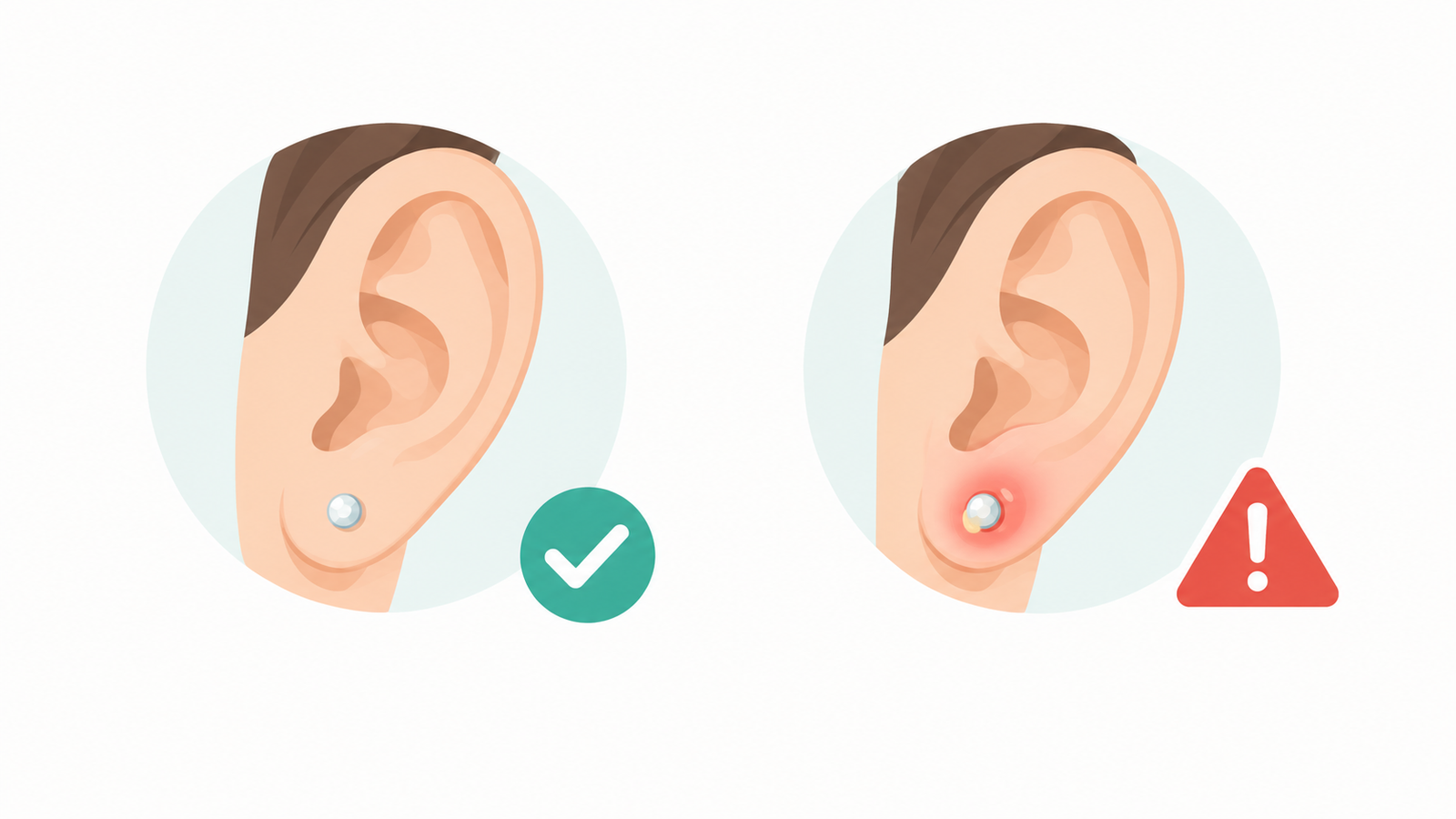
Signs of a normal healing piercing: mild redness, slight tenderness and a little clear or pale fluid in the first days. These settle gradually.
Signs of a problem:
- Infection: growing redness, warmth, swelling, pain, thick yellow or green discharge, a bad smell or fever
- Allergy: an itchy, red, scaly or weeping rash exactly where the metal touches the skin
- Embedded earring: the back is sunk into the skin, or the post cannot be turned or removed
- Cartilage infection: severe pain, a hot swollen upper ear, a swelling that feels fluid-filled, or fever
- Keloid: a firm, smooth, growing lump that extends beyond the original piercing, often weeks or months afterwards
Treatment: Choosing the Setting and Healing Well
A planned ear piercing in a clinic begins with a short check: your skin, your history of keloids or allergy, the placement and the jewellery. The position is marked with you looking in a mirror so both ears match. Clean equipment is used, the stud goes in, and you leave with clear care instructions. Because a doctor sees the ear and the skin together, you also get advice about what to do if something goes wrong, and what to do if you have a tendency to scar. A best dermatologist in Ahmedabad can also advise you on metal allergy and scarring before you pierce, and a clinic that offers dermatology surgery in ahmedabad can manage a complication if one happens.
Questions worth asking any provider:
- What instrument do you use, and is it single-use and sterile?
- Is the jewellery nickel-free, and what is it made of?
- Is the post long enough to allow for swelling, and when should it be changed to a shorter one?
- For cartilage, is a needle used instead of a gun?
- What aftercare do you advise, and who do I call if there is a problem?
Healing well:
- Wash your hands before touching the ear and do not touch it otherwise.
- Clean as advised, usually with clean water or saline, and avoid harsh products.
- Do not turn or twist the stud if told not to, and do not remove it early.
- Keep hair products, phone screens and rough pillowcases away from the area.
- Leave the first jewellery in for the advised time. Lobes usually take 6 to 8 weeks, and cartilage 3 to 12 months.
- Return for the post to be changed once the swelling has settled.
- Take out the jewellery and see a doctor if the area becomes red, hot, swollen or painful.
A word on numbing cream. It can reduce the pinch for some people, but it can swell and firm the skin slightly. Ask your doctor whether it suits you, and do not use any numbing product on a child without medical advice.
Doctor Review Block
This article has been medically reviewed by Dr. Tejansu Dalal, MD (Dermatology), for clinical accuracy. In my experience, most piercing problems are preventable. The best protection is clean equipment, the right metal, enough room for swelling and honest advice for people who scar or react easily. A piercing should be a cosmetic choice, not a medical problem.
Conclusion
Where you get your ears pierced changes the risk more than most people expect. Reusable guns used in busy parlours carry the highest risk, and cartilage piercings need particular care. A clean clinic setting, nickel-free jewellery, enough room for swelling and honest advice for children and for people who scar are what make a piercing heal well. Choose the provider the way you would choose any small procedure: ask questions, look at the setup and take your time.