
You finished the sessions, the hair thinned out beautifully and then, a few months later, some of it came back. Many people take this as a sign that laser hair reduction did not work or was done badly. Usually it is neither. Hair grows in cycles, and a laser can only affect hairs that are in the right stage at the time. Hormones, hair colour, skin tone and the laser settings all play a part too. This guide explains why some hair returns, what you can do about it and when regrowth deserves a closer look.
Some hair grows back after laser hair reduction because only hairs in their active growth stage are damaged during any one session, some follicles are only partly damaged and recover, fine or light hairs absorb too little energy, and hormones can wake up new hairs over time. For most people, a full course gives a lasting reduction in hair number, thickness and darkness, with occasional touch-up sessions. It does not guarantee that every hair is gone for life, which is why the correct term is hair reduction, not removal. Hormonal conditions such as PCOS, sessions spaced wrongly and settings that are too low are the most common reasons for stubborn regrowth.
Introduction
Laser hair reduction is one of the most common skin treatments in the world, and for good reason. It can leave the skin smoother, reduce ingrown hairs and cut down the time spent shaving, waxing or threading. Most people who complete a proper course see a big difference.
The disappointment usually comes from expectation. “Permanent hair removal” is a phrase that suggests every hair is gone forever. In medical terms, the goal is permanent reduction: a long-term, stable fall in the number of hairs that regrow after a course of treatment. Knowing the difference, and knowing why some hair returns, lets you plan sessions properly and judge your results fairly.
What Laser Hair Reduction Is?
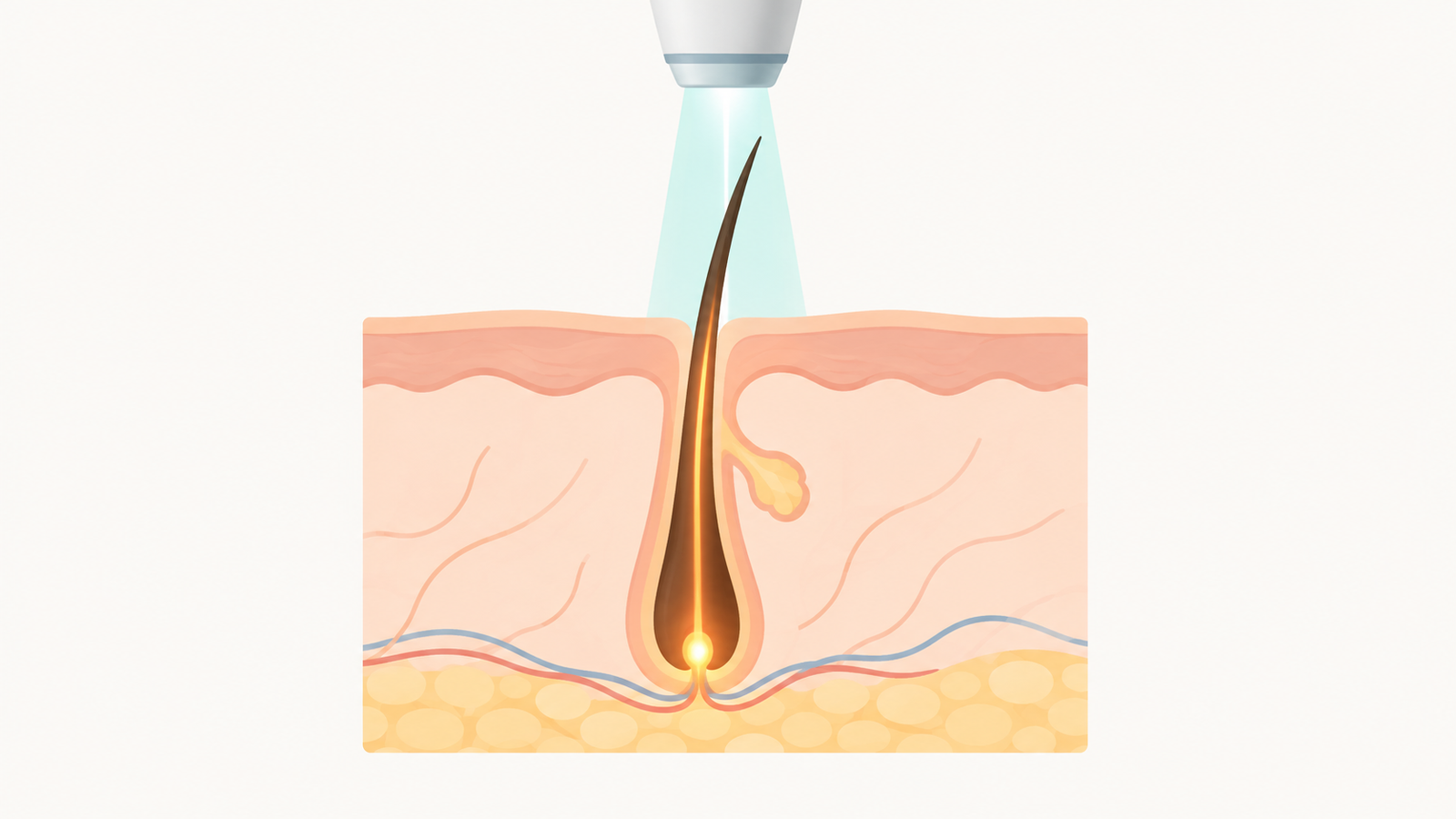
A laser sends a beam of light that is absorbed by the dark pigment in a hair. The light turns to heat, which travels down the hair to the root and damages the cells that make new hair. Because the laser looks for pigment, the colour of the hair and the colour of the skin both matter. Dark, thick hair on lighter skin absorbs the most energy. Darker skin tones need a laser type and settings that protect the skin while still reaching the root.
The treatment is done in a series of sessions, because hairs are not all in the same stage at the same time. Over the series, more and more of the growing hairs are caught.
Clinical Overview: Why Hair Grows Back
1. Hair grows in cycles. Each hair goes through a growing stage, a short transition stage and a resting stage. Only hairs in the growing stage are firmly attached to the root and full of pigment, so they respond best. Hairs in the resting stage are missed in that session and can grow in later. This is why several sessions are needed, and why some hair seems to “appear from nowhere” after a few months.
2. Some follicles are only partly damaged. The root contains stem cells that can rebuild a hair. If the heat reaching them is not enough, they are injured but not destroyed, and they can repair themselves and restart growth after weeks or months.
3. Hairs can become finer, not disappear. Partly damaged follicles often grow a thinner, lighter hair. This is a good result for appearance, but those fine, pale hairs have little pigment, so the laser has little to grab. They are hard to treat with further laser sessions.
4. Hormones can wake up new hairs. Male hormones, which women also have, can turn tiny, almost invisible hairs into coarse, dark ones, especially on the chin, jawline, neck, chest and lower abdomen. In conditions such as PCOS or other hormone imbalances, new hairs keep being recruited for months or years. A laser clears the hairs that are active now, but it cannot stop hormones from producing new ones.
5. Settings can be too low. In darker skin, settings are sometimes kept very cautious to protect the skin. If the energy is too low, or the laser type is not right for the skin and hair depth, the root may not get enough heat to be destroyed.
6. Paradoxical hair growth is rare but real. In a small number of people, a laser stimulates thicker hair to grow in or next to the treated area. Studies report it in roughly 1 to 3 out of every 100 people, and up to about 1 in 10 in higher-risk groups. It is more often seen on the face and neck, in medium to deeper skin tones and in people with hormonal conditions. It is thought to happen when low-level heat or light wakes up resting follicles instead of destroying them. If hair gets thicker after sessions, treatment should be reviewed instead of repeated unchanged.
Session Spacing by Body Area
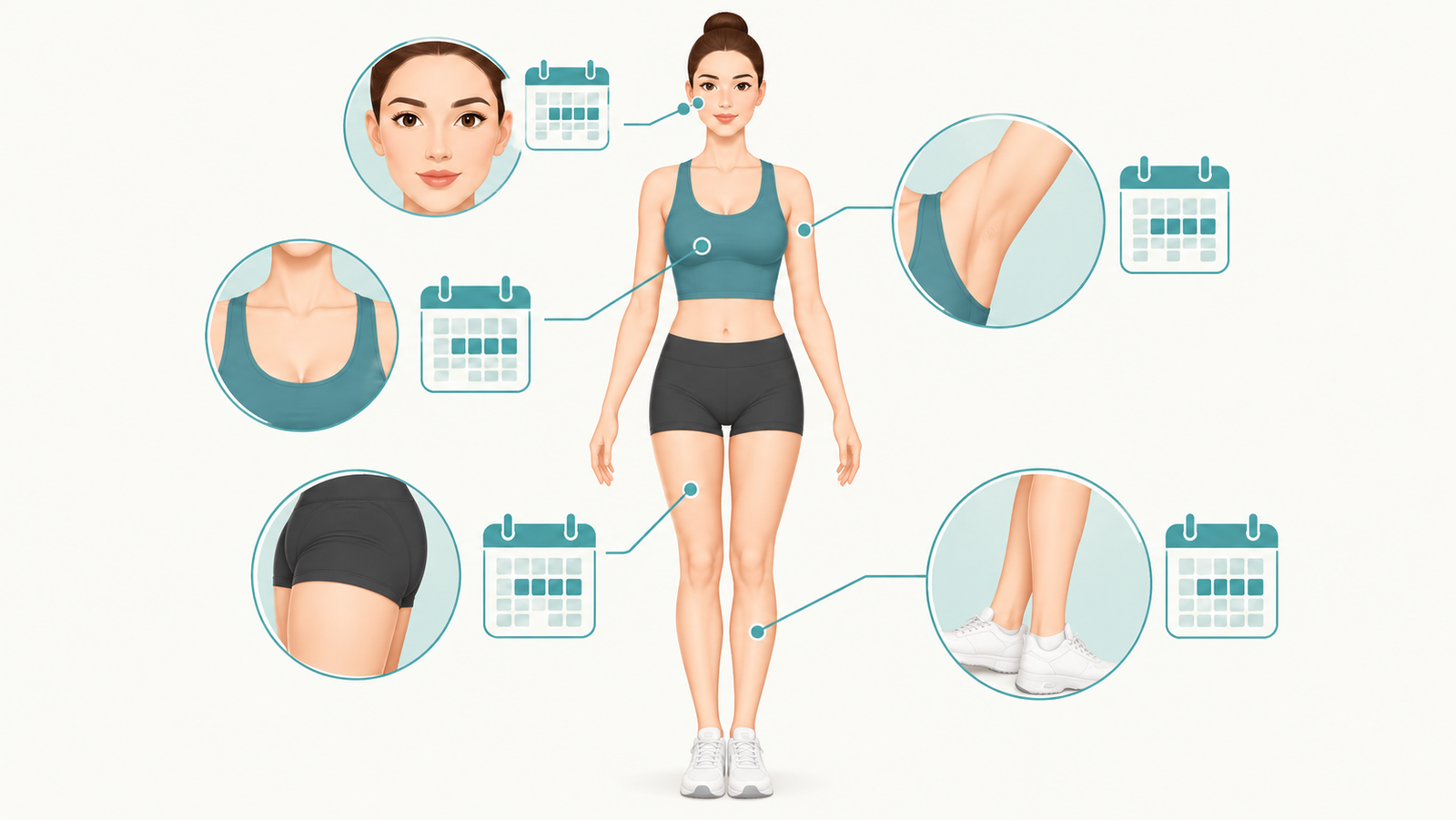
Hair on different parts of the body cycles at different speeds, so the gap between sessions is not the same everywhere.
| Body Area | How Fast Hair Cycles | Usual Gap Between Sessions |
|---|---|---|
| Face, upper lip and chin | Fast, around 6 months per cycle | About 4 to 6 weeks |
| Underarms | Moderate, around 7 months | About 6 to 8 weeks |
| Bikini area | Moderate, around 8 months | About 6 to 8 weeks |
| Chest and back | Slow, 9 to 12 months | About 8 to 10 weeks |
| Arms and legs | Slow, around 12 months | About 8 to 12 weeks |
These are general patterns from published research. Your doctor will set your own spacing based on your skin and hair.
Diagnosis: Who Responds Best and Who Needs a Check First
A consultation comes before the first session. A top skin doctor in ahmedabad will look at your hair colour, thickness and growth pattern, your skin tone, any recent tan, your medicines and your health history, and will decide whether laser hair reduction is the right option.
Usually responds well:
- Dark, coarse hair, especially with a good contrast to the skin
- Areas such as underarms, legs and bikini
- People who complete the full course and keep to the spacing
Responds less predictably:
- Light brown, blonde, red, grey or white hair, which has little pigment
- Very fine, fuzzy hair
- Hair in hormone-sensitive areas, such as the chin, jawline and neck
- Skin that is tanned or sun-exposed at the time of treatment
Needs a check, or a wait, first:
- Signs of hormone imbalance, such as irregular periods, acne and rapid or heavy hair growth on the chin, chest or abdomen. A blood test and a medical plan may be needed alongside the laser.
- Pregnancy, where doctors usually advise waiting
- A recent tan, an active skin infection, open wounds or irritated skin
- A history of marks that stay dark after skin injury
- Some medicines that make the skin sensitive to light. Tell your doctor about everything you take.
Key Takeaways
- Laser hair reduction lowers the number, thickness and darkness of hair. It does not promise to remove every hair for life.
- Only hairs in the growing stage respond to each session, which is why a series of sessions is needed.
- Hair grows back when follicles are only partly damaged, when hair becomes too fine to target, when hormones keep recruiting new hairs and when settings are too low.
- Spacing should match the body area, from about 4 to 6 weeks on the face to 8 to 12 weeks on the legs.
- Hormonal conditions such as PCOS often cause stubborn regrowth and need medical attention alongside the laser.
- Paradoxical hair growth is uncommon, but if hair thickens after sessions, treatment should be reviewed.
- Touch-up sessions are normal, and good sun protection keeps skin safe.
What the Research Shows
Reviews and clinical studies of laser hair reduction give a consistent picture:
- The aim is permanent reduction: Regulators define it as a long-term, stable fall in the number of hairs that regrow after a course of treatment, not removal of every hair.
- Growth stage matters: Hairs in the growing stage take up the most energy. Hairs caught in the resting stage tend to be shed and then regrow within months.
- Hair is not uniform across the body: The share of growing hairs and the length of the cycle differ by area, which is why spacing differs.
- Hair may thin before it stops: Partial damage can turn coarse hairs into fine ones, which are then hard to treat.
- Hormones are a major cause of regrowth: In people with hormone imbalance, new hairs are recruited over time, and clinics usually treat the hormones alongside the laser.
- Laser type and settings should match the skin and hair: Fairer skin with fine surface hair and darker skin with deeper hair need different approaches. Under-dosing for the sake of safety can leave the root alive.
- Paradoxical growth is documented: Rates of about 0.6% to 3% have been reported, higher in at-risk groups. When it happens, clinics usually change the laser type or settings, and persistent small patches can be treated with electrolysis, which treats one follicle at a time regardless of colour.
- Safety is generally good with proper settings: Common effects are redness and warmth that settle within hours, with a lower risk of pigment changes when settings suit the skin tone.
These points come from published reviews and studies. Your own results depend on your hair, your skin, your hormones and the care taken with your plan.
Treatment: Planning a Course That Lasts
A planned laser hair reduction course usually involves 6 to 8 sessions, with the spacing matched to the body area, followed by occasional touch-ups. Before each session, the skin is cleaned and the hair is trimmed or shaved, since long hair above the skin absorbs energy and can burn. A cooling method protects the surface, and the laser is passed over the area. Most people feel a warm, snapping sensation.
Before treatment:
- Avoid sun exposure and tanning, and use sun protection in the weeks before
- Shave the area as advised, and avoid waxing, threading or plucking between sessions, because the laser needs the root to be present
- Tell your doctor about your medicines, skin products and any hormonal condition
After treatment:
- Redness and mild swelling around the follicles are normal and settle within hours to a day or two
- Use sun protection and avoid heat, saunas and harsh scrubs for a few days as advised
- Do not pick or scratch the skin
- Shedding of treated hairs over the following two weeks is normal and not a sign of regrowth
If hair keeps coming back:
- Check whether your spacing matches the area
- Ask your doctor about hormone-related causes, especially on the chin, jawline, neck and lower abdomen
- Discuss changing the laser type or settings
- For small, stubborn patches, ask about electrolysis
A skin specialist in ahmedabad will also tell you honestly when laser is not the right tool, such as for very light or grey hair.
Doctor Review Block
This article has been medically reviewed by Dr. Tejansu Dalal, MD (Dermatology), for clinical accuracy. In my experience, patients are happiest when we talk about expectations before the first session: a big, lasting reduction, with occasional touch-ups, and a medical check when hormones may be involved. Honest planning matters more than any promise of permanent removal.
References & Citations
This article draws on published research on laser hair reduction and regrowth, including a clinical overview of laser hair removal from the National Center for Biotechnology Information and an update on laser treatment in hirsutism available through the National Institutes of Health. Rates and timelines reflect published research and general clinical practice.