

Introduction
Many clinics suggest a Hydrafacial every month. The reason usually given is that skin renews itself in about 28 days. That sounds scientific, but it is a marketing habit more than a medical rule. Skin renewal does slow down with age, and there is no biological rule that says a facial must be done every fourth week.
What matters more is what you want from it. Someone clearing active pimples needs a different plan from someone who just wants a glow before a wedding. Someone using strong prescription creams at home needs fewer sessions than someone using only a basic routine. A schedule matched to your skin works better and costs less effort than one copied from a package.
Many people ask how often should you have a Hydrafacial for clearer skin, and the answer depends on your goal.
Quick Answer
For clearer skin with mild to moderate acne, blackheads or excess oil, a Hydrafacial is usually done every two weeks for about six sessions, then spaced out to every four to six weeks to keep results. For dull or uneven skin, every four to six weeks is common. For a calm, balanced complexion or a pre-event glow, every two to three months or a single session is often enough. Doing it more often than every two weeks rarely helps and can irritate the skin, especially in darker skin tones where it can leave dark marks. It works on the surface only, so it does not fix deep scars, melasma or severe acne.
So, how often should you have a Hydrafacial for clearer skin? For most people with acne or congestion, the schedule below is the place to start.
What Is a Hydrafacial?
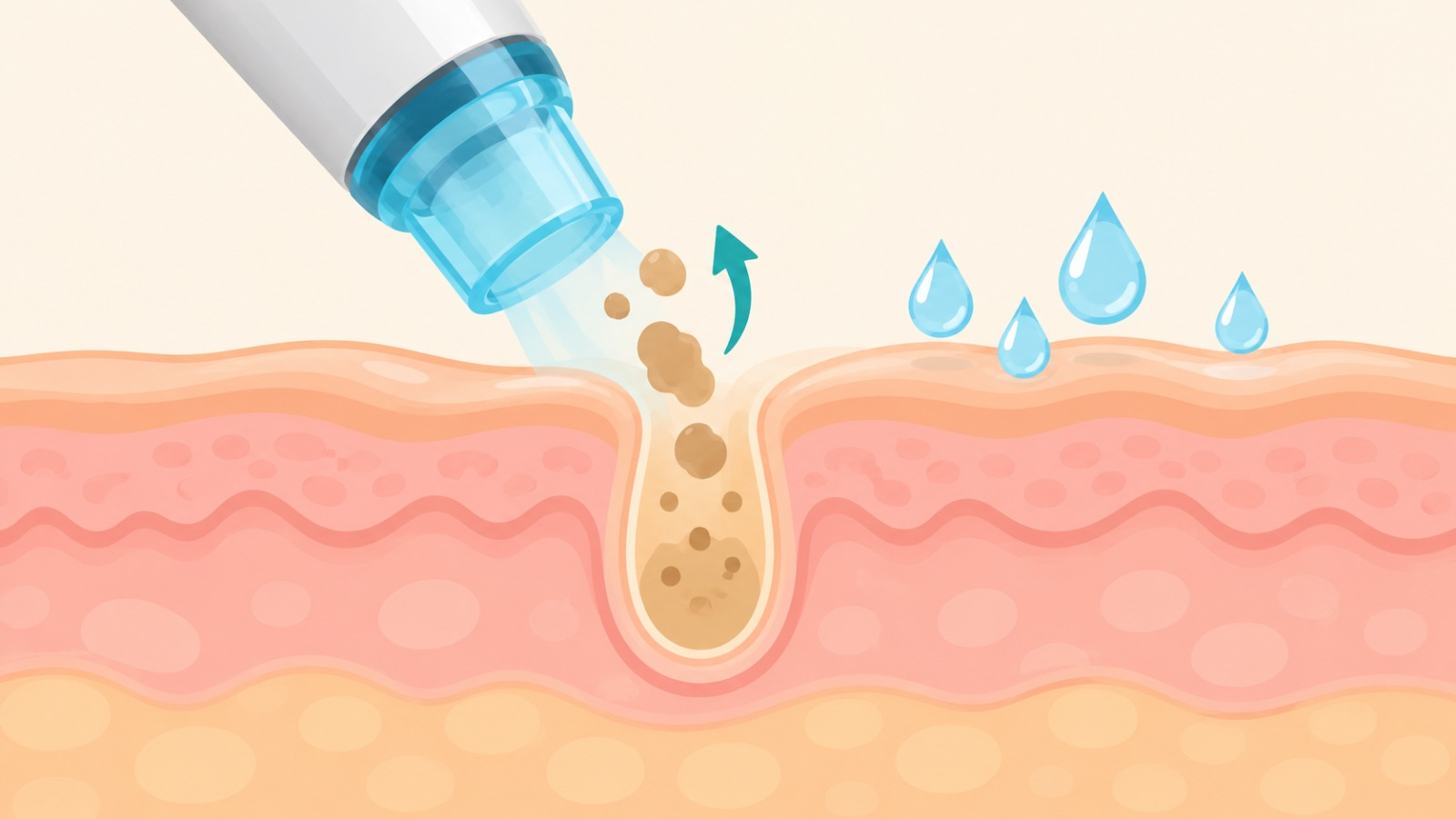
A Hydrafacial, also called a hydradermabrasion facial, is a device-based facial that cleans, exfoliates and extracts in one session. In simple terms, it combines a gentle acid cleansing step, a vacuum-assisted clearing of oil and debris from pores and an application of hydrating serums. Some versions end with a light therapy step. It acts on the top layer of skin and on the contents of the pores. It does not reach the deeper layers where scars and deeper pigment sit.
Because the number of steps and the strength of the cleansing step can differ between clinics, the right gap between sessions also differs. A gentler session can be repeated sooner than a stronger one.
How Often Based on Your Skin Goal
Think of a clear-skin plan in two phases. First comes a short, closer-spaced series to loosen plugged pores and calm surface congestion. Then comes a maintenance rhythm that matches your oil production and sensitivity.
Active mild to moderate acne and breakouts. Every two weeks for about six sessions, then reassess. After breakouts calm down, spacing out to every four to six weeks helps the skin barrier recover while keeping pores clear.
Oily skin, blackheads and congested pores. Every four weeks for upkeep, sometimes every two weeks at the start. In hot, humid months, sticking closer to every four to six weeks often makes sense because oil and sweat build up faster.
Dullness and uneven texture. Every four to six weeks, or a short series followed by regular upkeep.
Sensitive or redness-prone skin. Every four to six weeks at most, with a gentler set-up, and never during a flare-up.
A calm, balanced complexion or someone already using strong prescription creams. Every two to three months. Layering frequent clinic exfoliation on top of strong creams at home often tires the skin barrier.
A single event. One session two to three days before the event, then a seasonal refresh if you like.
One more point matters. The glow from one session usually lasts around five to seven days, and smoothness and hydration may last up to one or two weeks. These are clinic reports, and they differ from person to person.
Who Should Wait or Be Assessed First
A recurring schedule is only sensible if your skin is suitable. Wait or ask your doctor first if you have:
- Recent use of strong oral acne medicine. Most clinics wait at least six months, and some wait up to a year, because skin heals poorly during and after treatment.
- Active infection or open skin. This includes cold sores, open sores, sunburn and severe cystic acne.
- A flare of rosacea, eczema or psoriasis. Suction and exfoliation can make flares worse.
- A known allergy to aspirin-type medicines or to any product used. The acid step is related to these.
- Pregnancy or breastfeeding. Many clinics avoid the standard version, so check with your doctor before booking.
- Recent procedures. Allow about two weeks between a Hydrafacial and anti-wrinkle injections or fillers, and one to two weeks around waxing, threading, lasers, needling treatments or deeper peels.
What the Research Shows
- The evidence is small and short: Published studies of hydradermabrasion are small and short-term. Several have no comparison group, and some involve people linked to the device maker.
- Acne clearing builds over a course: A small open study in adults with mild to moderate acne gave six sessions, two weeks apart, over twelve weeks. The number of people rated clear or almost clear by the doctor rose from about 2 in 10 to about 6 in 10. It had no control group and only 20 people, so it supports the idea of a course, not a guarantee.
- Redness settles with repeat visits: In the same study, redness at some point affected nearly half the people, but by the last session it affected very few.
- An earlier controlled study used a closer gap: A small controlled study of hydradermabrasion in 20 women used six sessions seven to ten days apart and reported better fine lines, pores and pigment than serum applied by hand. It was small, used an older routine and did not compare against a standard facial.
- The skin barrier needs about two weeks: An imaging study of eight volunteers found the outer skin layer became about a third thinner right after one session and took about two weeks to rebuild. This is the main reason sessions closer than two weeks make little sense.
- No deeper change was seen: Two weeks after a session, the deeper layers where collagen sits had not changed. More frequent Hydrafacials will not fix pitted scars, deeper wrinkles, melasma or severe acne.
- Marketing claims are stronger than the evidence: Large figures such as huge hydration gains or long-lasting wrinkle reduction are mostly from the maker or clinics, not from independent trials.

Cadence Guide at a Glance
| Skin Goal | How Often | Usual Course | What the Evidence Looks Like |
|---|---|---|---|
| Mild to moderate acne | Every 2 weeks | About 6 sessions over 12 weeks, then reassess | One small open study |
| Oily skin and blackheads | Every 4 weeks, sometimes every 2 weeks at first | Ongoing upkeep | Clinic practice |
| Dull or uneven skin | Every 4 to 6 weeks | A short series, then upkeep | Small studies and clinic practice |
| Sensitive or redness-prone skin | Every 4 to 6 weeks, never in a flare | A few sessions, then every few months | Clinic guidance |
| Balanced skin or strong home creams | Every 2 to 3 months | As needed | Clinic guidance |
| Pre-event glow | Once, 2 to 3 days before | Seasonal refresh if wanted | Immediate surface effect |
This is a general guide. Your own schedule should come from an in-person assessment.
Doctor Review
This article has been medically reviewed by Dr. Tejansu Dalal, MD (Dermatology), for clinical accuracy. In my experience, the most common mistake is treating a Hydrafacial as a monthly habit for every skin type. The patients who do best set a goal, do a short series, check photos and then stretch the gap. If there is little change after a structured series, repeating it more often will not help, and a different treatment is the better step.
Key Takeaways
- There is no medical rule that a Hydrafacial must be done every four weeks.
- For clearer skin with mild to moderate acne, a series of about six sessions two weeks apart is the most studied plan, followed by wider spacing.
- Sessions closer than two weeks rarely help and can weaken the skin barrier.
- Darker skin tones are more prone to dark marks from over-treating, so a gentler set-up and wider spacing are safer.
- Results are temporary and build with a series, so photographs help track progress.
- It works on the surface only, so scars, melasma and severe acne need other treatments.
- Strong oral acne medicine, active infection, a flare of skin disease and pregnancy mean wait and ask first.
Planning Your Schedule and Aftercare
A planned Hydrafacial starts with a skin assessment, a clear goal and a plan for how many sessions to do before you reassess. A visit to the skin doctor in Ahmedabad also includes a check on the creams you use at home, since these change how often your skin can take a session. A cosmetic dermatologist in Ahmedabad can add other treatments when a concern needs more than surface care.
Before a session
- Pause strong exfoliating or acne creams for about 48 hours, or longer if your skin is sensitive, unless your doctor advises otherwise.
- Come with a clean, makeup-free face and avoid shaving on the same day.
After a session
- For the first 24 hours, avoid heavy exercise, saunas, steam rooms and swimming pools.
- Use a gentle cleanser and plain moisturiser, and hold exfoliating acids and strong creams for at least 48 hours.
- Use daily broad-spectrum sunscreen, since the surface of the skin is thinner for a while.
- Redness usually settles within a day or two, but stronger settings can leave it for two to five days.
How to judge the plan Take photos in the same light before you start. If congestion has clearly improved after four to six sessions, widen the gap. If breakouts, dark marks or scars barely change after a full series, more frequent sessions will not fix it. A prescription treatment or a stronger procedure is the better next step.
Conclusion
A Hydrafacial can help clearer skin when it is used as a short, planned course and then spaced out, not as a monthly habit by default. About six sessions two weeks apart is the most studied plan for acne and congestion, and every four to six weeks or less often keeps results going. More often is not better, and the treatment cannot reach deep scars or stubborn pigment. Set a goal, track photos and let your results, not a package, decide your schedule.
If you still ask how often should you have a Hydrafacial for clearer skin, the honest answer is: as few sessions as your results need.
References
This article draws on published research on hydradermabrasion, including an open study in adults with mild to moderate acne available through the National Institutes of Health, and an early study of hydradermabrasion as a non-ablative facial rejuvenation method indexed by the National Library of Medicine. Descriptions reflect small published studies and general clinical practice.
Frequently Asked Questions
How often should I have a Hydrafacial?
It depends on your goal. For acne and congestion, about every two weeks for six sessions, then every four to six weeks. For dullness, every four to six weeks. For balanced skin, every two to three months.
Is a monthly Hydrafacial necessary?
No. Monthly is a common habit but not a medical rule. Many people do well with a short series and then wider gaps.
Can too many Hydrafacials harm my skin?
Yes. Sessions closer than about two weeks can weaken the skin barrier, cause redness and stinging, worsen breakouts and, in darker skin, leave dark marks that fade slowly.
How long does the glow last?
Usually about a week, with smoothness and hydration lasting up to a couple of weeks. It varies by skin type and home care.
Can I have a Hydrafacial if I use strong creams or acne medicine?
If you use strong prescription creams, gaps of four to six weeks or longer are usually better tolerated. If you have taken strong oral acne medicine recently, wait and ask your doctor first.