
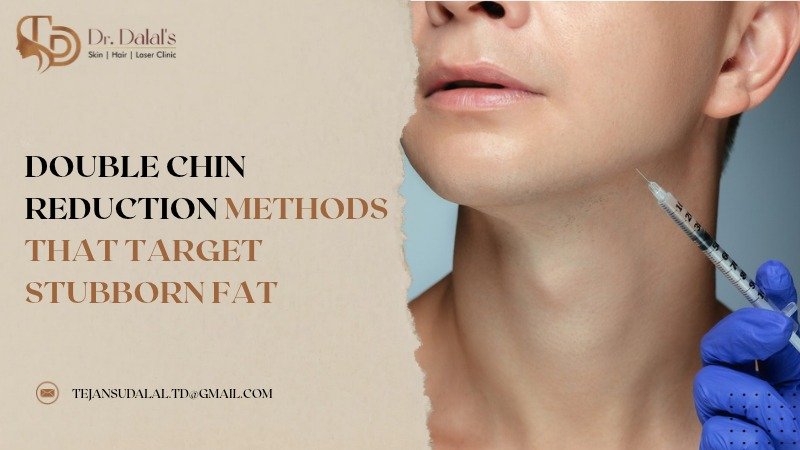
A double chin is not always about weight. Many slim, fit people have a stubborn pad of fat under the chin that no amount of dieting or exercise will shift. The good news is that there are several ways to reduce it, but the right one depends on what is actually causing the fullness, and that is not the same for everyone.
Double chin reduction works best when the treatment is matched to the layer that is causing the fullness. If the problem is a soft pad of fat just under the skin, options include fat-dissolving injections, fat-freezing treatments, a small liposuction procedure and, in some cases, energy-based devices. If the skin is loose, treatments that tighten while reducing fat are preferred. If the fullness comes from deeper tissue, muscle bands or a weak chin bone, surface treatments will disappoint, and a deeper surgical approach may be needed. A proper examination is what decides which route is right.
Key Takeaways
- A double chin can come from fat under the skin, loose skin, muscle bands in the neck, deeper fat beneath the muscle, or a receding chin. Each cause needs a different fix.
- Fat-dissolving injections, fat-freezing and liposuction work on the fat that sits just under the skin. They do little for deeper fat.
- Non-surgical treatments usually need several sessions and show full results over two to three months.
- Removing fat from a face with loose skin can make the area look looser, so skin quality must be assessed before choosing a treatment.
- A simple self-check, tensing the neck muscle in the mirror, helps show whether the fullness is superficial or deeper.
Introduction
Fullness under the chin blurs the jawline, makes the face look heavier and can make the neck look older. Surveys suggest that a large majority of people seeking aesthetic treatment are unhappy with the fullness under their chin. Over the last decade, treatments for this area have grown well beyond surgery. Fat-dissolving injections, fat-freezing devices, radiofrequency and acoustic wave treatments now sit alongside liposuction and neck lift procedures. This article explains what is really behind a double chin, how each method works, who it suits and how clinicians choose between them.
What Really Causes a Double Chin?
Several different things can create the look of a double chin, and they often overlap. The most common cause is a pad of fat sitting just under the skin of the chin. Genetics decide how much fat is stored there, which is why it can persist in people who are otherwise slim. Ageing adds to the problem, because the skin loses firmness and the neck muscles loosen, so the area sags even if the amount of fat has not changed. A small or receding chin bone also gives soft tissue less support, so a normal amount of fat looks heavier. In some people, extra fat lies deeper, beneath the neck muscle, or the glands under the jaw are prominent.
Clinical Overview: The Layers Under the Chin
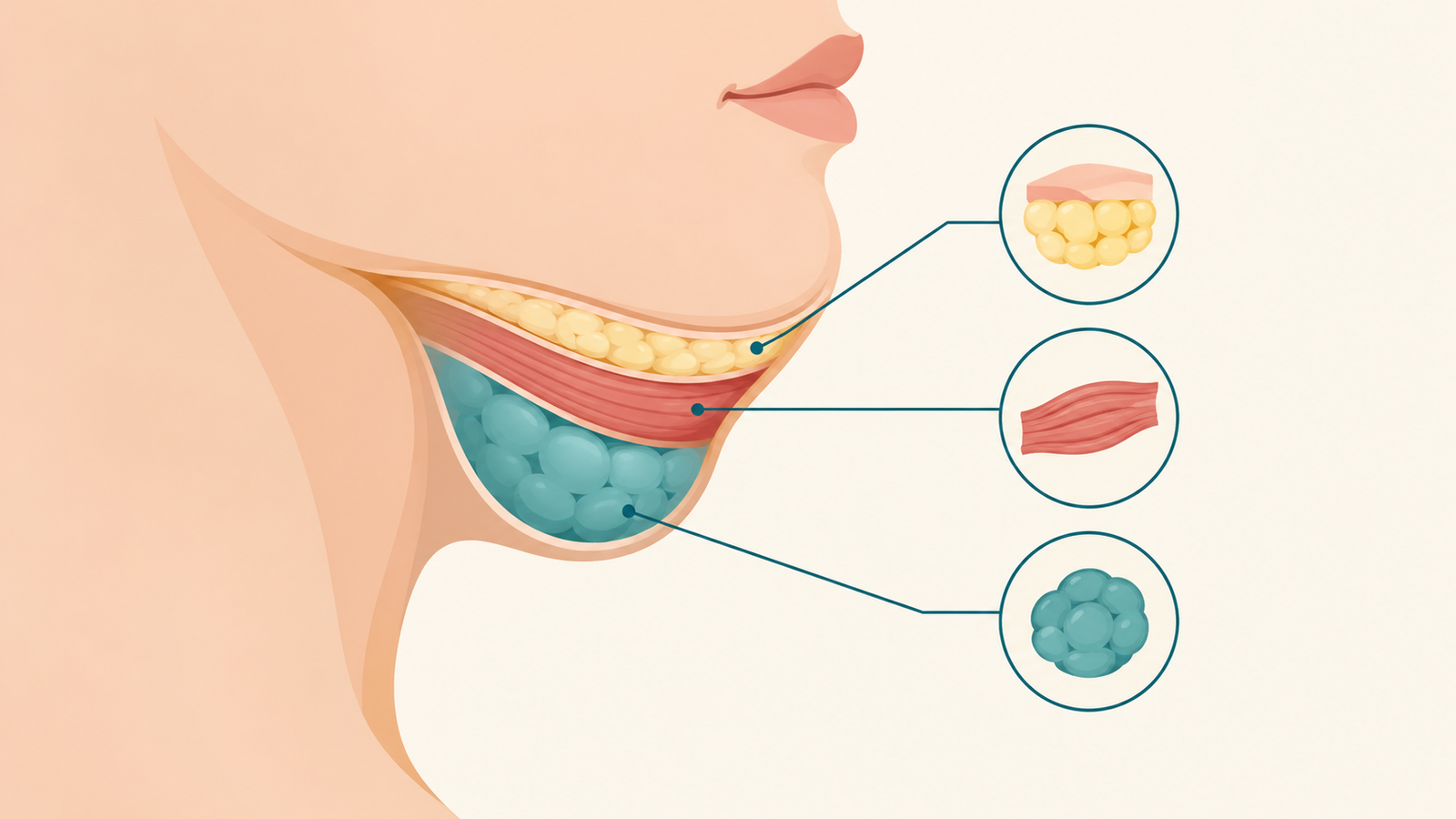
It helps to picture the area as layers:
- Top layer: the skin and the fat directly beneath it. This is where most double chins are located, and it is the easiest layer to treat without surgery.
- Middle layer: the thin neck muscle. With age, its front edges can separate, creating vertical bands in the neck that blunt the angle between chin and neck, even when there is not much fat.
- Deep layer: fat beneath the muscle, the muscles that run under the jaw and the glands beneath the jawbone. Volume here cannot be removed from the surface.
Many treatment disappointments come from misjudging the layer. Treating deep fullness with surface methods gives little change, and removing surface fat can sometimes make deeper structures more noticeable.
Diagnosis: Working Out Which Layer Is the Problem
A clinician usually works this out with a few simple checks:
- Pinch test: soft fat that can be gently pinched between the fingers suggests superficial fat. A firm, deep fullness that cannot be pinched suggests deeper tissue.
- Muscle tensing test: when the person tenses the neck muscle, fat that can still be pinched above it is superficial, while fullness that remains below it is deep.
- Skin quality check: loose, crepey skin that does not spring back means that removing fat alone may leave the area looking looser.
- Profile view: a receding chin or a flat angle under the jaw changes the plan.
- Neck muscle bands: visible vertical cords point to a muscle problem and not only fat.
Patients usually fall into three groups. The first has soft superficial fat and firm skin and is a good candidate for fat-reduction treatments. The second has superficial fat with mild to moderate loose skin and benefits from treatments that tighten as well as reduce fat. The third has deep fullness, muscle bands or marked loose skin and usually needs surgical correction.
Treatment: Methods That Reduce Chin Fat
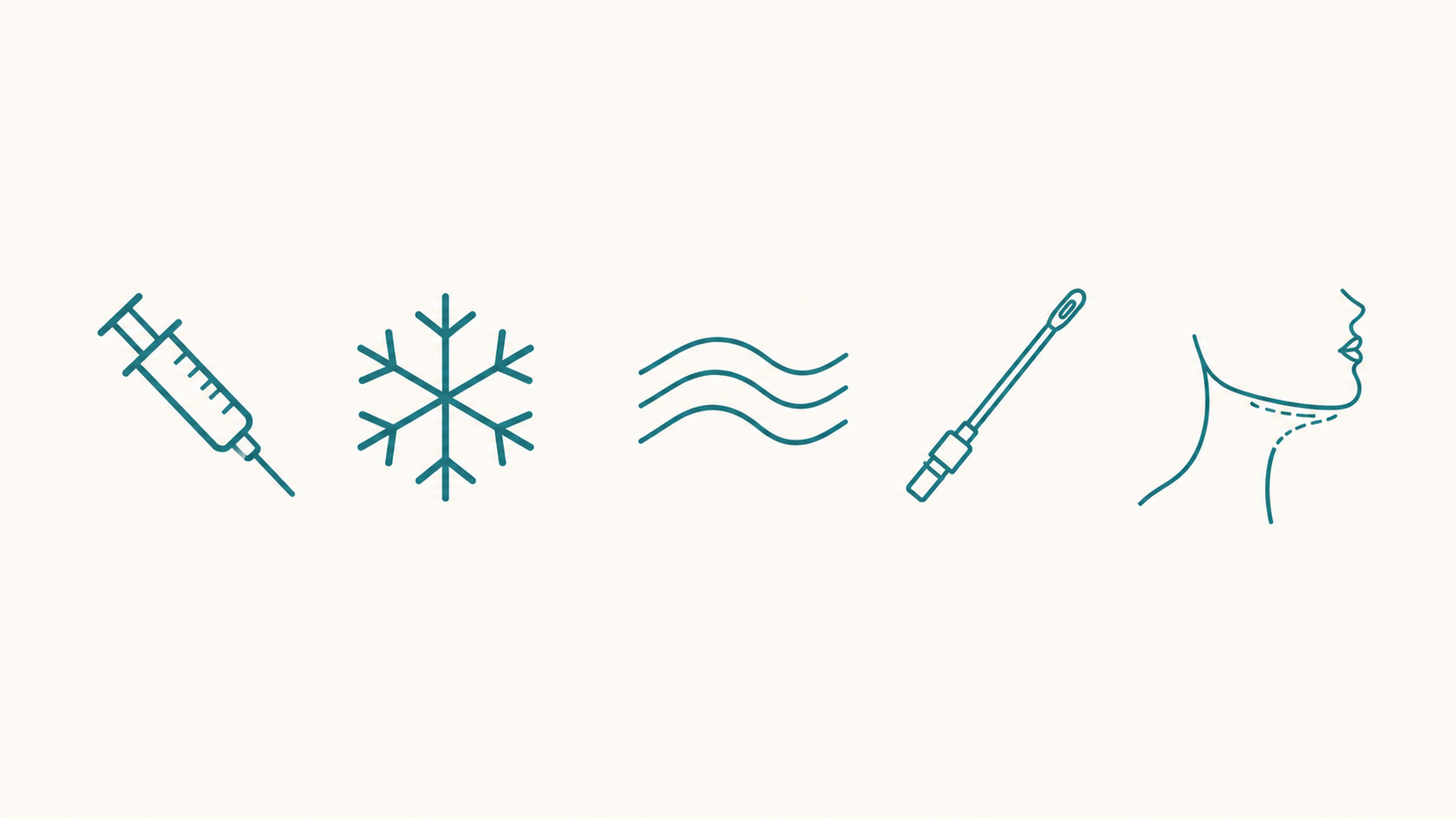
Modern double chin reduction offers several routes, and each one targets fat in a different way. Fat-dissolving injections use a natural bile-type acid that breaks down the walls of fat cells. The treated fat is cleared away by the body over several weeks, and the area often tightens slightly as the skin heals. Treatment is given as a series of small injections in a mapped area, usually over up to four to six sessions. Swelling, tenderness, firmness and numbness are common for a few days to weeks. A temporary weakness of the lower lip can occur in a small number of people if the solution spreads near a facial nerve, and it recovers by itself, usually within about a month. Careful mapping and correct technique lower this risk.
Fat-freezing treatments cool the chin fat with a small applicator until the fat cells shrink and die, and the body removes them over eight to twelve weeks. A single session can reduce the fat in the treated spot by roughly a fifth to a quarter. Temporary numbness, redness and tenderness are common. Radiofrequency microneedling uses tiny needles to deliver heat in the deeper skin and fat, which tightens skin and reduces fat together, and satisfaction rates in studies are high, although the heat must be set carefully to avoid fat loss that is too aggressive. Acoustic wave treatment uses pressure waves to disturb fat cells and has no real downtime, usually over a few weekly sessions.
Small liposuction under local anaesthetic removes the fat in a single session through a tiny cut in the crease under the chin. Recovery is usually two to four days, and it suits people under about fifty with good skin elasticity and fat only in the top layer. It cannot treat deeper fat or muscle bands. When the cause is deeper, a surgical neck lift may be required. A neck lift can tighten the muscle bands, remove deeper fat and reposition prominent glands. The recovery is longer, but it is the most dependable fix for deep fullness and for very loose skin.
Method Comparison Guide: Which Option Suits Which Chin
| Method | How It Works | Best For | Sessions and Downtime |
|---|---|---|---|
| Fat-dissolving injections | Break down fat cell walls; body clears the debris | Soft superficial fat, firm skin | Up to 4 to 6 sessions; swelling and numbness for days to weeks |
| Fat-freezing treatment | Cools fat cells until they die and are cleared | Moderate superficial fat, prefers non-injection | Usually one or two sessions; results over 8 to 12 weeks; minimal downtime |
| Radiofrequency microneedling | Heats deep skin and fat, stimulates collagen | Fat with mild to moderate loose skin | Series of sessions; redness and tiny scabs for a few days |
| Acoustic wave therapy | Pressure waves disturb fat cells | Mild superficial fat, no downtime wanted | A few weekly sessions; almost no downtime |
| Small liposuction | Removes fat through a tiny cut | Superficial fat, good skin elasticity, wants one-step result | One session; 2 to 4 days of social downtime |
| Surgical neck lift | Tightens muscle, removes deeper fat, reshapes glands | Deep fullness, muscle bands, very loose skin | One surgery; around 10 to 14 days recovery |
The right option depends on the layer causing the fullness, skin quality and how much downtime is acceptable. It is decided after an examination, not from a photograph.
Combining Treatments for Better Results
Sometimes one method is not enough, and combining treatments is more effective. For a very full chin, doctors may first reduce the bulk with fat-freezing and then refine the remaining pockets with a few fat-dissolving injections. Because less solution is needed in the second step, swelling and the risk of side effects can be lower. In studies of this approach, every participant improved by at least one grade on a standard fat rating scale, and most improved by two.
For people with both chin fat and thin or ageing skin, aggressive heat can cause the tissue to look hollow. Gentle radiofrequency microneedling followed by regenerative treatment of the skin is an emerging approach for these patients. In people with more loose skin, combining small liposuction with a skin-tightening treatment can prevent the skin from sagging after the fat is removed.
What the Research Shows?
Published research on chin fat reduction supports several points:
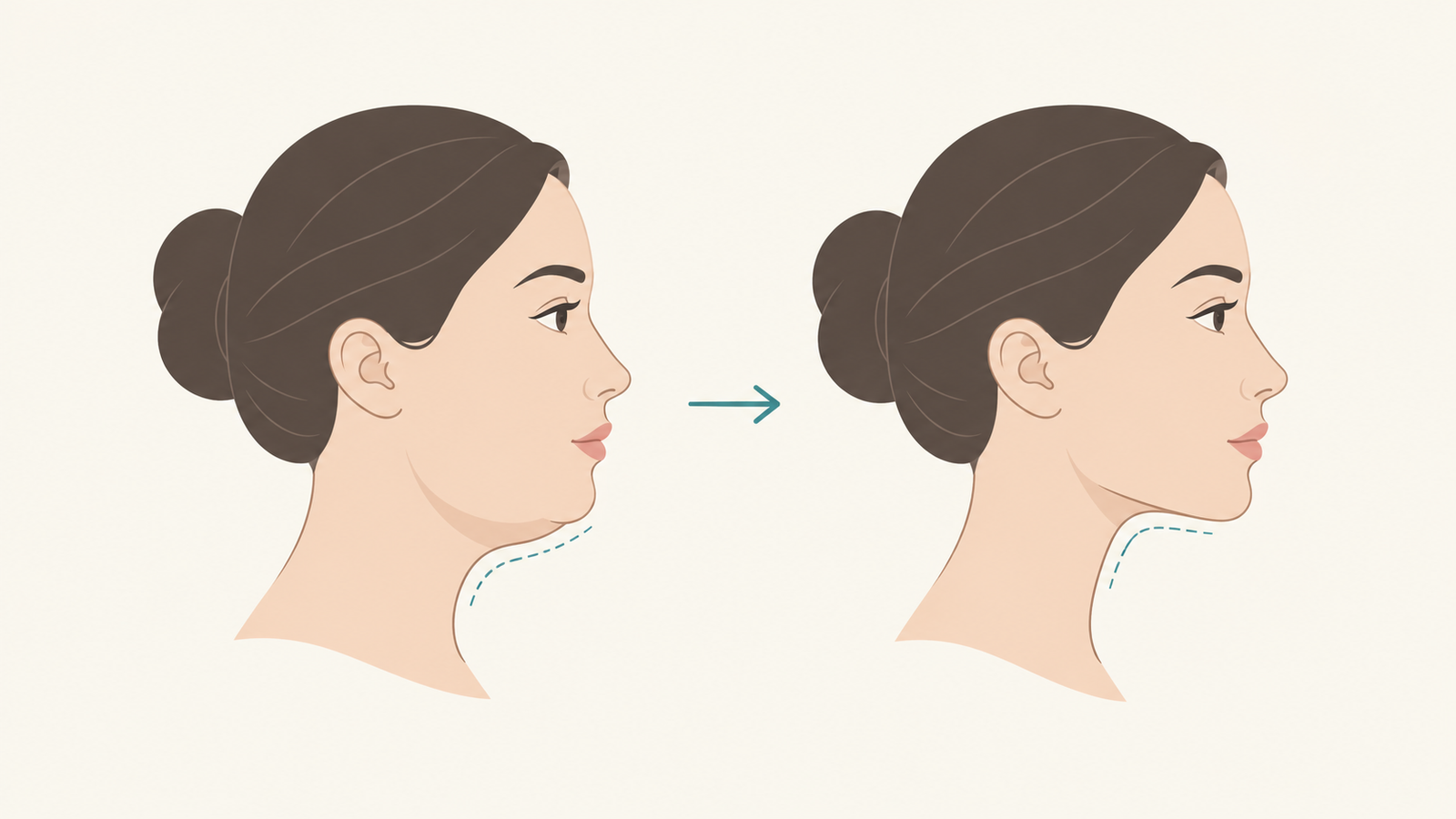
- Fat-dissolving injections are effective: A combined analysis of more than 1,500 participants found that about 71% of treated people achieved a meaningful improvement, with most reporting satisfaction after several sessions.
- Side effects are mostly short-term: Swelling, pain, redness, firmness and numbness are common. Temporary lower-lip weakness occurred in a small percentage of people and recovered in about a month.
- Fat-freezing reduces chin fat gradually: Studies report visible fat thickness reduction over eight to twelve weeks with a low rate of serious side effects.
- Matching the method to the anatomy matters: Reviews stress that many failed treatments result from treating deeper fullness with surface methods, which gives little improvement.
These findings reflect published research; individual results depend on anatomy, skin quality and the clinician’s assessment.
Doctor Review Block
This article has been medically reviewed by Dr. Tejansu Dalal, MD (Dermatology), for clinical accuracy. A double chin is not one condition, and no single treatment suits everyone. The most important step is a careful examination that finds out which layer is responsible, because choosing the right method for that layer is what separates a pleasing result from a disappointing one.
References & Citations
This article draws on research on submental fat reduction, including a review published by the National Center for Biotechnology Information on current trends in managing fullness under the chin, and reference material from the National Institutes of Health on selecting the right technique for submental treatment. Efficacy and safety details reflect published clinical research.