

Pemphigus vulgaris can feel frightening when it first appears, with painful blisters on the skin and inside the mouth that break open easily. The encouraging part is that treatment has changed a great deal in recent years, and many people can now reach long periods of remission with far less steroid exposure than in the past.
Pemphigus vulgaris treatment aims to stop new blisters, heal existing ones and then keep the disease quiet with the lowest safe amount of medicine. Oral steroids act fastest and are used to gain control quickly. For moderate to severe disease, a targeted B-cell medicine is now widely used alongside a short steroid course, because it helps many people reach remission off all treatment while reducing steroid side effects. Other immune-calming medicines are used when this option is not suitable. Long-term control depends on regular follow-up, blood antibody monitoring and early action if the disease starts to return.
Key Takeaways
- Pemphigus vulgaris is an autoimmune disease. The immune system attacks the proteins that hold skin cells together, so the cells separate and blisters form.
- Diagnosis needs more than a skin examination. A small skin biopsy with a special antibody test is considered the gold standard.
- Steroids work quickly but cause serious side effects when used at high doses for a long time, which is why treatment now focuses on using them for a shorter period.
- A targeted B-cell medicine combined with a short steroid course led to far more people reaching remission off treatment than steroids alone in a major trial.
- Long-term care is about monitoring. Antibody blood tests, B-cell checks and early review of any new blister help prevent a major relapse.
Introduction
Pemphigus vulgaris is a rare but serious autoimmune blistering disease. Left untreated it can be life-threatening, because open skin and mouth sores invite infection and fluid loss. For many years, the only real option was high-dose steroids for months or years, and the medicine itself often caused as much harm as the disease. Today, doctors have better tools and clearer goals. This article explains how pemphigus is diagnosed, what the main treatment options are, how doctors define remission and how long-term control is maintained.
What Pemphigus Vulgaris Is and Why Blisters Form?
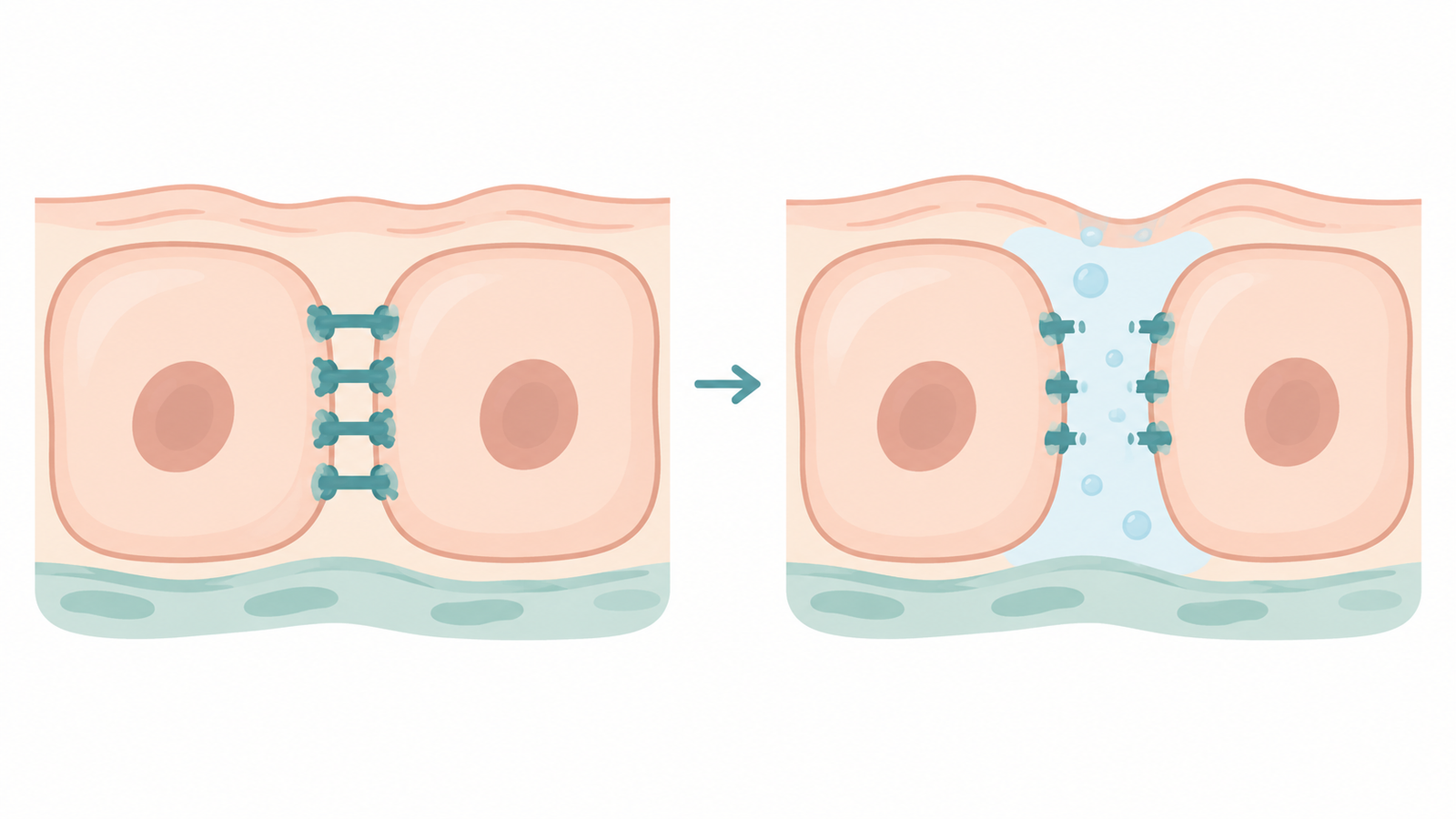
Skin cells are held together by tiny structures that work like rivets. In pemphigus vulgaris, the immune system makes antibodies that attack the proteins in these rivets. Once the rivets are damaged, cells lose their grip on each other, a process called acantholysis, and fluid collects between them. The result is soft, fragile blisters that burst quickly and leave raw, painful areas that heal slowly and can easily become infected.
Where blisters appear depends on which proteins are attacked. When only the protein found mainly in the mouth and deeper skin is targeted, the disease stays mostly in the mouth and other moist surfaces. When a second protein found in the upper skin layers is also attacked, both skin and mouth are involved and the disease is usually more severe. Pemphigus usually appears between the ages of 40 and 60 and affects men and women equally.
Clinical Overview: Stages of Treatment Response
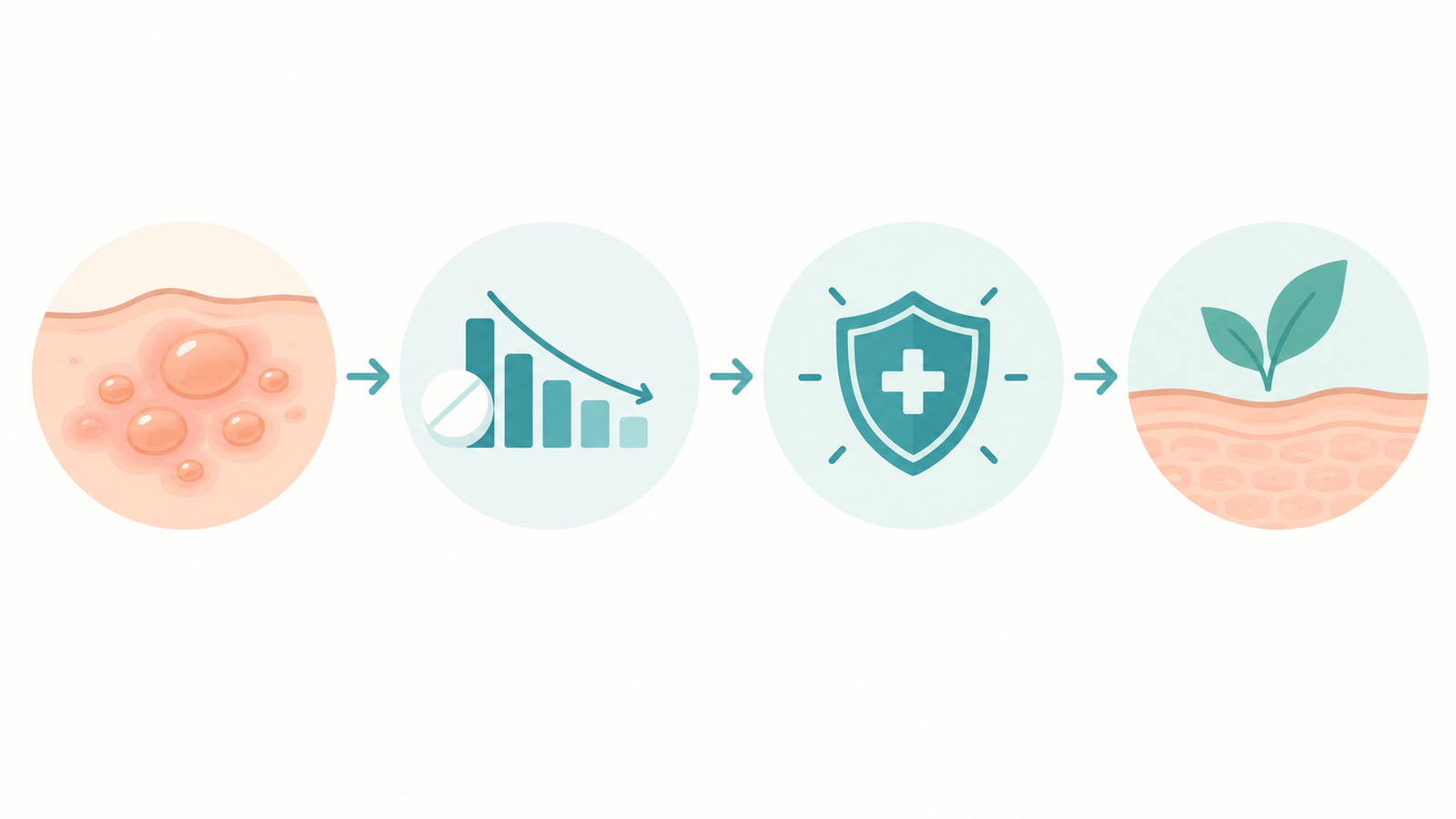
Specialists use agreed milestones to describe how well treatment is working. Knowing these words makes follow-up visits easier to understand:
- Control of disease: new blisters stop forming and existing ones begin to heal.
- Consolidation: no new blisters for at least two weeks and most existing sores have healed over.
- Minimal therapy: the disease stays quiet on a very low dose of steroid and/or a small amount of a supporting medicine.
- Remission on minimal therapy: no blisters at all for at least two months while on that low dose.
- Remission off therapy: no blisters for at least two months with all systemic treatment stopped. This is the long-term goal for most patients.
- Relapse: new blisters that do not heal within a week, or clear growth of old areas after disease had been controlled.
Diagnosis: How Pemphigus Vulgaris Is Confirmed
Because blistering diseases can look alike, doctors combine several tests rather than relying on appearance alone:
- Bedside smear: cells scraped from the base of a fresh blister are examined under the microscope for the typical loose, rounded cells. It is a quick first step.
- Skin biopsy: a small, fresh blister is sampled and studied for the characteristic split high within the skin.
- Direct immunofluorescence: a second sample from normal-looking skin beside a blister is tested for antibodies stuck between skin cells. This is considered the gold standard test, with a typical “fishnet” pattern.
- Blood antibody tests: measure the levels of the two key antibodies. They help identify the type of disease and are used later to track activity.
Early, accurate diagnosis matters because the disease is much easier to control when treatment starts promptly.
Treatment: Steroids, Targeted Therapy and Other Options
Modern pemphigus vulgaris treatment is planned around disease severity, general health and the long-term safety of every medicine. Oral steroids are still the quickest way to stop blister formation, and the starting dose depends on how severe the disease is. In very severe flares, short courses of steroid given through a vein may be used to gain control faster. If blisters keep forming, the dose is raised under supervision. After control is achieved, the dose is lowered step by step on a planned schedule. Reducing steroids too fast can cause a flare, while staying on high doses for too long can cause infections, bone thinning, diabetes, high blood pressure and stomach ulcers.
To reduce this burden, doctors now often add a targeted medicine that removes the B-cells responsible for making the harmful antibodies. It is given by infusion, usually in two sessions two weeks apart, and is recommended as a first-line choice for moderate to severe disease. When it cannot be used, other medicines that calm the immune system, such as azathioprine or mycophenolate, are used to allow steroid doses to come down. These take several weeks to work, and some need blood tests before starting to check they are safe for that person. In stubborn or dangerous flares, treatments such as immunoglobulin infusions or procedures that clear antibodies from the blood may be added. Mouth-focused or milder disease is sometimes helped by a supporting medicine such as dapsone, which requires a blood test first.
Treatment Options Guide: What Each Medicine Does
| Treatment | What It Does | Main Role | Key Points |
|---|---|---|---|
| Oral steroids | Rapidly calm the immune attack | Fast control of active disease | Work quickly but have serious long-term side effects, so used for as short a time as possible |
| Targeted B-cell therapy | Removes the cells that make harmful antibodies | First-line for moderate to severe disease | High rate of remission off therapy; needs infection monitoring |
| Azathioprine or mycophenolate | Slow down immune cell growth | Steroid-sparing when targeted therapy is not suitable | Slow to start working; blood tests required |
| Dapsone | Reduces inflammatory cell activity | Add-on for milder or mouth-dominant disease | Blood test needed before starting |
| Immunoglobulin infusion or antibody-clearing procedures | Neutralise or remove circulating antibodies | Stubborn or severe flares | Used alongside other treatments, not alone |
The right plan depends on disease severity, other health conditions and how the body responds. It is always decided with the treating dermatologist.
Long-Term Control: Monitoring and Preventing Relapse
Reaching remission is only part of the goal. Staying there needs a regular follow-up plan:
- Antibody blood tests are usually done at the start, after about three months and then every three to six months. A steady rise in the skin-related antibody during a steroid taper can warn of a coming flare, while a low antibody level on its own, with clear skin, does not usually need stronger treatment.
- B-cell checks: after targeted therapy, B-cells stay low for about six to twelve months. When they begin to return, the risk of relapse rises, so some centres re-treat when early recovery is detected, while others give repeat infusions on a fixed schedule.
- Handling a flare: a small flare with only a few new blisters may be managed with a strong skin cream or a short return to the last effective steroid dose. A larger relapse needs a bigger step back in treatment.
- Daily care: gentle skin and mouth care, avoiding injury, prompt attention to signs of infection and keeping vaccinations up to date as advised by the doctor all protect long-term health.
What the Research Shows?
Published research on pemphigus vulgaris supports several key points:
- Targeted therapy changes the outlook: In a major trial of 90 patients with newly diagnosed moderate to severe disease, about 89% of those who received the B-cell therapy with a short steroid course were in remission off all treatment at two years, compared with about 28% on high-dose steroids alone.
- Far less steroid is needed: The targeted-therapy group received roughly one third of the total steroid dose and had fewer serious side effects.
- Remission lasts longer: People in the targeted-therapy group reached remission sooner and had far fewer relapses in the following year.
- Newer medicines are still being studied: Some newer antibody-clearing or oral targeted medicines clear antibodies quickly but have not yet matched the long-term remission rates of the B-cell approach when used on their own.
These findings reflect published research; each person’s treatment still depends on disease severity, other health conditions and the specialist’s judgment.
Doctor Review Block
This article has been medically reviewed by Dr. Tejansu Dalal, MD (Dermatology), for clinical accuracy. Pemphigus vulgaris is a serious but increasingly manageable disease. The best outcomes come from early diagnosis, a plan that limits steroid exposure, and regular monitoring that catches a flare before it becomes severe.
References & Citations
This article draws on research on blistering skin disease, including a review published by the National Center for Biotechnology Information on the approach and management of pemphigus vulgaris, and reference material from the National Institutes of Health containing Indian consensus guidelines for managing pemphigus. Treatment phases and monitoring recommendations reflect published clinical guidance.