
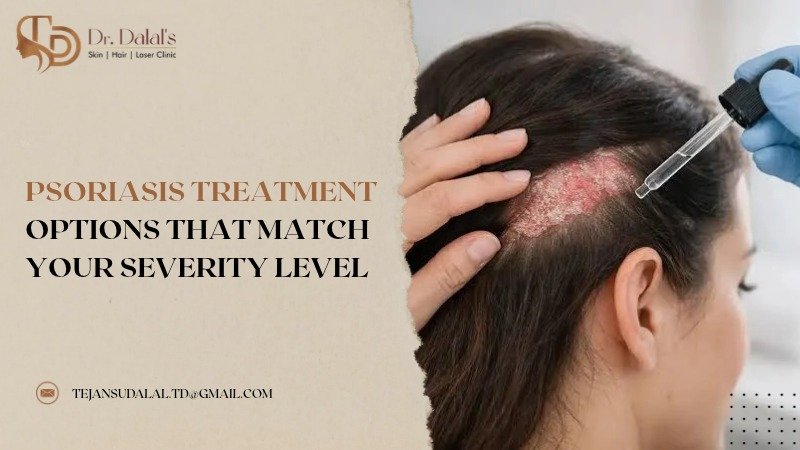
Psoriasis is not treated the same way in everyone. A few small patches on the elbow call for a very different plan than widespread plaques, painful scalp disease or skin that is affecting daily life. The best results come when treatment is matched to how severe the condition really is, and that is about much more than how much skin is covered.
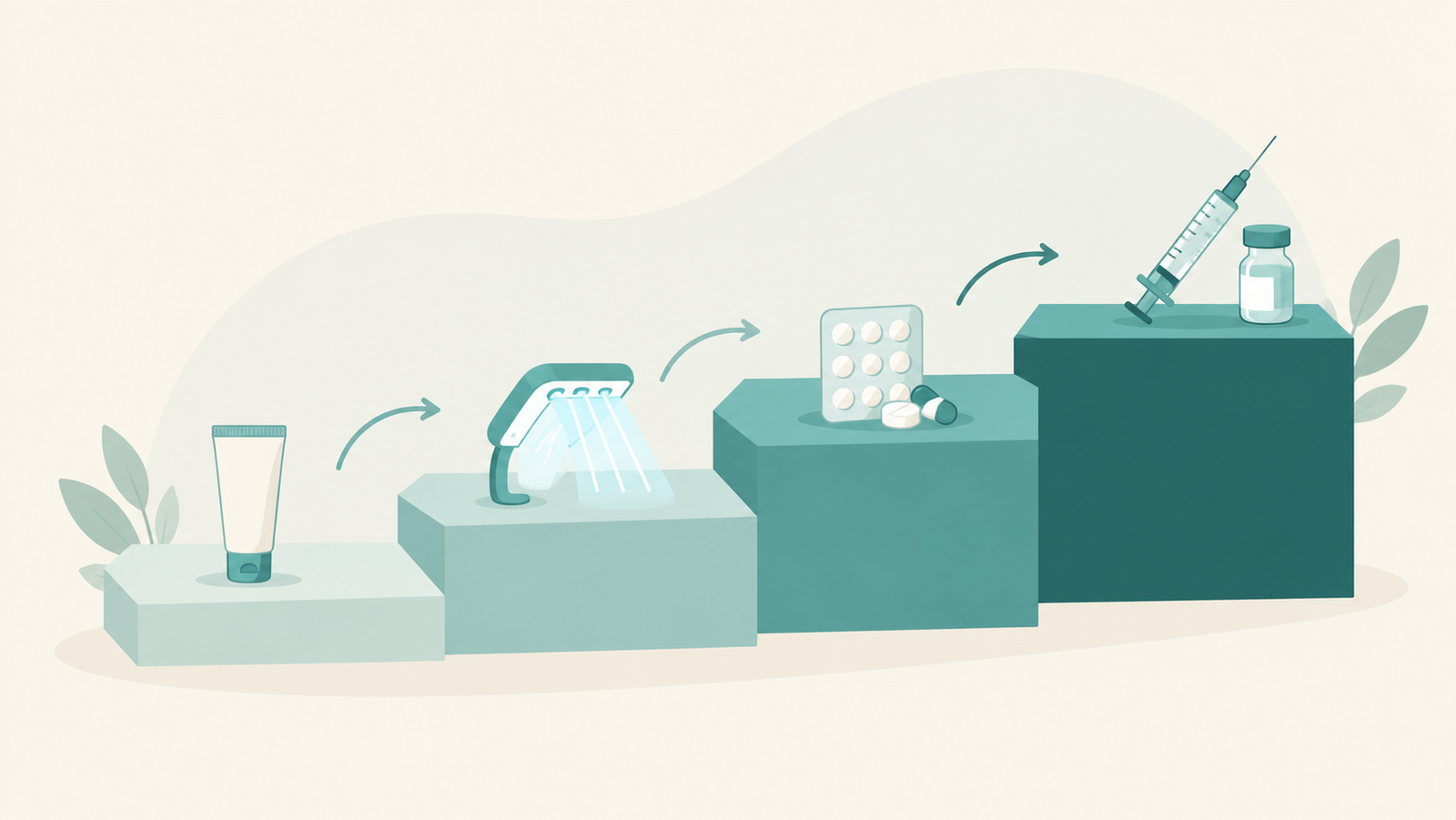
Psoriasis treatment works in steps, and the right step depends on severity. Mild, limited psoriasis is usually treated with creams and ointments. If creams are not enough, or if the disease is widespread, treatment moves up to light therapy, then oral medicines and finally targeted injections called biologics. Doctors judge severity using the percentage of skin involved, how thick and red the plaques are, how much life is affected and where the patches are. Even a small patch on the face, scalp, hands, feet or private areas may need stronger treatment, because these sites cause far more distress than their size suggests.
Key Takeaways
- Severity is judged by more than body coverage. Thickness and redness of plaques, the location of patches and the impact on daily life all count.
- Psoriasis on the scalp, face, hands, feet and genital area is treated as high-impact, even when the patch is small.
- Creams are the first step for mild disease, but strong steroid creams must be limited in duration and avoided on thin skin.
- If two consecutive courses of proper cream treatment do not clear the skin, it is time to discuss light therapy or systemic treatment.
- Psoriasis is a whole-body inflammatory condition, so joint pain, heart health and mood also need attention during treatment.
Introduction
Psoriasis is a long-term immune condition in which skin cells multiply too quickly, building up into red, scaly, raised plaques. It is not contagious, and it tends to come and go. Because it ranges from a few small patches to disease that covers much of the body, there is no single best treatment. Doctors choose from a ladder of options and move up or down as needed. This article explains how severity is measured, what each level of treatment involves and when it is time to step up to stronger options.
How Psoriasis Behaves in the Body?
In psoriasis, the immune system is overactive and sends constant inflammatory signals to the skin. As a result, new skin cells are produced in days instead of weeks and pile up on the surface as thick, silvery scales over red, inflamed skin. The condition is chronic and tends to flare with triggers such as stress, infections, skin injury and some medicines, then settle again.
Psoriasis is more than a skin problem. The same inflammation can affect the joints, and it is linked with higher rates of heart disease, diabetes-related problems, high blood pressure and low mood. This is why modern treatment aims to control the whole condition and not only clear the visible patches.
Clinical Overview: Mild, Moderate and Severe Disease
Doctors traditionally group psoriasis into three levels:
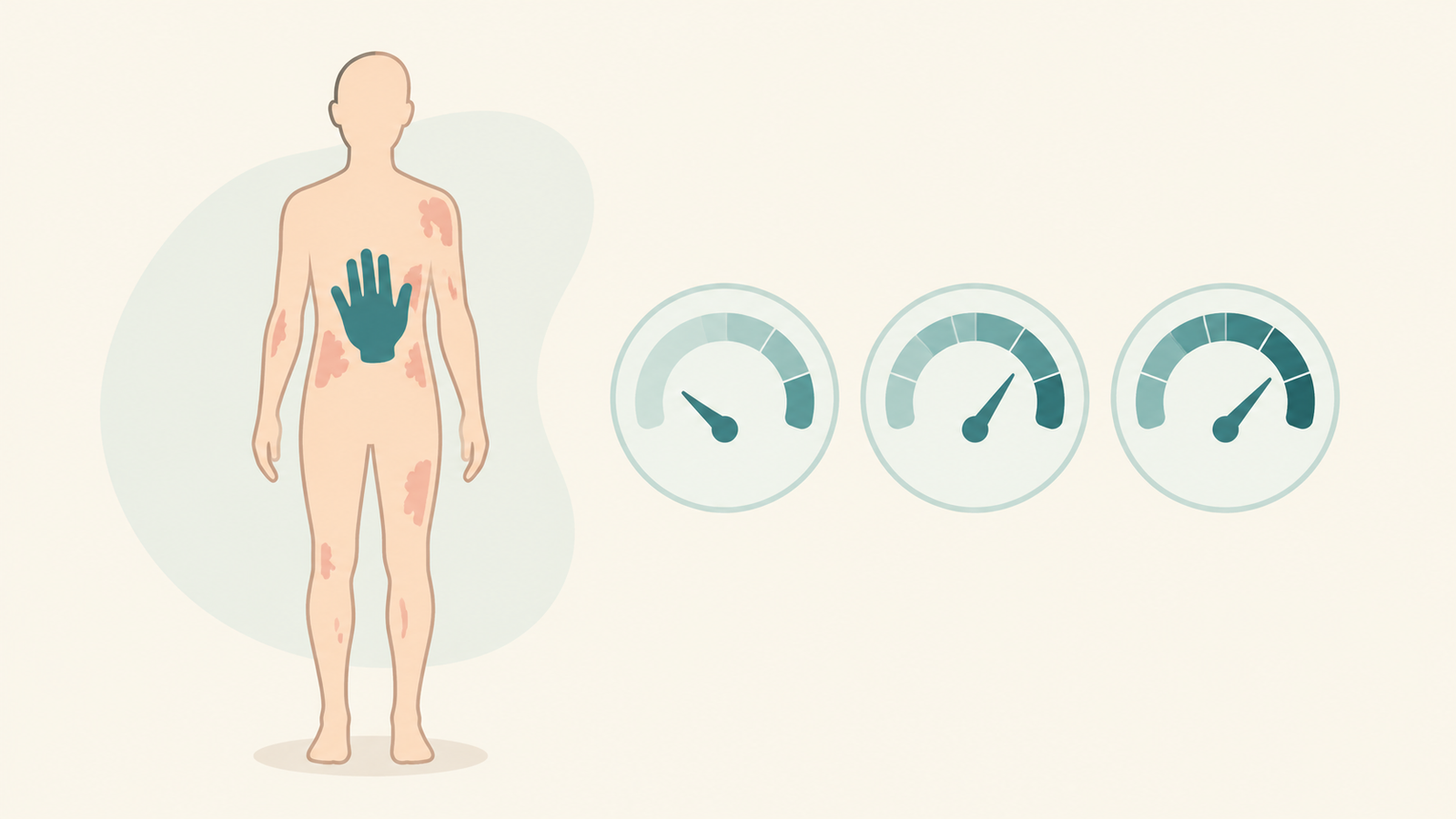
- Mild: only a small part of the body is involved, usually less than about three percent of the skin. One full hand, including the fingers, covers roughly one percent of the body, which is how this is estimated at the bedside.
- Moderate: about three to ten percent of the body is involved.
- Severe: more than about ten percent of the body is involved, or the disease causes a major impact on life.
A simple rule used by specialists is the “rule of tens”. Psoriasis is considered severe if more than about ten percent of the body is covered, if a detailed scoring index is above ten, or if a quality-of-life score is above ten. Meeting any one of these is enough.
Newer guidance goes further and simplifies the decision. Instead of mild, moderate and severe, the question becomes whether a person can be managed with creams alone or needs treatment that works through the whole body. A person is considered a candidate for body-wide treatment if they have widespread disease, patches in high-impact areas, or creams have failed to control the condition.
Diagnosis: How Severity Is Measured
Psoriasis is usually recognised by its typical appearance, but severity is assessed using several tools together:
- Body surface area: the percentage of skin involved, estimated using the hand-size method. It is quick, but it ignores thickness and location.
- A detailed scoring index: it combines how much skin is involved in four body regions with redness, thickness and scaling, giving a score from 0 to 72. Under 5 is mild, 5 to 10 moderate and above 10 severe. It is used mainly by specialists and in research.
- A quality-of-life questionnaire: a short form that asks how skin disease affects feelings, social life, work and daily activities. A high score shows that the condition is seriously affecting the person, whatever the skin looks like.
- Doctor’s overall rating: a simple overall grade of plaque thickness, redness and scaling.
Location matters a great deal. Psoriasis on the scalp, face, palms, soles or genital area can cause severe pain, difficulty with work and daily tasks, and emotional distress even when it covers only a very small area. Studies show that people with high-impact site disease have a much greater risk of poor quality of life and depression than the surface area alone would suggest. For this reason, these sites are treated as candidates for stronger treatment from the beginning.
Treatment: From Creams to Targeted Medicines
Modern psoriasis treatment begins with the least intensive option that can control the disease and moves up only when needed. For mild disease, creams and ointments are the foundation. Steroid creams reduce inflammation quickly, vitamin D-based creams slow the growth of skin cells, and combination products that contain both often give faster and longer-lasting clearance than either alone. Scale-softening products help thick plaques absorb treatment better, and a retinoid-type cream can be added for stubborn plaques. On thin skin such as the face and skin folds, strong steroids are avoided and gentler non-steroid creams are used instead. Plain moisturisers help at every stage and are safe even in pregnancy.
Strong steroid creams are powerful but need discipline. Used continuously for more than about four weeks, they can thin the skin, cause stretch marks and stop working as well, and they should not be spread over large areas of the body. Doctors usually switch to a break schedule or to non-steroid creams for long-term control. For a few stubborn plaques, a small injection of steroid into the patch may be used.
When creams alone fail, which is generally defined as not reaching clear or almost clear skin after two consecutive four-week courses of proper treatment, the next step is considered. Narrowband ultraviolet light therapy is a well-established option that does not suppress the immune system. If light therapy is not available, does not work or the disease returns quickly, oral medicines are used. These include medicines that slow immune activity and cell growth, a fast-acting option for severe flares and a vitamin A-related tablet that does not suppress immunity and suits certain types such as palm and sole disease. These require regular blood tests because they can affect the liver, kidneys or blood counts.
The biggest advance has been targeted medicines, mostly given as injections, that block specific inflammation signals. Different groups target different signals, and the newer ones can clear skin completely in a large proportion of patients, often with doses spaced weeks apart. Comparison studies show that these usually clear skin more completely than older tablets and than a newer oral targeted option. Before starting them, doctors screen for tuberculosis, hepatitis B and C and check vaccinations, and some groups are avoided in people with inflammatory bowel disease.
Treatment Ladder Guide: What Each Step Offers
| Step | Treatment | Best For | Key Points |
|---|---|---|---|
| 1 | Moisturisers, steroid creams, vitamin D creams, scale-softening products | Mild, limited psoriasis | Safe and effective for most; steroid use must be time-limited |
| 1 (thin skin) | Non-steroid anti-inflammatory creams | Face, skin folds, genital area | Avoids skin thinning on delicate areas |
| 2 | Narrowband ultraviolet light therapy | Widespread plaques or creams not enough | No immune suppression; needs regular visits |
| 3 | Oral medicines | Moderate to severe disease, light therapy unsuitable | Need blood tests and regular monitoring |
| 4 | Targeted biologic injections | Moderate to severe disease, joint disease, treatment failure | Highest rates of clear skin; screening before starting |
| 4 (alternative) | Targeted oral medicine | Those who prefer tablets over injections | Convenient, but clears skin less often than injections |
The right step depends on severity, location, joint involvement, other health conditions and personal preference. It is always chosen together with a dermatologist.
Beyond the Skin: Joints, Heart and Mood
Because psoriasis is a whole-body condition, good care looks beyond the skin. A meaningful share of people with psoriasis go on to develop psoriatic arthritis, which causes joint pain, swelling, stiffness, sausage-like swollen fingers or toes and heel pain. Skin disease usually appears 5 to 10 years before the joints are affected, so doctors ask about joint symptoms at every visit. Catching arthritis early matters, because untreated joint inflammation can cause permanent damage, and some treatments protect both skin and joints.
Psoriasis is also linked with a higher risk of heart disease, high blood pressure, abnormal cholesterol, weight-related health problems and depression. Regular check-ups, a healthy weight, not smoking, limiting alcohol and attention to mood are an important part of treatment. In children, psoriasis is managed with age-adjusted plans, using gentler creams first, and stronger medicines only under specialist supervision.
What the Research Shows?
Published research on psoriasis supports several key points:
- Body area alone can mislead: Studies show that people with small patches in high-impact areas such as the scalp, face, hands, feet and genitals can have a quality of life as poor as those with widespread disease.
- Combination creams work better: Products that combine a vitamin D-based ingredient and a steroid clear plaques faster and keep them away longer than either ingredient on its own.
- Targeted injections clear skin more completely: Head-to-head trials show that newer targeted injections clear more skin than older tablets and than a newer oral targeted option, and some keep working for years.
- Joint disease is common and often missed: Screening questionnaires used at every visit help detect psoriatic arthritis early, which allows treatment before joint damage becomes permanent.
These findings reflect published research; the right treatment for an individual depends on severity, health history and a specialist’s assessment.
Doctor Review Block
This article has been medically reviewed by Dr. Tejansu Dalal, MD (Dermatology), for clinical accuracy. The most common mistake in psoriasis care is judging severity only by how much skin is covered. A small patch on the scalp, hands or face can disrupt life more than a larger patch on the trunk, and treatment should be matched to the real burden on the patient.
References & Citations
This article draws on research on psoriasis severity and treatment, including a study published by the National Center for Biotechnology Information on classifying the severity of psoriasis, and reference material from the National Institutes of Health on criteria for identifying candidates for body-wide psoriasis treatment. Severity thresholds and treatment steps reflect published clinical guidance.