
We Don’t Just See a Scar. We See the Confidence That Scarring Has Taken.
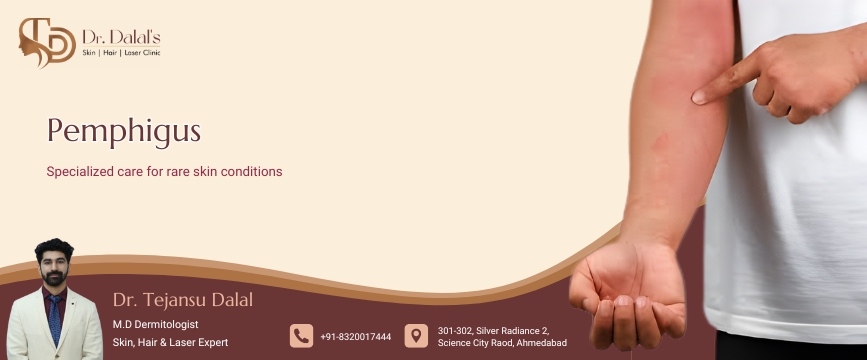
Pemphigus is a group of rare autoimmune diseases. In simple terms, your immune system—which is supposed to protect you—mistakenly attacks the glue that holds your skin cells together.
| Symptom | Description |
|---|---|
| Fragile Blisters | Soft blisters that burst easily and leave raw skin behind. |
| Painful Mouth Sores | Ulcers in the mouth, making eating or brushing uncomfortable. |
| Skin Peeling | Thin, tender skin that peels or erodes after blisters open. |
| Burning or Stinging Sensation | Discomfort around new or forming blisters. |
| Slow-Healing Wounds | Open areas that take time to dry and recover. |
| Crusted or Scaly Patches | Especially seen in Pemphigus Foliaceus on scalp or face. |
| Widespread Redness or Irritation | Inflamed skin in areas where blisters appear. |
| Possible Weight Loss or Dehydration | Happens when mouth sores make it hard to eat or drink. |
| Treatment | What It Does |
|---|---|
| Steroid Medicines | Quickly reduce swelling, redness, and stop new blisters from forming. |
| Immune-Calming Medicines | Help control the immune system so it stops attacking the skin. |
| Biologic Injection (Rituximab) | A modern treatment that works deeply to control the disease for a long time. |
| Antibiotics (if needed) | Used when open sores get infected. |
| Pain & Comfort Medicines | Help reduce pain, burning, and discomfort. |
| Wound Care | Gentle cleaning and protection of open sores to help them heal faster. |
| Diet & Nutrition Support | Helpful when mouth sores make eating difficult. |
| Lifestyle & Trigger Guidance | Helps avoid things that worsen symptoms (stress, heat, certain medicines). |