
We Don’t Just See a Scar. We See the Confidence That Scarring Has Taken.
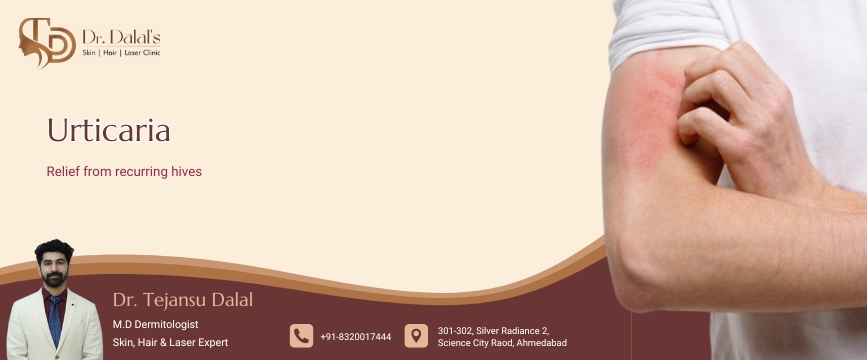
Urticaria, commonly called hives, is a skin reaction that appears suddenly as itchy, raised swellings on the skin. These patches can be red or skin-colored and may move from one area to another within a short time.
| Treatment | How It Helps |
|---|---|
| Antihistamine Medicines | Main treatment that reduces itching, redness, and swelling by blocking histamine. |
| Higher-Dose Antihistamines | Used when regular doses don’t fully control symptoms, especially in chronic urticaria. |
| Short-Term Anti-inflammatory Medicines | Given for severe flare-ups to quickly calm intense itching and swelling. |
| Immune-Modulating Therapy | Helps control long-lasting or frequently recurring urticaria. |
| Biologic Injections (Advanced Cases) | Used when urticaria does not respond to standard treatment; provides long-term control. |
| Trigger Identification & Avoidance | Prevents repeated attacks by avoiding foods, medicines, stress, or physical triggers. |
| Skin Care & Lifestyle Measures | Avoid hot showers, scratching, tight clothes; helps reduce flare-ups. |
| Emergency Treatment (Rare Cases) | Required if there is severe swelling of lips, face, or breathing difficulty. |